Most sushi dining experiences can be enhanced when you understand proper etiquette. Knowing the do’s and don’ts will help you enjoy your meal while respecting the traditions of this Japanese culinary art. From how to use chopsticks to whether you should mix your soy sauce, these guidelines will ensure you navigate the sushi bar like a pro. For a deeper dive, check out A cool guide on sushi etiquette : r/coolguides.
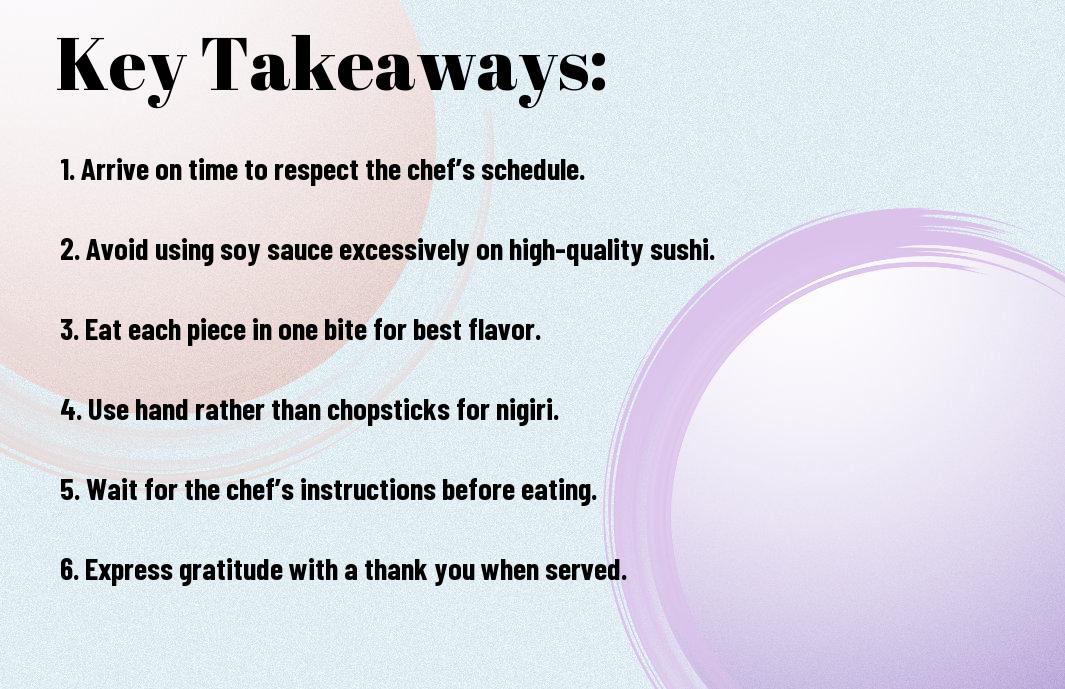
Key Takeaways:
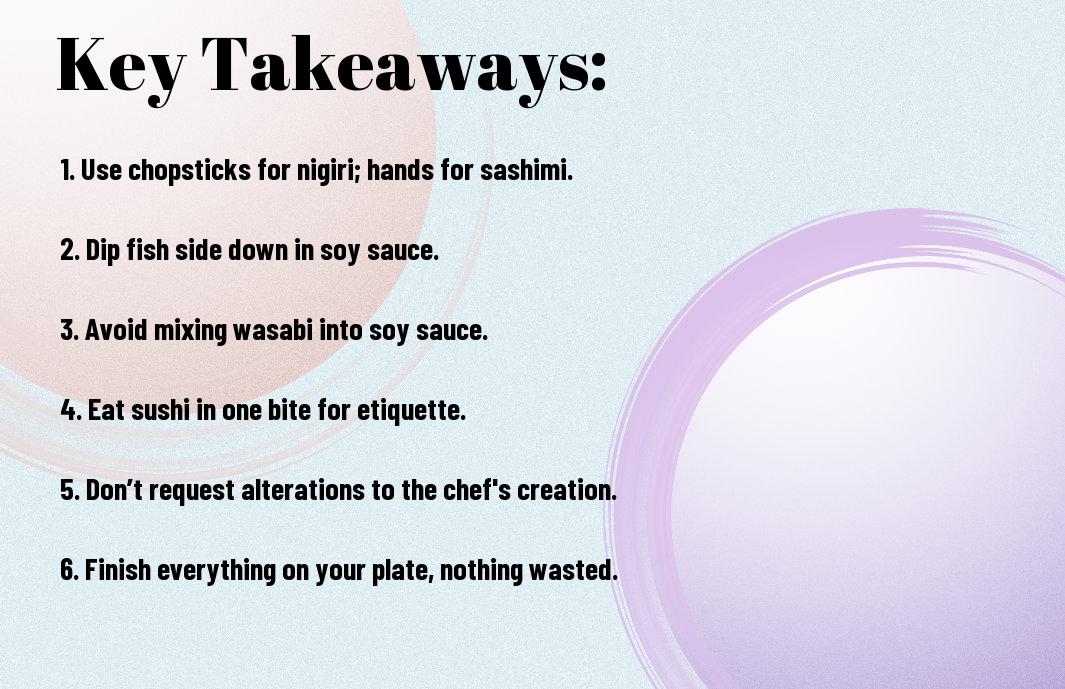
- Chopsticks Use: Always use chopsticks for taking sushi, but never use them to point or stab your food.
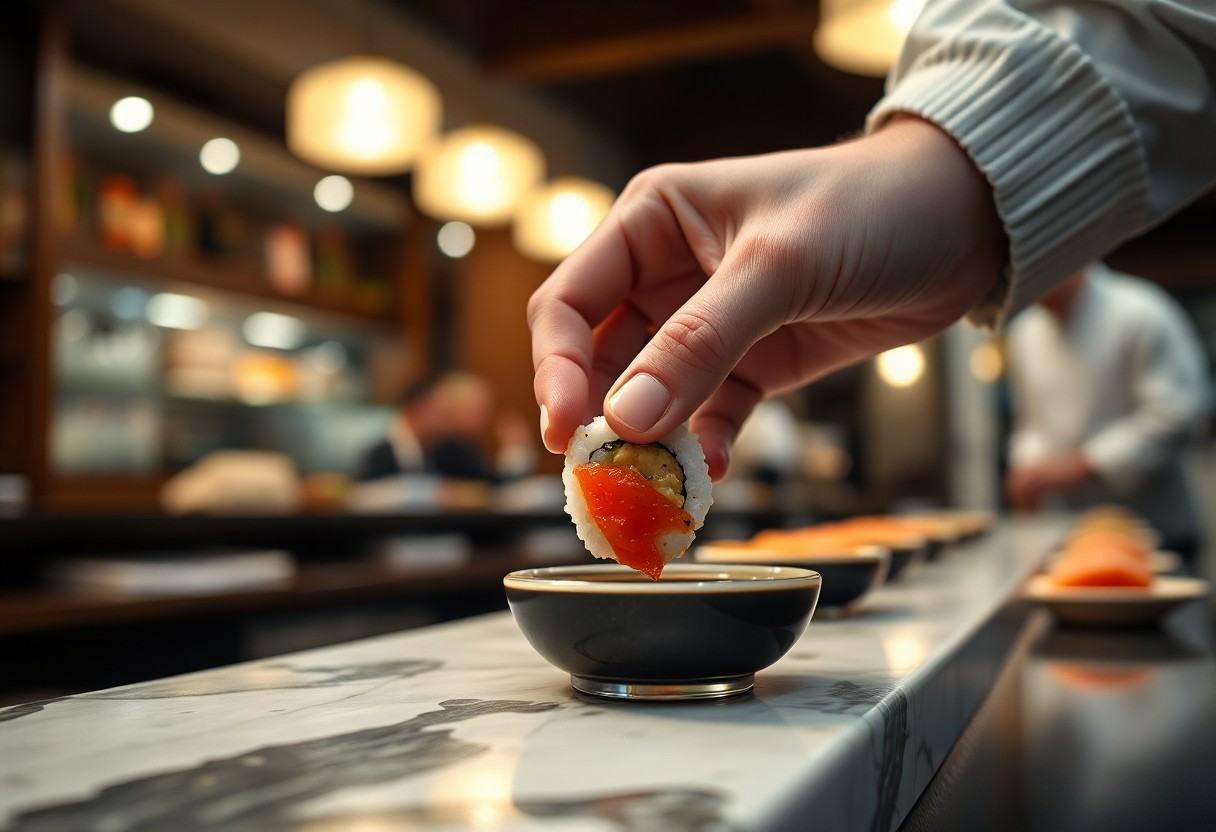
- Sauce Dipping: Dip the fish side of sushi into soy sauce, not the rice, to avoid overpowering its flavor.
- Wasabi Application: Add wasabi sparingly; it’s often already included by the chef, and you should avoid overdoing it.
- Eating Order: Consume sushi in the order it is served to appreciate the different flavors and textures.
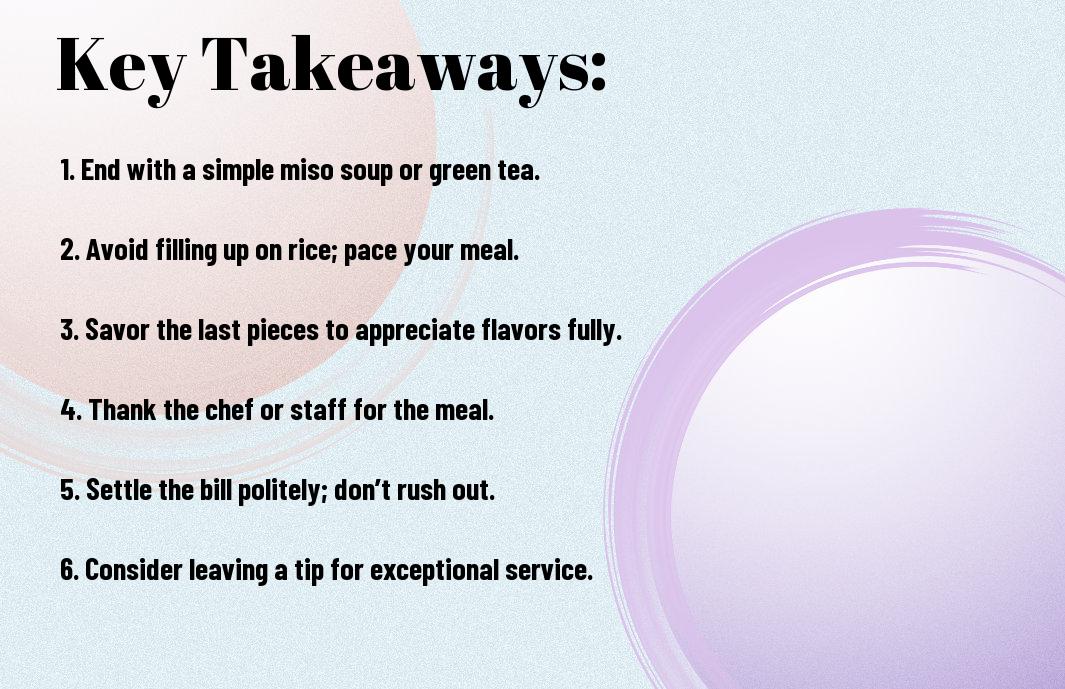
- Compliments: Show appreciation to the chef after your meal, acknowledging their skill and dedication.
Understanding Sushi Types
To grasp the variety of sushi, it’s important to distinguish between its many forms. Each type offers a unique taste and presentation, enhancing your dining experience. Here’s a snapshot of common sushi types:
| Sushi Type | Description |
|---|---|
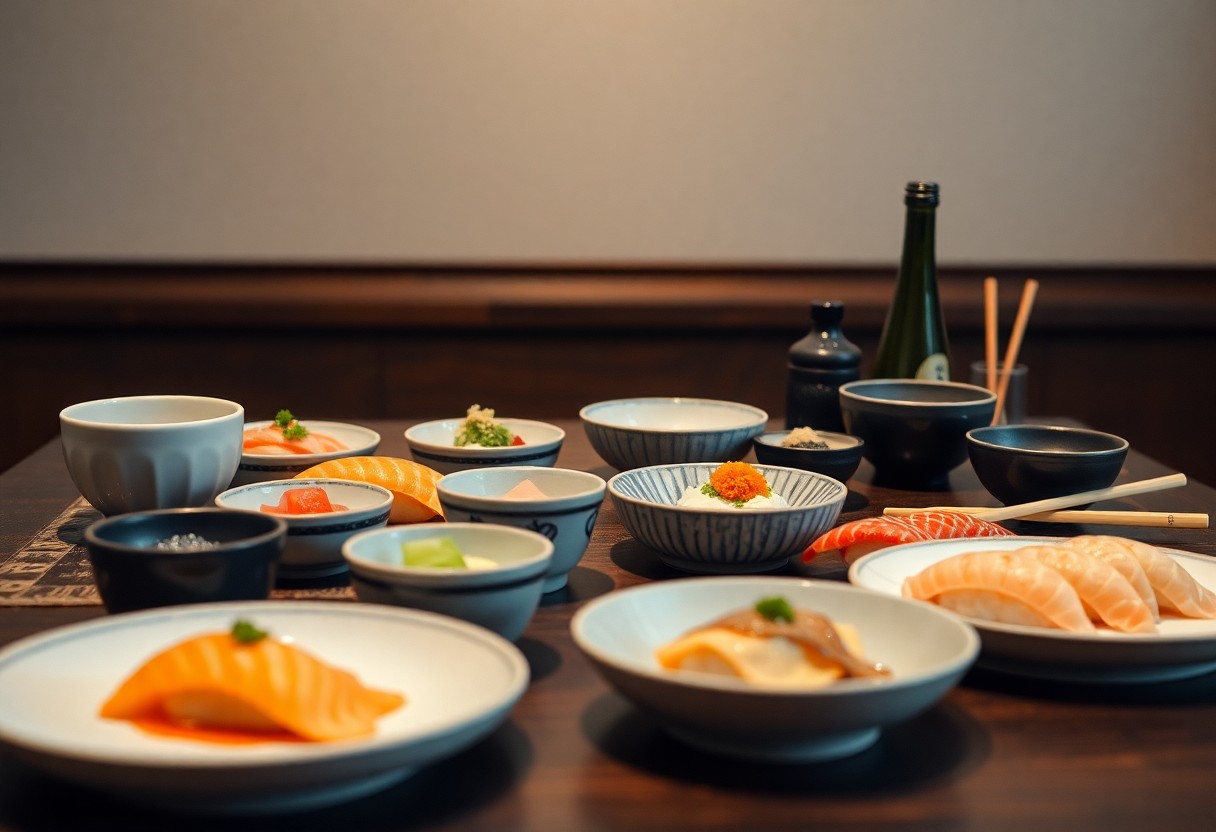
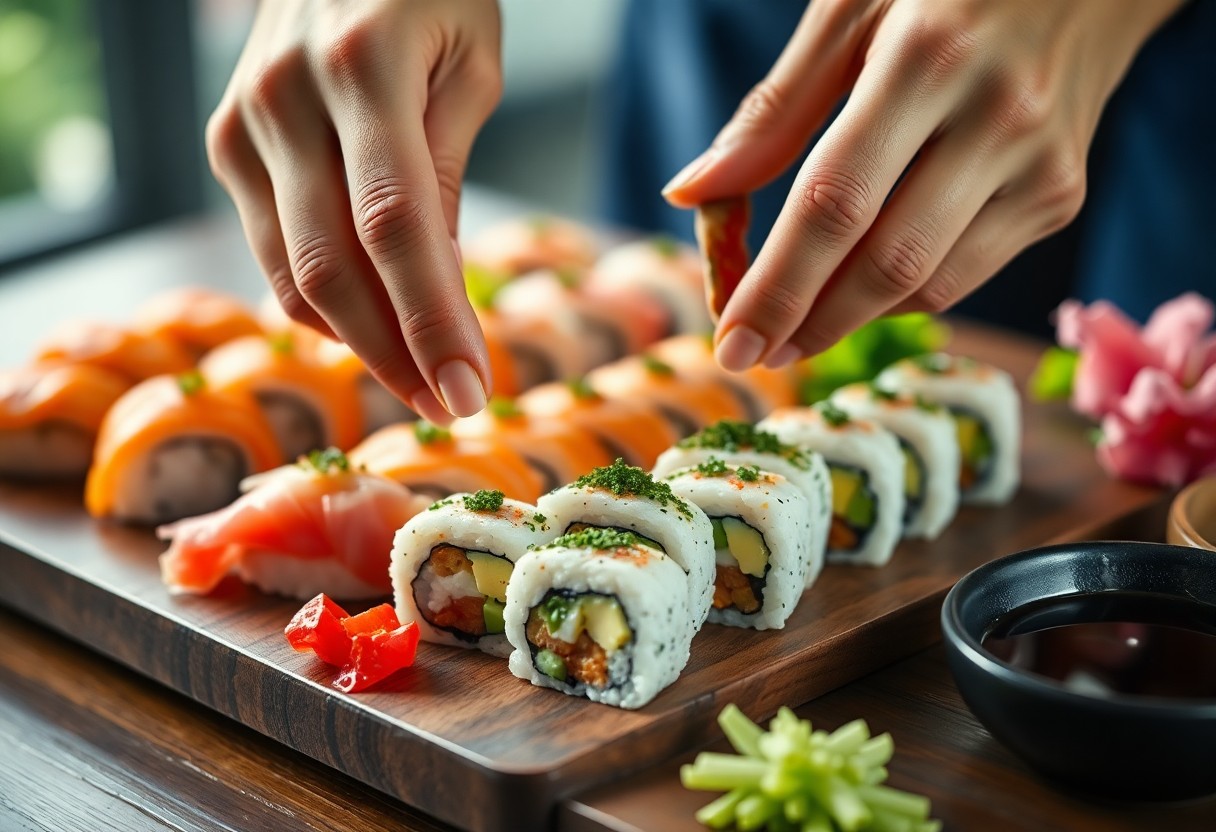
| Nigiri | An oval mound of rice topped with a slice of fish or seafood. |
| Sashimi | Thinly sliced raw fish, served without rice. |
| Maki | Rolled sushi with rice and fillings, wrapped in seaweed. |
| Temaki | Hand-rolled cones of sushi filled with various ingredients. |
| Uramaki | Inside-out rolls with rice on the outside. |
The Dos and Don’ts of Sushi – Sushi Etiquette will further enhance your understanding of these sushi types.
Nigiri
Nigiri is crafted by hand-pressing rice shaped into a small mound, topped with a slice of fresh fish or seafood, which can enhance the flavor profile. This presentation is often accompanied by a bit of wasabi for extra depth of taste.
Sashimi
The focus of sashimi is purely on the fish itself, served without rice. This dish allows you to appreciate the quality of the seafood and is often accompanied by dipping sauces and garnishes, elevating your dining experience.
But sashimi can also be accompanied by different textures and flavors, such as soy sauce, citrus, or radish, allowing for a diverse tasting journey. Sushi enthusiasts often savor sashimi for its purity and freshness, making it a beloved choice for many.
Maki
With maki, you enjoy a delightful combination of flavors and textures, as the sushi is rolled up with various fillings. This type often includes ingredients like fish, vegetables, and sauces wrapped in seasoned rice and seaweed.
Considering the variety of fillings and rolling techniques, maki offers endless possibilities for customization. You can experiment with different ingredients, ensuring a unique flavor experience each time you indulge.
Do’s of Sushi Etiquette
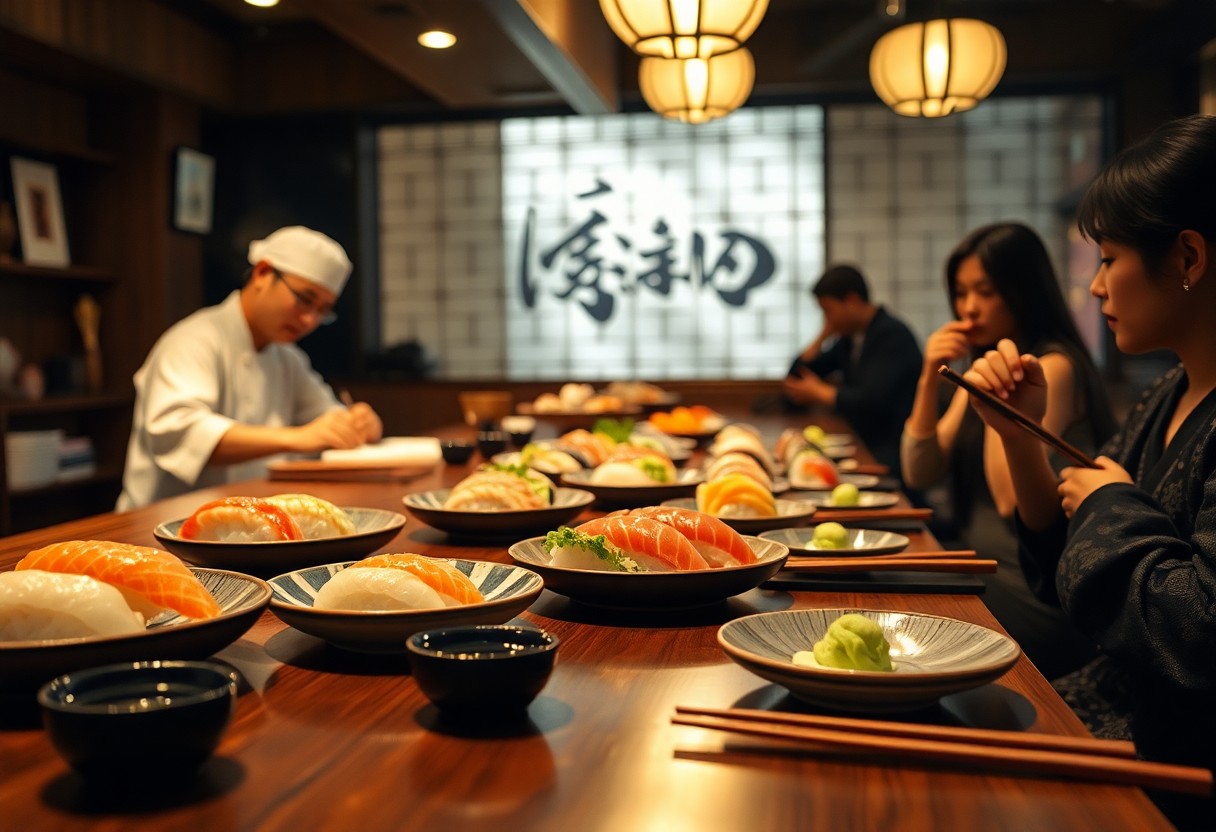
Some vital do’s of sushi etiquette include appreciating the art of sushi making, using chopsticks properly, and savoring the flavors of each piece. It’s important to be respectful to the sushi chef and observe proper dining practices, such as eating with an open mind and being considerate of those dining around you. By following these guidelines, you enhance your sushi experience and show respect for this traditional cuisine.
How to Properly Use Chopsticks
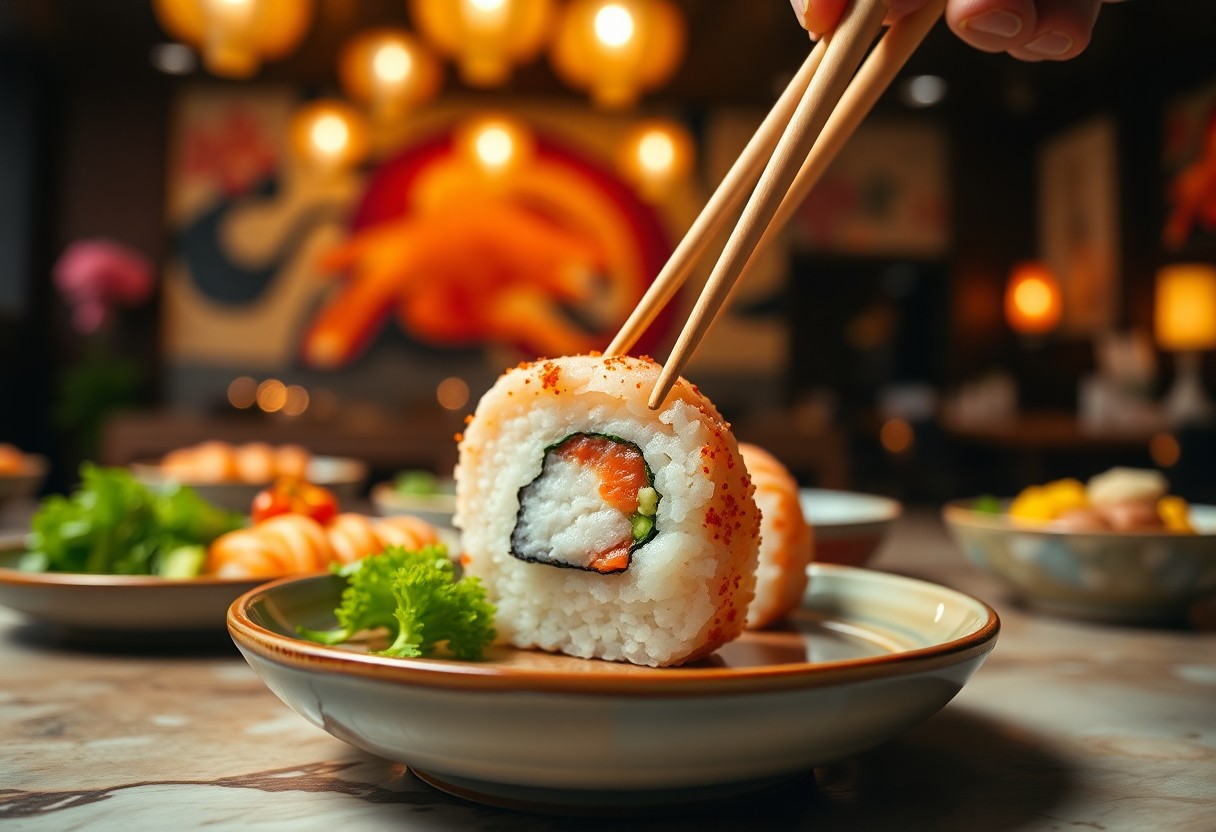
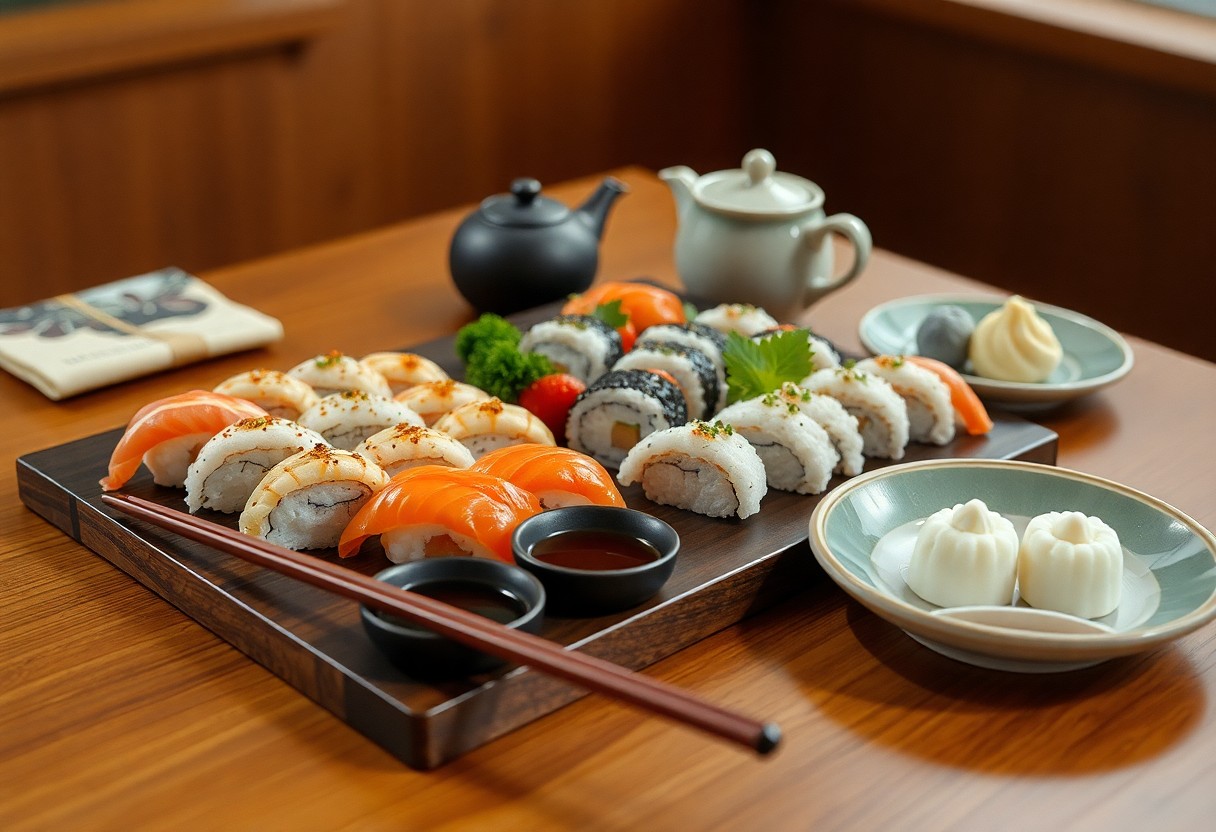
An vital aspect of sushi etiquette is knowing how to properly use chopsticks. You should hold the first chopstick stationary between your thumb and index finger while using the second one to grasp and lift the sushi piece. Avoid using your chopsticks to spear food or point at others, as this can be seen as disrespectful in Japanese culture.
The Role of Soy Sauce
Among the various components of sushi dining, soy sauce plays a significant role in enhancing the overall flavor of your meal. It is customary to dip the fish side of the sushi into the soy sauce, allowing the seasoning to complement the main ingredient rather than overpower it. Be cautious not to drown your sushi in soy sauce; a light dip is all you need to elevate the taste.
The careful use of soy sauce not only enhances the flavor but also reflects your understanding of sushi etiquette. Pour a small amount into a dish rather than directly on the sushi, preserving its visual appeal. You are also encouraged to appreciate the unique flavors of the sushi without relying solely on soy sauce, allowing yourself to enjoy the craftsmanship behind each piece.
Eating Order
To fully enjoy your sushi experience, it is important to follow the recommended eating order. Starting with lighter flavors and moving towards richer, more robust tastes will help your palate appreciate each ingredient’s unique characteristics. Following this order can elevate your dining experience and demonstrate your knowledge of sushi etiquette.
Due to the delicate nature of sushi, starting with nigiri or sashimi and progressing to more complex rolls allows you to enjoy the nuances of each dish. This thoughtful approach enhances your overall experience, ensuring you savor each bite without overwhelming your taste buds. By adhering to this order, you display a respect for the traditions of sushi craftsmanship and allow yourself and your dining companions to fully engage with the meal.
Don’ts of Sushi Etiquette
Keep in mind that sushi dining has its own set of rules that you should follow to enhance your experience. Avoid overwhelming your palate with too many flavors at once; it’s better to savor the subtlety of each piece. You should also refrain from mixing wasabi with soy sauce, which can mask the delicate flavors of the sushi. For more insights on the right way to eat sushi: Tips from the experts on …, consider honing your technique before your next meal.
Avoiding Common Mistakes
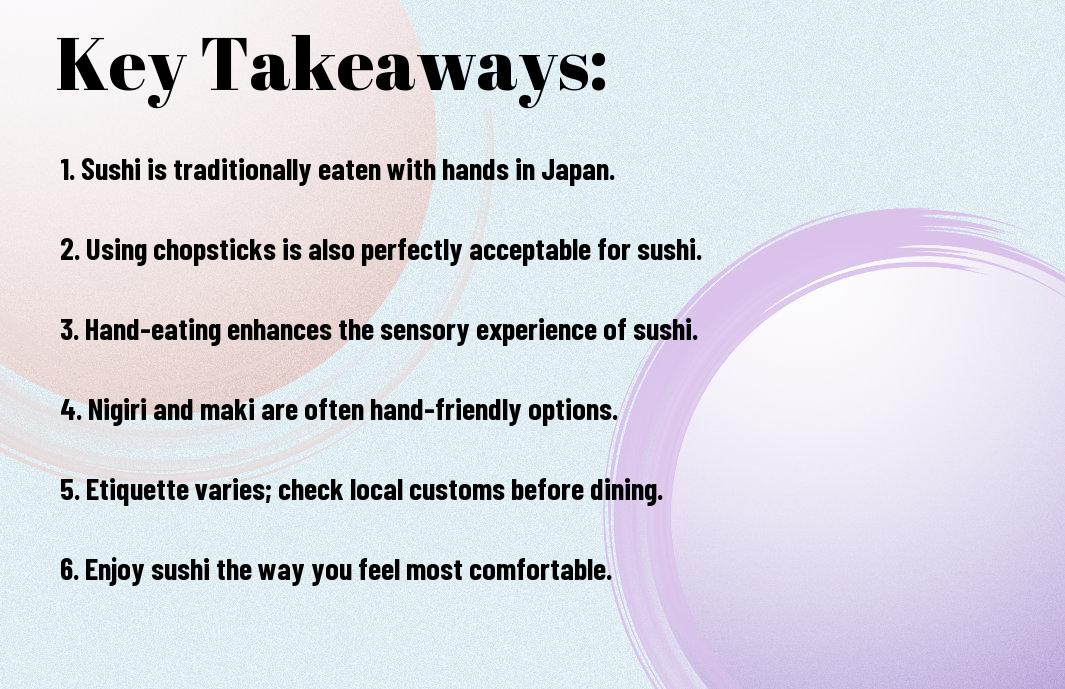
One major mistake many make is using chopsticks incorrectly or opting to pick up sushi with their hands without understanding when it is appropriate. Familiarize yourself with proper handling methods to show respect for the cuisine and those who prepare it.
Misuse of Condiments
After you have chosen your sushi, seasoning it correctly is key to enhancing your dining experience. Avoid overloading your sushi with condiments, which can detract from the flavor of the fish and rice, and try to use them in moderation.
Condiments should complement, not overpower the main flavors in sushi. If you enjoy soy sauce, dip just the fish side of your piece in it rather than the rice, which can absorb too much liquid and lose its texture. A small dab of wasabi is perhaps sufficient rather than a full scoop, allowing you to taste the fish as it was intended.
Talking with a Full Mouth
One of the more common faux pas is talking with a mouth full of sushi. Engaging in conversation while chewing can be seen as impolite and distracts from the dining experience.
With sushi being meant to be enjoyed fully, it’s best practice to wait until you’ve swallowed your food before contributing to a conversation. Not only will this show your companions that you respect their company, but it allows you to engage thoughtfully and enjoy every bite of your meal without interruption.
Dining Etiquette in Sushi Restaurants
Once again, understanding proper dining etiquette enhances your experience at a sushi restaurant. From how to greet your chef to savoring each bite with appreciation, an awareness of the subtle nuances can elevate your meal. Be mindful of your actions, as they reflect not only your respect for the cuisine but also the traditions behind it.
Seating Arrangements
One common practice you should observe is allowing your host or the more senior members of your party to take the lead on seating arrangements. Typically, you’ll want to occupy a position that fosters conversation while ensuring everyone remains comfortable. If there is a sushi bar, sitting close to the chef will enable you to engage more intimately with the preparation and artistry of the food.
Paying the Bill
Below, you’ll find it crucial to align your approach to paying the bill with the culture of the setting. At sushi restaurants, paying is often handled discreetly, with various customs depending on whether you are dining alone or with a group.
Due to the variations in cultural practices, it’s advisable to discuss the payment method beforehand if you’re dining with friends. In traditional settings, one person may offer to pay as a gesture of generosity, but splitting the bill is also common. Additionally, avoid placing cash on the table; handing it directly to the server or using a compartment in the check folder is more appropriate. Always express gratitude to your server when settling the bill.
Cultural Significance of Sushi
Not only is sushi a delightful culinary experience, but it also holds deep cultural significance in Japan. It represents a blend of tradition, artistry, and meticulous attention to detail, reflecting the values of harmony and respect for nature. When you enjoy sushi, you are partaking in a rich cultural heritage that celebrates seasonal ingredients and distinct flavors, connecting you to centuries of Japanese history.
Historical Background
The origins of sushi can be traced back to Southeast Asia, where fish was preserved in fermented rice. Over time, this practice evolved into what we know today as sushi, with its various forms and styles emerging in Japan during the Edo period. By savoring sushi, you are engaging with a culinary practice that has evolved dramatically over hundreds of years.
Regional Variations
Beside the traditional sushi styles you might find in Tokyo, various regions in Japan have developed their unique adaptations of sushi influenced by local ingredients and customs. This diversity offers you an opportunity to explore flavors and techniques that can be distinctly different from one another.
It is fascinating to discover that sushi varies significantly across Japan’s regions. For example, in Hokkaido, you may find sushi featuring fresh seafood like salmon and scallops, while in Osaka, the local specialty, “oshizushi,” involves pressing sushi rice and fish together in a mold. Each region’s interpretation enhances your sushi experience, allowing you to appreciate the local culture, geography, and ingredients through this beloved dish.
Sushi Experience Enhancement Tips
For an unforgettable sushi experience, consider these enhancement tips:
- Choose quality over quantity when selecting sushi varieties.
- Opt for the chef’s fresh recommendations.
- Savor your sushi slowly to appreciate the flavors.
- Engage with your sushi chef to learn about the offerings.
The right approach can elevate your sushi tasting journey.
Choosing the Right Restaurant
Sushi dining is best experienced at a restaurant that prioritizes quality ingredients and skilled chefs. Look for establishments with a solid reputation, ideally with a focus on authentic Japanese cuisine. Reading reviews and seeking recommendations can help you find a venue where freshness and craftsmanship are paramount, enhancing your overall sushi experience.
Pairing with Beverages
One of the joys of enjoying sushi is the pairing of beverages that complement the delicate flavors of the dish.
Even if sake is the traditional choice, exploring various beverages can enrich your meal. White wines and sparkling sakes can enhance the flavor of fish, while green tea offers a refreshing contrast. If you prefer non-alcoholic options, try pairing with yuzu lemonade or iced hojicha for an aromatic experience. It’s imperative to experiment with different pairings to find what suits your palate best.
Final Words
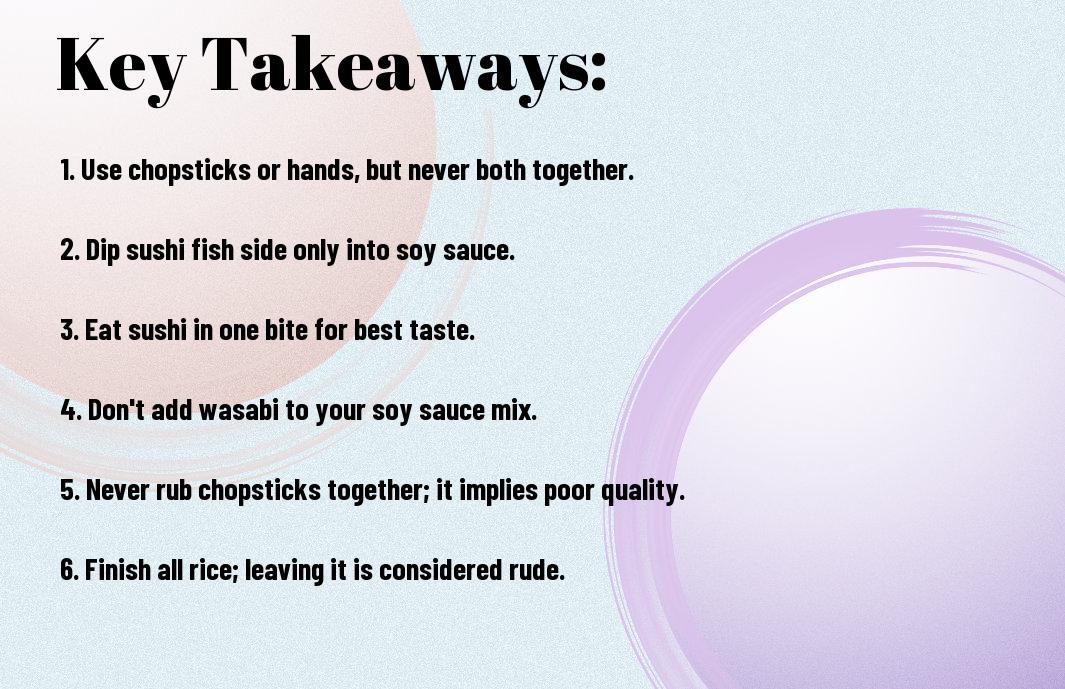
Hence, adhering to sushi etiquette not only enhances your dining experience but also shows respect for this traditional cuisine. By following the do’s and don’ts—such as using your hands for nigiri, avoiding excessive soy sauce, and enjoying sushi in one bite—you can enjoy sushi as intended. Your understanding of these practices helps you appreciate the artistry behind each dish, ensuring a more authentic and enjoyable sushi experience. So, the next time you savor sushi, apply these guidelines to elevate your meal and immerse yourself in the culture that surrounds it.
Q: What is the proper way to eat sushi with your hands?
A: While it is perfectly acceptable to eat sushi with your hands, there are some guidelines to follow. When picking up nigiri, gently grasp it between your thumb and forefinger. It’s important to avoid squeezing too hard to prevent damaging the fish or the rice. If you wish to dip your sushi in soy sauce, do so by dipping the fish side, not the rice side, to avoid overwhelming the rice’s flavor and causing it to fall apart.
Q: Is it appropriate to mix wasabi into my soy sauce?
A: Mixing wasabi into soy sauce is generally frowned upon in traditional sushi etiquette. Instead of combining the two, you should apply a small amount of wasabi directly onto the sushi piece, if necessary, or enjoy it as is. Using wasabi this way allows you to appreciate the chef’s careful preparation and the intended balance of flavors in the dish.
Q: Should I eat sushi in one bite or can I take my time?
A: Ideally, sushi should be eaten in one bite to fully appreciate its flavors and textures. However, if a piece is too large, it is acceptable to take a small bite. It’s best to ensure that you do not leave behind any portion of the sushi, as this indicates that you didn’t find it enjoyable. Savoring the sushi helps to honor the craftsmanship and effort that went into its creation.