There’s a unique dining experience awaiting you at an omakase table, where you relinquish control to the chef and embrace the artistry of sushi preparation. To fully appreciate this culinary journey, it’s important to understand the key etiquette that enhances both your experience and the chef’s. From how to interact with the chef to the appropriate way to savor each piece, these guidelines will help you navigate the delicate balance of respect and enjoyment in this traditional setting.
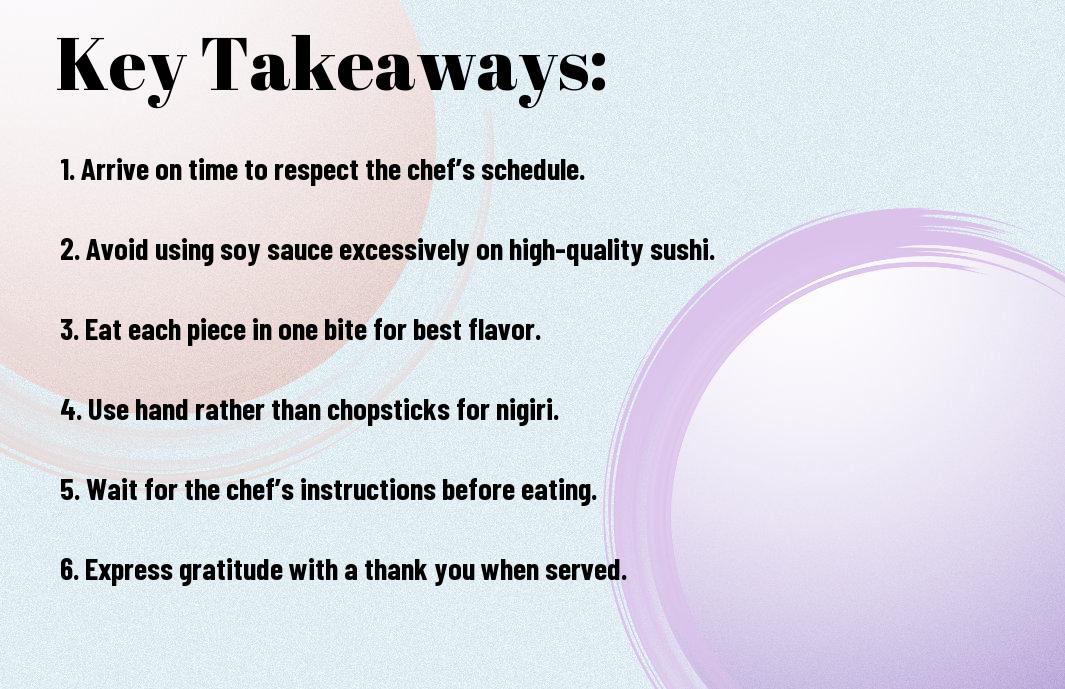
Key Takeaways:
- Dining Pace: Enjoy the experience at a comfortable pace, as the chef will serve dishes to complement the flow of your meal.
- Chopstick Usage: Use chopsticks properly and avoid sticking them upright in rice, as this symbolizes death in Japanese culture.
- Taste Order: Savor the sushi in the order presented, and appreciate each piece as a unique creation from the chef.
- Communication: Engage with the chef if comfortable, as they appreciate feedback and interaction, enhancing your dining experience.
- Finishing Entire Dish: It’s polite to finish each piece of sushi, respecting the craftsmanship and ingredients used.
Understanding Omakase
Your journey into the world of sushi starts with understanding omakase, which translates to “I leave it up to you.” In this dining experience, the chef selects a series of dishes, showcasing the freshest ingredients and their culinary expertise. Embrace the adventure of tasting unique flavors and textures as you savor each carefully curated course. For insightful tips from some of America’s finest chefs, check out these 14 Pro Sushi Tips From America’s Top Omakase Chefs.
Definition of Omakase
Definition: Omakase is a style of dining where the chef prepares a meal based on the ingredients of the day, allowing you to experience the freshest and most seasonal offerings. This approach emphasizes trust in the chef’s expertise and allows for an intimate connection between you and the culinary artistry.
History and Cultural Significance
About: Omakase has deep roots in Japanese culture, evolving from the traditional sushi bars of Tokyo. The practice emphasizes seasonality, craftsmanship, and the relationship between the chef and diners. This cultural experience enriches your understanding of Japanese cuisine and showcases the artistry involved in sushi-making.
For instance, as you sit at the sushi bar, each dish served reflects the chef’s skill and the availability of fresh ingredients. The intimate setting fosters a bond between you and the chef, who learns your preferences while delighting you with an array of flavors. This connection amplifies the overall experience and artfully highlights the rich cultural heritage of omakase dining.
Preparing for Your Omakase Experience
Any sushi aficionado knows that an omakase experience is not just a meal; it’s an art form. Before diving in, familiarize yourself with the process by checking out How to Eat Omakase: A Complete Guide. Understanding the flow and etiquette will enhance your enjoyment and appreciation of the chef’s culinary mastery.
Choosing the Right Restaurant
With many options available, selecting the right restaurant for your omakase experience is important. Look for establishments that focus on high-quality, seasonal ingredients and have skilled chefs who are passionate about their craft. Reading reviews and seeking recommendations will help you find a venue that delivers an unforgettable meal.
Reservation and Arrival Tips
On your journey to the perfect omakase, making a reservation is often the first step. Be sure to:
- Book your table well in advance, especially at popular spots.
- Inform the restaurant of any dietary restrictions or allergies.
- Arrive at least 15 minutes early to relax and orient yourself.
This preparation sets the stage for an impressive dining experience.
It’s important to approach your reservation and arrival with mindfulness. Being punctual not only shows respect for the chef and the dining experience but also allows you to settle in and soak up the ambiance. Consider these additional tips:
- Dress appropriately for the restaurant’s vibe.
- Turn off your phone or put it in silent mode to avoid distractions.
- Engage with your chef; they appreciate guests who show interest in their craft.
This will contribute to a more immersive and enjoyable experience.
Seating Etiquette
All diners should be aware that seating etiquette at an omakase table can enhance your overall dining experience. When you arrive, wait for the host or chef to guide you to your seat, as this demonstrates respect for their process. Typically, the most honored position is at the center, while other seats are assigned based on the flow of service and interaction between diners and the chef.
The Importance of Seating Arrangement
Below the surface, the seating arrangement at an omakase table is thoughtfully designed to create a harmonious atmosphere for both the chef and the diners. Your place can influence your interaction with the culinary experience, while also allowing you to enjoy the interplay of flavors and presentation as they unfold.
Communicating with the Chef
With the chef directly in front of you, this is an opportunity to engage and share your preferences. A simple acknowledgment and a polite greeting can set a positive tone for the evening. Make sure to express any dietary restrictions or preferences early in the meal, as this can help the chef tailor the experience to your taste.
Considering that the omakase experience relies heavily on the relationship between the chef and diners, effective communication will enrich your evening. Feel free to ask questions about the dishes, such as their origins or preparation methods, to deepen your appreciation. However, be mindful of the chef’s pace and avoid interrupting the flow of service, as this ensures that everyone enjoys the experience fully.
Dining Etiquette at the Omakase Table
After being seated at the omakase table, it’s important to immerse yourself in the experience with appreciation and respect. Engage with the chef and staff, as they are dedicated to curating a memorable dining experience for you. Maintain a sense of curiosity and gratitude, as this journey is as much about the artistry of the food as it is about the flavors. Keep your conversations pleasant and avoid distractions; this allows both you and the chef to focus on the exquisite creations being presented.
Accepting the Chef’s Recommendations
About embracing the omakase experience means trusting the chef’s expertise and accepting their recommendations. By allowing the chef to guide your meal, you commence on a culinary adventure that highlights the best seasonal ingredients and their unique preparations. Relinquish control and remain open-minded; this approach not only enhances your enjoyment but also shows appreciation for the chef’s artistry and skills.
Proper Use of Chopsticks and Condiments
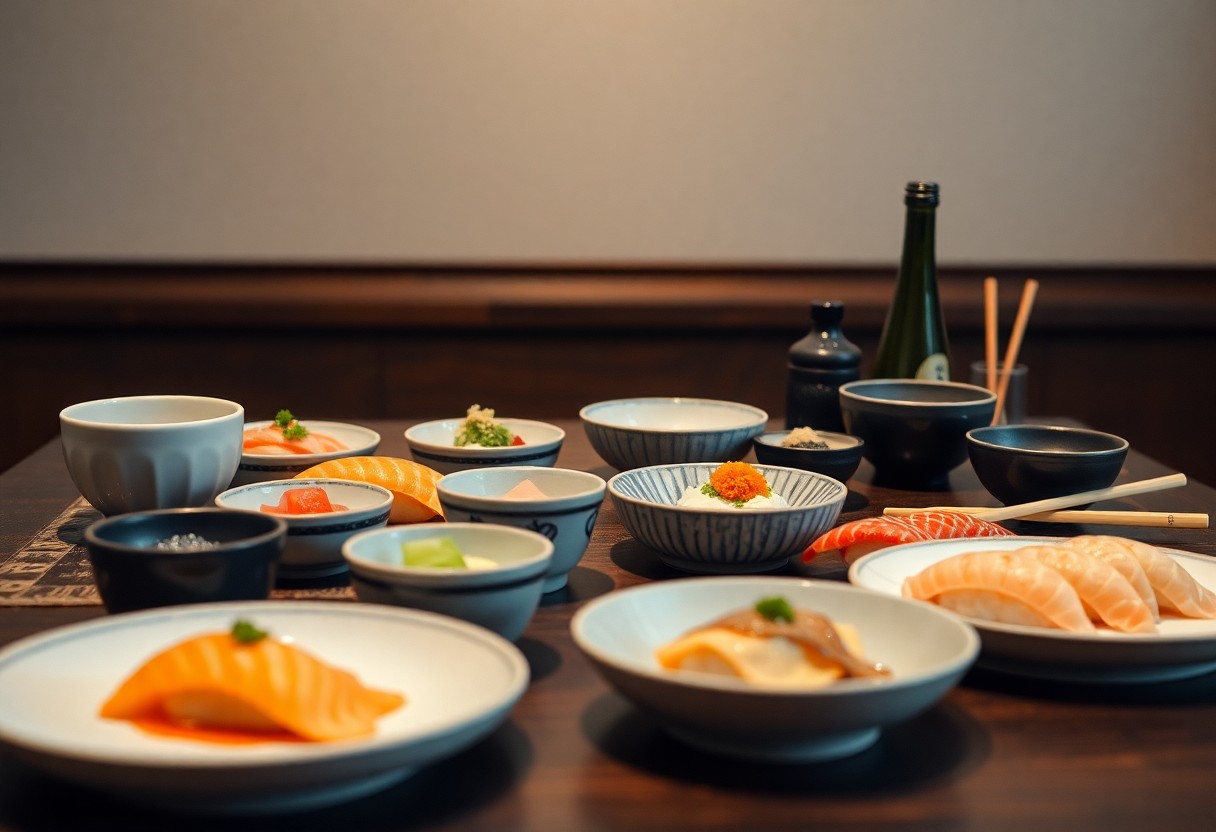
Omakase dining genuinely encourages respectful use of chopsticks and condiments. You should use chopsticks to pick up sushi with care, avoiding piercing or mashing delicate pieces. In the matter of condiments like soy sauce or wasabi, the general practice is to apply them sparingly, allowing the natural flavors of the fish to shine. This not only helps you savor the dish fully but also demonstrates a respectful attitude toward the chef’s preparation.
Recommendations for proper use of chopsticks and condiments include holding the chopsticks towards their ends for a precise grip, ensuring you can pick up each piece easily. Dip the fish side into soy sauce rather than soaking the rice, as this preserves the integrity of the sushi. If using wasabi, a small amount can be gently placed on top of the fish rather than mixing it into the soy sauce, to honor the chef’s intention. Following these guidelines enhances your dining experience and upholds the etiquette of omakase.
Tipping and Payment Practices
For sushi aficionados, navigating tipping and payment at an omakase table is imperative to a well-rounded experience. It’s advisable to familiarize yourself with Sushi Etiquette: How To Dine Omakase Properly to ensure you respect local customs, especially regarding service charges and tips.
Understanding Service Charges
An omakase meal often includes a service charge embedded in the bill, reflecting the chef’s artistry and dedication. This can vary by establishment, so checking your receipt is smart to discern any additional costs.
Appropriate Tipping Guidelines
Service in a sushi omakase setting can differ significantly from Western norms, making it important to adjust your tipping habits accordingly. Consider that the personal touch provided by the chef is integral to your experience, and showing appreciation enhances the overall dining atmosphere.
Guidelines suggest that if your omakase meal includes a service charge, further tipping may not be necessary, but rounding up or adding a little extra can express your gratitude. In contrast, if no service charge is included, tipping around 10-15% of your total bill is appropriate. Always reflect on the quality of service and remember that chefs treasure your thoughtful acknowledgment.
Common Misconceptions About Sushi Etiquette
Keep in mind that sushi etiquette varies, and many misconceptions could affect your experience at an omakase table. For example, some people think it’s disrespectful to ask questions about the dishes, while in fact, it shows your genuine interest in the chef’s craft. Furthermore, many believe that you must only use chopsticks, but hand-eating is perfectly acceptable for sushi, especially nigiri. Understanding these nuances will enhance both your sushi experience and your interaction with the chef.
Myths Debunked
Etiquette surrounding sushi can often be tangled in myths. One common misunderstanding is that it’s rude to leave food on your plate. In reality, leaving a small amount can demonstrate that you’ve enjoyed the meal without feeling pressured to finish every last bite. Also, some patrons believe that tipping is frowned upon at omakase tables, yet it is typically embraced as a gesture of appreciation for exceptional service and skill.
Cultural Differences in Sushi Etiquette
After exploring the myths, it’s important to recognize that sushi etiquette varies significantly across cultures. In Japan, traditional practices may differ from those of Western countries, influencing everything from how you taste the food to how you interact with the chef. For example, in Japan, you might observe that diners avoid using soy sauce excessively as this can overpower the nuanced flavors of fresh fish.
Common cultural differences can lead to misunderstandings. In certain regions, the way you eat sushi can reflect your respect for the craft. For instance, in Japan, you should not mix wasabi into your soy sauce, as this is seen as a lack of appreciation for the chef’s flavor pairing. On the other hand, in Western sushi restaurants, such practices might not hold the same weight. Being aware of these variations can enhance your sushi dining experience and help you communicate effectively with your chef.
Final Words
So, as you navigate the experience of dining at an omakase table, your adherence to sushi etiquette enhances not only your enjoyment but also the overall atmosphere. Respect the chef’s creations by sampling each piece as it is served, using your hands when appropriate, and refraining from excessive conversation. By being mindful of your actions and showing appreciation for the artistry involved, you contribute to a respectful dining experience that honors both the chef and the tradition of omakase sushi.
FAQ
Q: What is the proper way to eat sushi at an omakase table?
A: When enjoying sushi at an omakase table, it’s best to eat each piece in one bite. This allows you to fully appreciate the balance of flavors and textures. If the piece is too large, you can take a small bite to make it manageable. It’s also polite to avoid using too much soy sauce since the chef typically seasons each piece to perfection.
Q: Is it acceptable to mix wasabi with soy sauce during an omakase experience?
A: It is generally not advisable to mix wasabi into your soy sauce at an omakase table. Skilled chefs often prepare sushi with the right amount of wasabi already incorporated. If you prefer extra wasabi, a small dab placed on top of the sushi piece before eating is more acceptable than mixing it with soy sauce.
Q: Can I request modifications to the sushi served during an omakase meal?
A: While you can politely express food preferences or allergies before the meal starts, requesting modifications to the dishes themselves is not typical in an omakase dining experience. The concept of omakase relies on the chef’s expertise and vision for the meal, so it’s best to embrace the offerings as presented.
Q: How should I behave when seated at an omakase table?
A: At an omakase table, maintaining a respectful demeanor is key. Speak softly, avoid using loud phones, and engage in polite conversation with fellow diners and the chef. If you’re uncertain or have questions, feel free to ask them as they come, but always be considerate of the chef’s pace and focus.
Q: What should I do with the remaining sushi pieces at the end of the meal?
A: If you have any sushi pieces left at the end of your omakase meal, it’s polite to leave them on your plate. If you wish to take leftovers home, kindly ask the staff beforehand if that is an option. Generally, omakase is designed to be enjoyed in one sitting, so it’s best to savor each piece while it’s fresh, rather than focusing on taking any home.