Just as you savor the delightful combinations of flavors and textures in sushi, it’s vital to understand the etiquette surrounding dipping sauces. Your approach to dipping not only influences your experience but can also reflect your respect for the chef’s craftsmanship. In this guide, you’ll learn the proper techniques for enjoying sushi with soy sauce and other condiments without unintentionally offending the chef or altering the intended taste. Elevate your sushi experience by mastering these simple yet effective dipping practices.
Key Takeaways:
- Respect the sauce: Use soy sauce sparingly and avoid soaking your sushi, as this can mask the chef’s flavors.
- Position matters: Dip the fish side of nigiri into the soy sauce rather than the rice side to prevent it from falling apart.
- Skip the wasabi: Don’t add wasabi directly to your soy sauce; instead, use it sparingly directly on the fish to honor the chef’s preferred balance.
- Choose your sushi type: Different types of sushi may come with their own recommended dipping techniques, so be observant and adapt accordingly.
- Mind your etiquette: Engaging in polite conversation and expressing appreciation can enhance the dining experience and show respect to the chef.
Understanding Sushi Etiquette
For anyone enjoying sushi, adhering to proper etiquette can enhance your dining experience while showing respect for the art behind it. Understanding the subtleties of sushi etiquette, such as how to properly dip your sushi, helps you appreciate the chef’s craft and the traditions that come with it. Being mindful of these customs allows you to enjoy your meal fully, while also ensuring that your actions do not unintentionally offend the chef.
The Role of the Chef
Role of the sushi chef goes beyond just preparing food; they create a harmonious experience that balances taste, texture, and presentation. Their years of training and dedication instill a deep respect for the ingredients and culinary traditions. By following proper sushi etiquette, you honor their craftsmanship and acknowledge the effort that goes into each dish.
Cultural Significance of Dipping
The cultural significance of dipping your sushi in soy sauce reflects the delicate balance of flavors in Japanese cuisine.
It enhances the overall taste experience of sushi, allowing you to savor the fresh fish while also considering the chef’s intended flavors. However, the manner in which you dip your sushi matters, as it demonstrates your appreciation for the meticulous preparation done by the chef. You should dip the fish side, not the rice, to avoid overwhelming it with soy sauce and to maintain the integrity of the dish. This small act embodies respect for both the food and the artist behind it.
Types of Sushi and Their Dipping Protocols
Even seasoned sushi enthusiasts may not know the proper dipping protocols for the various types of sushi. Understanding these nuances can enhance your experience and show respect for the chef. Here’s a quick guide to ensure you dip your sushi correctly:
| Type of Sushi | Dipping Protocol |
|---|---|
| Nigiri | Dip the fish, not the rice |
| Maki | Wrap the roll and dip |
| Sashimi | Use a small amount of soy sauce |
| Temaki | Dip the tip of the cone |
| Uramaki | Dip the rice side lightly |
After understanding these basic protocols, you can fully appreciate the artistry behind each type of sushi while basking in the chef’s expertise.
Nigiri
Beside being a favorite among many sushi lovers, nigiri represents a beautiful balance of rice and fish. When dipping, focus on the fish piece rather than the rice to maintain the integrity of the sushi. This practice not only preserves the flavor but also reflects your respect for the chef’s craftsmanship.
Maki
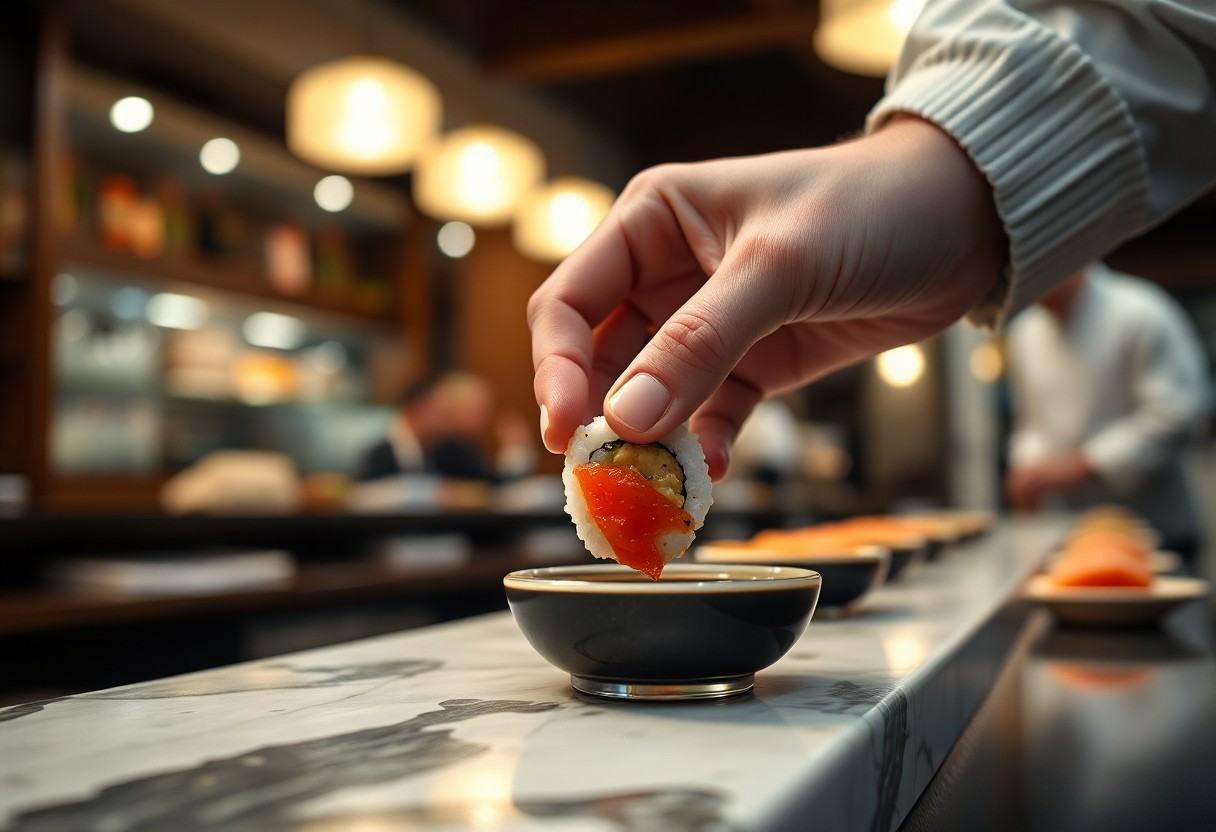
Any sushi lover will tell you that maki rolls, or sushi rolls, are a delightful option thanks to their variety and textures. When dipping, be sure to wrap your fingers around the roll and dip it gently to avoid disassembling the roll while also ensuring the flavors meld seamlessly.
Maki comes in different styles, with uramaki being a popular choice among sushi enthusiasts. Uramaki features rice on the outside and is often filled with delightful ingredients like fresh fish and vegetables. You can experiment with various dipping techniques; however, treating it delicately will elevate your dining experience. Enjoy your maki sushi with a light dip to relish the flavors without overwhelming them.
The Right Condiments: Soy Sauce and Beyond
After mastering the art of sushi, it’s time to explore the condiments that elevate your experience. While soy sauce often takes center stage, understanding how to complement your sushi with the right dipping options can enhance both flavor and cultural appreciation. By choosing your condiments wisely, you can show respect for the chef and enjoy each bite to its fullest.
Choosing the Right Soy Sauce
Condiments play a vital role in enhancing your sushi experience. When selecting soy sauce, opt for high-quality, traditionally brewed options that have a rich, umami flavor. Dark soy sauce offers a deeper taste, while light soy sauce adds a delicate saltiness. Be mindful of how much you use; a light dip is often all that’s needed to enhance your sushi without overwhelming its natural flavors.
Other Dipping Options
Other dipping options can also add unique flavors to your sushi experience. Wasabi, for instance, provides a spicy kick that can beautifully complement the subtle flavors of fish. Additionally, ponzu sauce—a citrus-based sauce—adds a refreshing twist to your sushi. You may also consider dipping your rolls in a hint of sesame oil to add richness to your palate.
Considering other dipping options can transform your sushi enjoyment. Each condiment offers distinct flavors that can highlight different elements of your sushi, allowing for endless experimentation. You might also want to try dipping in a mixture of soy sauce and wasabi for a balance of saltiness and spice. Don’t shy away from exploring different textures and combinations to find what resonates with your taste buds, while still honoring the chef’s craft.
Techniques for Dipping Sushi
Many sushi lovers may find themselves unsure about the proper techniques for dipping sushi without offending the chef. Understanding the subtle nuances of Traditional Sushi Etiquette – How to Eat Sushi will enhance your experience. Proper dipping not only respects the culinary art but also elevates the flavors. Follow these guidelines to show appreciation for the craft of sushi making.
The Proper Way to Dip Nigiri
Beside the vinegared rice, the sushi chef painstakingly prepares nigiri with a balance of flavors. When dipping nigiri, hold it gently by the sides and turn it so the fish side faces the soy sauce. This prevents the rice from soaking up too much sauce, maintaining its integrity while allowing you to savor the combination of flavors crafted by the chef.
Dipping Maki Without Ruining the Roll
Between sushi enthusiasts, dipping maki can be a challenge because the delicate rice and fillings can easily topple or disarray. To ensure your roll stays intact, hold the maki with your fingers, dip only the outer edge into soy sauce, and enjoy it in one bite. This method allows for a balanced taste without compromising the roll’s structure.
Another technique to maintain the integrity of your maki involves using chopsticks for dipping. Gently pick up the roll and dip the exposed edge, ensuring that the fillings remain untouched by the sauce. By using this approach, you can appreciate each component of the sushi while honoring the effort put into its preparation. This respectful method can enhance your overall dining experience.
Common Mistakes to Avoid
Unlike what some might think, correctly enjoying sushi involves more than just taking a bite. Common mistakes include over-dipping, using an excess of wasabi, and failing to respect the artistry behind the dish. To show your appreciation for the chef’s work, be mindful of how you interact with the sushi, allowing for a more authentic and respectful experience.
Over-Dipping
Above all, avoid the temptation to submerge your sushi in soy sauce. A simple dip is sufficient to enhance its flavors. Over-dipping can overwhelm the delicate balance created by the chef, masking the unique taste profiles of the ingredients.
Using Too Much Wasabi
One of the most common pitfalls is slathering excessive amounts of wasabi on your sushi. This not only makes the experience harsh but also detracts from the nuanced flavors intended by the chef.
Indeed, a small dab of wasabi serves to complement the fish, not overpower it. A proper technique involves adding just a touch to your bite, allowing the natural flavors to shine through. Overindulging in wasabi can result in a challenging experience, detracting from the overall enjoyment of the meal. Aim for balance, and you’ll enhance your sushi without overwhelming your palate.
Respecting the Presentation
Keep in mind that sushi is not just a meal; it’s an art form. The chef invests considerable effort in arranging each piece with the intention of delighting your senses. By respecting the presentation, you honor their creativity, enhancing your dining experience and maintaining a harmonious relationship with the chef. A beautiful presentation signifies the care and skill that goes into crafting each dish, and it’s necessary to appreciate it before indulging.
Understanding Chef Intentions
Around each plate of sushi lies the chef’s vision, where every element serves a purpose. The color combinations, textures, and arrangements reflect the season, the fish used, and the chef’s personal style. Being aware of these intentions can help you approach the meal with an open mindset, allowing you to appreciate the thoughtfulness behind the artistry.
Enjoying Sushi as an Art Form
Among the many culinary delights, sushi stands out as a beautifully crafted experience. Each piece is designed not just for taste but also for visual pleasure, blending form and function. By treating sushi as an art form, you open yourself up to a deeper appreciation of the flavors and techniques involved in its creation.
Also, embracing sushi as an art form encourages you to savor each bite slowly and consciously. Instead of rushing through your meal, take a moment to admire the intricate details and flavors, allowing the artistry to resonate with you. This approach transforms your dining experience into a celebration of craftsmanship, fostering a profound respect for the skill and tradition behind every carefully constructed piece of sushi.
Summing up
Upon reflecting, mastering the art of dipping sushi is vital to fully enjoying this culinary experience while showing respect to the chef. You should always dip your sushi lightly to maintain the balance of flavors, and avoid overwhelming the fish with soy sauce. By following proper etiquette, you not only enhance your own dining experience but also honor the chef’s craftsmanship. For more insights on sushi etiquette, check out the rules of sushi.
FAQ
Q: Why is it important to dip sushi in soy sauce the right way?
A: Dipping sushi correctly honors the craftsmanship of the chef. It helps maintain the balance of flavors and supports the integrity of the dish. By using the proper technique, you take care to avoid overwhelming the subtle tastes of fresh fish and rice. Also, this method helps to prevent sogginess in the rice, preserving the overall texture of the sushi.
Q: What is the best way to dip sushi so as not to offend the chef?
A: The best way to dip sushi is by tilting the piece slightly and dipping only the fish part into the soy sauce rather than the rice. This shows appreciation for the chef’s skill while preventing the dilution of the rice’s flavor. Additionally, if there are garnishes like wasabi or pickled ginger, use them sparingly to enhance the dish rather than overpower it.
Q: Are there any common mistakes to avoid when dipping sushi?
A: Yes, common mistakes include dipping sushi entirely in soy sauce or using excessive amounts. This can mask the delicate flavors intended by the chef. Another mistake is adding soy sauce to the rice or mixing wasabi into your soy sauce; many chefs consider this disrespectful as they prepare sushi to be enjoyed with the right balance of flavors. Keep it simple and subtle for a more respectful dining experience.