You may think you know how to enjoy sushi, but dining in Japan involves nuances that go beyond the menu. Understanding the unspoken rules of sushi etiquette not only enhances your dining experience but also shows respect for this esteemed culinary tradition. From how to use chopsticks to the proper way to appreciate the flavors, knowing these guidelines will elevate your sushi meal and help you connect with the culture. Dive into this guide to ensure your sushi experience in Japan is authentic and enjoyable.
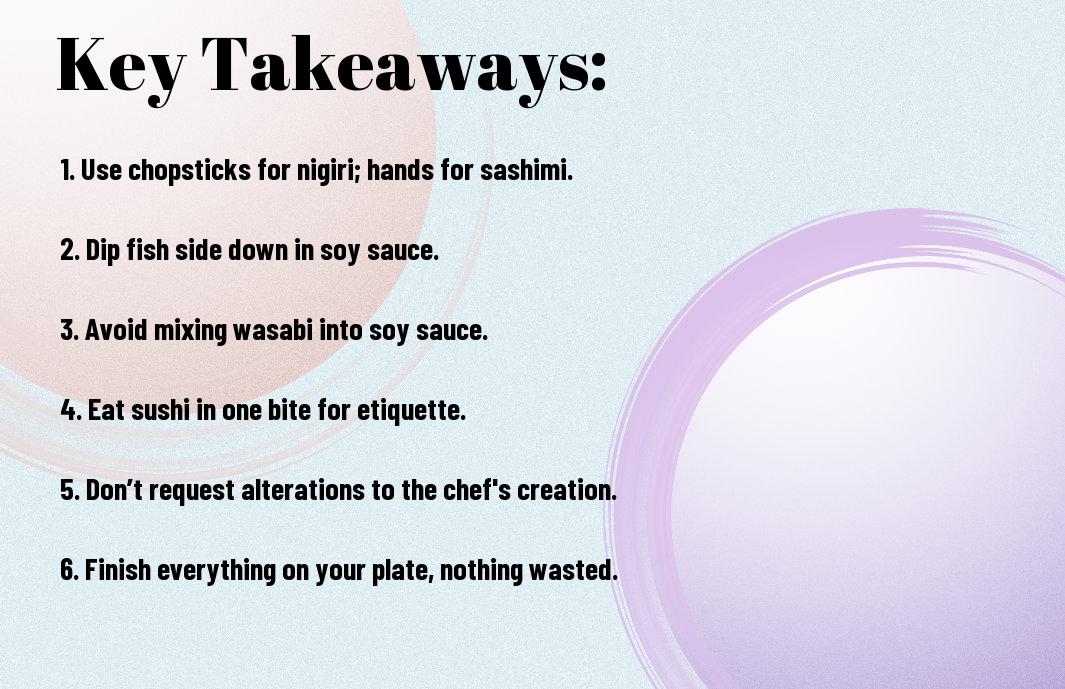
Key Takeaways:
- Etiquette: Always be polite and follow local customs when dining.
- Chopsticks: Avoid sticking chopsticks upright in your rice, as it resembles a funeral rite.
- Dipping Sauce: Dip the fish side of the sushi into soy sauce, not the rice side, to prevent it from soaking too much sauce.
- Wasabi Use: Use wasabi sparingly; it’s often already included by the chef for balance.
- Eating Order: Savor sushi from lighter flavors to stronger ones for the best tasting experience.
Understanding Sushi Culture
For anyone exploring Japan, understanding sushi culture is important. This culinary art form goes beyond merely eating; it encompasses tradition, etiquette, and a deep appreciation for the craftsmanship that goes into each piece. It is vital to grasp the importance of fresh ingredients, presentation, and the rituals surrounding sushi consumption to fully savor the experience.
Historical Context
Beside its contemporary popularity, sushi has a rich history that dates back centuries. Originating as a preservation method for fish, sushi evolved from fermented rice to the various styles we see today. The transformation reflects Japan’s changing palate and cultural influences, making sushi a mirror of the nation’s culinary evolution.
Types of Sushi
By stepping into the types of sushi, you can enhance your appreciation for this beloved dish. Sushi comes in numerous forms, each offering a unique flavor profile and presentation. Here’s a quick overview of popular types:
| Type | Description |
| Nigiri | Hand-formed rice topped with fish or seafood. |
| Maki | Rolls of rice and fillings wrapped in seaweed. |
| Sashimi | Thinly sliced raw fish, served without rice. |
| Temaki | Hand-rolled sushi cones filled with rice and ingredients. |
| Uramaki | Inside-out rolls with rice on the outside. |
Understanding these types ensures you can choose dishes that suit your palate when dining out. Each type brings something unique to the table, creating an expansive sushi journey waiting for you to explore. Here are some highlights:
- Nigiri showcases the quality of the fish used.
- Maki is often colorful and visually appealing.
- Sashimi emphasizes the fresh taste of the fish alone.
- Temaki allows for a fun, hands-on eating experience.
- Uramaki offers a contrast in textures and flavors.
Recognizing the various types of sushi enhances your dining experience, allowing you to savor each creation fully.
Traditional Etiquette
Assuming you want to fully immerse yourself in the sushi experience in Japan, understanding traditional etiquette is vital. You can refer to the 10 Unique Japanese Eating Etiquette Rules to enhance your dining experience. Proper respect for sushi chefs and the food prepared is deeply ingrained in Japanese culture, making it beneficial to familiarize yourself with these customs.
How to Use Chopsticks
Across various dining settings, using chopsticks correctly is important. Hold them near the top, avoid pointing them at others, and never use them to spear food. Additionally, do not stick chopsticks upright in rice, as this resembles a funeral practice in Japan. Instead, place them on the holder when not in use.
Proper Ways to Dine at a Sushi Bar
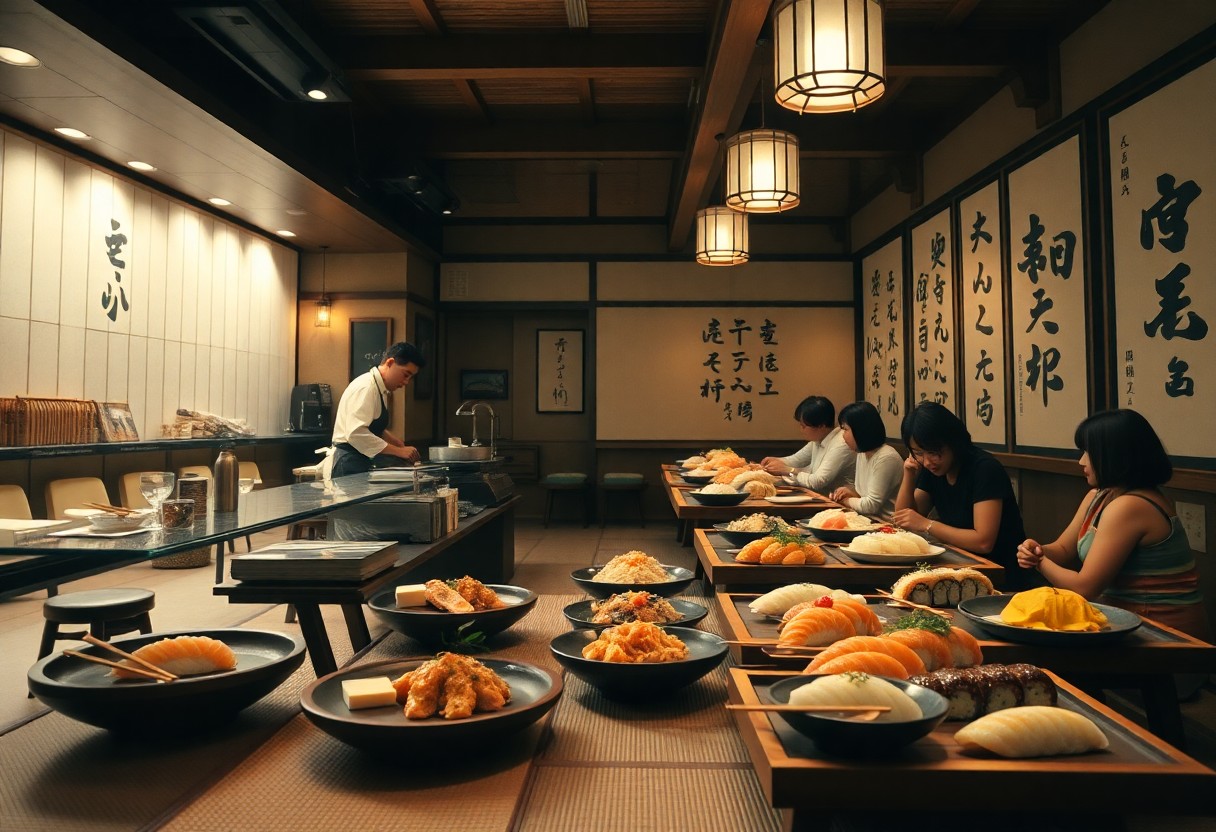
Between the chef’s counter and your plate, the way you engage in the sushi bar experience can significantly impact your meal. Sit at the counter when possible, as this allows direct interaction with the sushi chef, who may prepare special items just for you. Taking a moment to appreciate the craftsmanship before enjoying each piece reflects your respect for their skill.
In fact, many sushi chefs take pride in hand-picking fish and preparing sushi to showcase their techniques. Engaging in conversation, expressing gratitude, and even trying the sushi in the order recommended shows your appreciation for their artistry. Observing these nuances not only enhances your experience but also fosters a warm connection with the chef, enriching your sushi journey in Japan.
Ordering Sushi
To order sushi in Japan, it’s best to approach the counter and greet the chef politely. You may want to follow a traditional method, perhaps by using simple phrases like “Omakase,” which means you’d like the chef’s selection. For further insights, check out A cool guide on sushi etiquette : r/coolguides to enrich your understanding of the dining experience.
Communicating with Chefs
Against common belief, you don’t have to know Japanese to communicate with sushi chefs. A warm smile and pointing at the menu can work wonders. Most chefs will appreciate your effort, even if it’s minimal. Express your preferences or dietary restrictions simply, while being open to suggestions.
Choosing the Right Variety
Around sushi restaurants, you’ll find a wide variety of options, from nigiri to sashimi and rolls. To make an informed choice, consider what flavors and textures you prefer from seafood and ingredients. If you’re new to sushi, start with milder flavors like salmon or shrimp and gradually explore stronger tastes like mackerel or sea urchin.
Also, keep in mind that certain sushi types are seasonal. Engaging with the chef about what’s best during your visit can enhance your experience; they can recommend the freshest options available. Taking a moment to ask can lead to discovering unique flavors that are often overlooked.
Tasting and Appreciating Sushi
Not only is sushi a culinary delight, but it’s also an experience for your senses. Each bite speaks to the harmony of flavors, textures, and techniques that define this Japanese cuisine. To truly appreciate sushi, take your time and savor each piece, allowing the freshness and craftsmanship to shine through. Engaging with your meal at this level fosters a deeper connection to the artistry behind it and enhances your overall dining experience.
Balancing Flavors
Behind every piece of sushi lies a delicate balance of flavors. This interplay of sweet, salty, sour, and umami is intentional, designed to elevate your tasting experience. Each ingredient, from the fish to the rice, complements one another in a way that creates a harmonious dish. As you eat, focus on how these flavors work together and appreciate the skill involved in achieving this balance.
The Role of Soy Sauce and Wasabi
Wasabi plays an crucial role in the sushi experience, offering a fiery kick that enhances the flavor of the fish. Striking the right balance of wasabi can elevate the sushi’s taste without overpowering it. The same goes for soy sauce; it’s a seasoning tool rather than a dip. Your goal is to enhance the flavor of the sushi, so use it sparingly to respect the chef’s artistry and the quality of the ingredients.
To best enjoy soy sauce and wasabi, apply a small amount of wasabi directly onto the fish rather than mixing it into the soy sauce. This preserves the integrity of the sushi and allows you to appreciate the carefully crafted flavors. When dipping, make sure to immerse only the fish side into the soy sauce, avoiding the rice. This not only protects the rice from becoming soggy but also lets you fully enjoy the full experience without overpowering the delicate taste of your sushi.
Common Mistakes to Avoid
Unlike in Western countries, dining etiquette in Japan holds significant importance. One common mistake is using your hands to eat sushi instead of chopsticks; while it’s acceptable for nigiri, be mindful of presentation. Additionally, avoid placing soy sauce on rice, as this can overwhelm the delicate flavors. Lastly, skipping the ginger is a misstep, as it’s intended to cleanse your palate between different types of sushi.
Do’s and Don’ts
An effective way to enjoy sushi in Japan is to follow a few simple do’s and don’ts. Do try a variety of sushi types to appreciate the artistry involved. Don’t overwhelm your taste buds with excessive soy sauce; a dip is sufficient. Do acknowledge the sushi chef with a nod or “Arigato” when receiving your meal, as this shows respect for their craft.
Misconceptions About Sushi
Avoid the common misunderstandings about sushi, such as believing that sushi is merely raw fish. Sushi encompasses a variety of preparations, including cooked ingredients and vegetarian options, presenting a wide culinary experience.
In fact, many people think sushi is limited to raw seafood alone, overlooking the range of flavors and textures available. Cooked items like eel and shrimp are just as popular, and vegetarian options like cucumber or avocado rolls are widely enjoyed. Additionally, sushi can differ greatly between regions, offering unique local specialties that go beyond traditional raw fish. Embracing the diversity of sushi will enhance your dining experience in Japan.
Summing up
With these considerations in mind, you can enhance your sushi dining experience in Japan. By adhering to the unspoken rules—such as using your hands for certain types of sushi, avoiding soy sauce on particular pieces, and understanding the etiquette of ordering—you show respect for the culture and its culinary traditions. This knowledge will not only make your meal enjoyable but also foster a deeper connection to Japan’s rich dining customs, ensuring that you appreciate every bite fully.
FAQ about The Unspoken Rules of Eating Sushi in Japan
Q: What is the proper way to eat sushi in Japan?
A: When dining on sushi, many patrons prefer to eat each piece with their hands. However, using chopsticks is also acceptable, particularly for nigiri sushi. It’s important to take the piece of sushi in one bite, enjoying the combination of flavors as intended by the chef. Dipping the sushi into soy sauce should be done carefully, preferably by dipping only the fish side to prevent the rice from soaking up too much sauce.
Q: Is it appropriate to mix wasabi with soy sauce?
A: Mixing wasabi into soy sauce is generally discouraged in Japan. Chefs usually prepare sushi with the right amount of wasabi already placed between the fish and the rice. If you feel the need for extra wasabi, it’s best to apply it directly on the sushi piece rather than blending it with soy sauce. This respects the chef’s artistry and the intended flavor balance.
Q: Can I ask for modifications to my sushi order?
A: While it’s not uncommon for diners in Western countries to request specific modifications, it’s typically frowned upon in Japan, especially at traditional sushi counters. Chefs take great pride in their craft, and altering a dish might be seen as disrespectful. If you have dietary restrictions or allergies, it’s advisable to explain these needs politely rather than asking for changes to the sushi itself.
Q: Should I finish all the rice on my plate?
A: In Japan, finishing the rice on your plate is a sign of appreciation for the meal, but it’s important to understand that sushi is often served in bites. Therefore, it’s acceptable to leave some rice behind if you feel full. However, avoid leaving large amounts of food uneaten, as this can be perceived as wasteful. Striking a balance between enjoying your meal and being mindful of portion sizes is key.
Q: Is it expected to tip in sushi restaurants in Japan?
A: Tipping is not a customary practice in Japan and can even be considered rude in some situations. Service charges are typically included in the meal price, and excellent service is expected as part of the dining experience. If you want to express gratitude, a polite thank you or a genuine compliment to the chef can convey your appreciation without the need for a monetary tip.