There’s a vibrant sushi landscape waiting to be explored, where sushi chains offer convenience, consistency, and familiarity, while local gems provide unique flavors and personalized experiences. As you navigate this delicious divide, understanding the key differences will enhance your sushi adventures. From the sourcing of ingredients to the craftsmanship behind each roll, knowing what sets chains apart from local eateries can help you make informed decisions for your next dining experience. Let’s examine what distinguishes these two sushi realms and how to choose the best option for your taste buds.
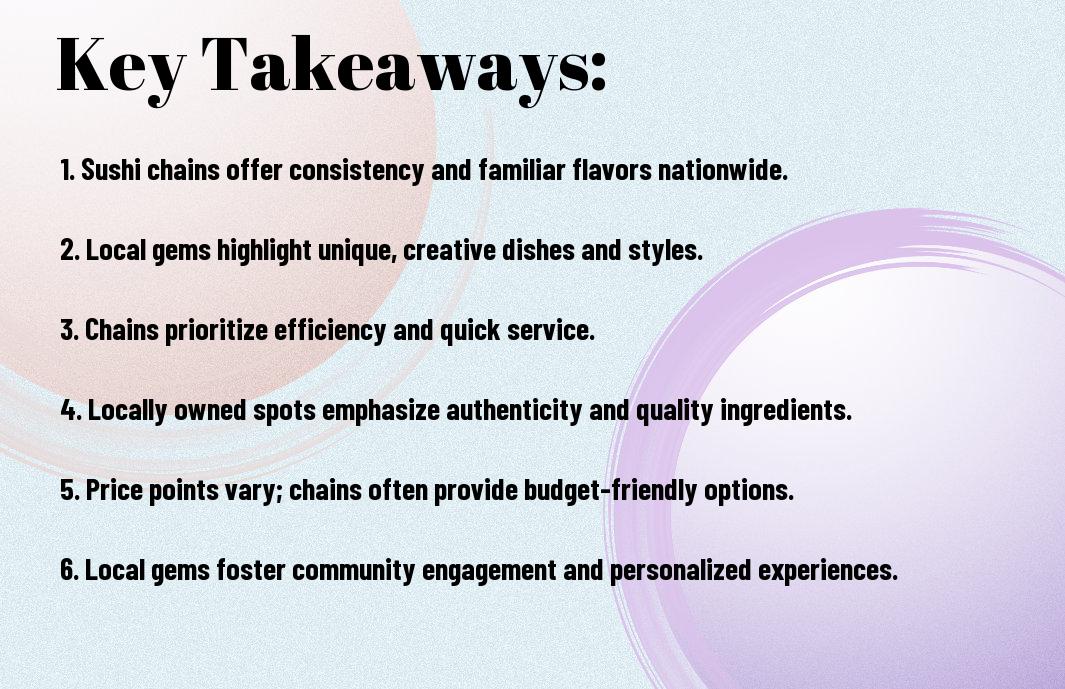
Key Takeaways:
- Sourcing Ingredients: Sushi chains often rely on mass-produced ingredients, while local gems prioritize fresh and seasonal offerings.
- Authenticity: Local sushi spots usually preserve traditional techniques and recipes, whereas chains may adapt to broader consumer preferences.
- Atmosphere: Local gems often provide a unique dining experience with personalized service, in contrast to the uniformity found in chain restaurants.
- Menu Diversity: Sushi chains may offer a standardized menu, but local gems often feature creative and unique dishes that reflect regional influences.
- Community Engagement: Local sushi establishments frequently engage with their communities, while chains focus more on brand consistency across locations.
The Rise of Sushi Chains
To understand the sushi landscape today, it’s important to recognize the emergence of sushi chains that have rapidly gained popularity. These establishments cater to the increasing demand for sushi by offering a convenient, consistent dining experience. As you explore this phenomenon, you’ll find that sushi chains focus on efficient service and broad accessibility, allowing you to enjoy sushi without compromising on quality.
Business Model and Strategy
Chains utilize a streamlined business model that emphasizes scalability and uniformity. By developing efficient supply chains and standardized processes, these establishments can maintain quality while serving large volumes. This strategy allows you to expect a familiar menu and taste regardless of the location, making sushi a more accessible dining option for many.
Standardization vs. Customization
Among the key distinctions in sushi chains is the emphasis on standardization rather than customization. This approach ensures that you receive a consistent product each time you visit, which can be particularly appealing if you enjoy specific items. However, it may limit your opportunity to explore unique flavors or dishes that come from more personalized, local sushi restaurants.
Strategy often drives the standardization seen in sushi chains, with a focus on creating a predictable experience for diners. While this means that you can find favorite dishes reliably, it may also result in a more limited selection when compared to local gems that thrive on seasonal ingredients and chef creativity. Consequently, as you consider your options, you may find that choice and individuality take a backseat in the chain experience, while reliability and convenience take center stage.
The Allure of Local Sushi Gems
You can find a delightful variety of local sushi gems that offer more than just a meal; they provide a unique dining experience. These establishments often emphasize personalization and creativity, enticing you to explore their signature rolls and seasonal offerings. To deepen your appreciation, you can Learn about All Different Types of Sushi Rolls (w/Photos), showcasing the diverse world of sushi crafted by passionate local chefs.
Unique Recipes and Techniques
Against the backdrop of mass-produced options, local sushi chefs often introduce unique recipes and techniques that reflect their cultural heritage and personal flair. Their intimate knowledge of ingredients and traditional methods allows them to craft extraordinary flavors that elevate your sushi experience.
Community Impact and Support
Above the culinary delights, local sushi spots thrive on community engagement. They often collaborate with local suppliers for fresh ingredients, which not only enhances the quality of their dishes but also strengthens local economies. This synergy creates a supportive environment where everyone benefits.
And by choosing to dine at these local gems, you play an imperative role in fostering a sense of community. Your patronage helps sustain these businesses, allowing them to continue showcasing their unique culinary contributions. Plus, you often become part of a close-knit atmosphere, making your dining experience all the more memorable. Supporting local sushi not only satisfies your cravings but also nurtures the vibrant food culture in your area.
Quality of Ingredients: Chains vs. Locals
All sushi is not created equal, and the quality of ingredients often highlights the distinction between sushi chains and local gems. Sushi chains typically rely on mass-produced ingredients, resulting in a uniform but less personalized taste. In contrast, local establishments often gather fresh, seasonal offerings from trusted suppliers, enhancing the overall flavor of your meal. For insight on how ingredient quality impacts sushi, check out The difference between Grocery Store Sushi vs Local Joint ….
Sourcing Practices
The sourcing practices employed by chains versus local sushi spots can significantly affect your dining experience. Chains may source ingredients from bulk suppliers to ensure consistency, while local eateries often prioritize relationships with local fishermen and farmers. This dedication to sourcing often means higher-quality fish and organic vegetables in your rolls.
Freshness and Authenticity
The freshness and authenticity of sushi can notably vary between chains and local gems. While sushi chains may offer convenience, you might find that local spots provide a more authentic experience, utilizing ingredients that are often freshly caught or harvested. This authenticity reflects not only in flavor but also in the overall presentation of your meal.
Due to the local suppliers’ connections and commitment to quality, your sushi experience at an independent restaurant can greatly surpass that of a chain. Locally sourced fish often arrives at restaurants daily, allowing chefs to craft dishes that celebrate the flavors of each ingredient. This focus on freshness and authenticity not only elevates the taste but also allows you to enjoy a meal that embodies the rich cultural heritage of sushi-making.
Customer Experience: Atmosphere and Service
Not every sushi experience is created equal—customer experience can vary significantly between chains and local gems. While chains often focus on efficiency, local gems prioritize creating a welcoming atmosphere, allowing you to enjoy your meal in a more relaxed environment. The service you receive can greatly influence your dining experience, as attentive staff can make you feel special and valued, enhancing the overall enjoyment of your meal.
Dining Environment
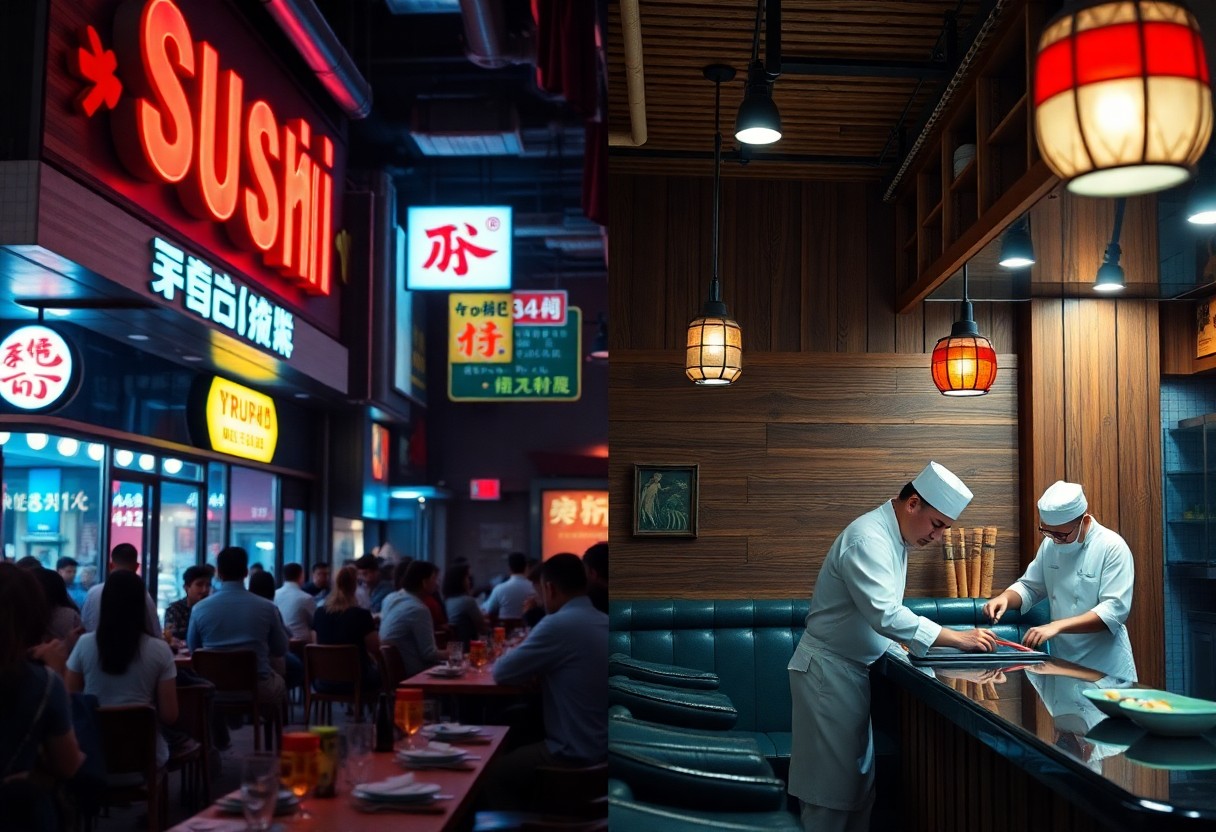
An inviting environment can greatly affect your meal, and local sushi places often excel in this aspect. Local gems usually boast distinctive décor and more intimate settings that encourage you to linger over your food, fostering a genuine connection to the culinary experience. In contrast, chains may offer a more sterile ambiance designed for quick turnover, lacking the charm that local spots provide.
Customer Interaction and Personalization
Against the backdrop of personalized service, local sushi establishments often shine, providing you with a unique experience that chains simply cannot replicate. By fostering relationships with their customers, local gems can tailor recommendations based on your preferences and dietary needs, allowing you to explore new tastes and creations. This interaction not only makes you feel valued but also enhances your connection to the cuisine.
Atmosphere matters in customer interaction. A personalized approach not only enhances your experience but also creates lasting memories tied to the food. Local sushi spots often know regular customers by name, inviting you into a community where your preferences are acknowledged. This level of engagement invites you to relax and enjoy more than just a meal; it transforms dinner into an unforgettable culinary journey.
Price Point Considerations
Keep in mind that price is one of the primary factors when deciding between sushi chains and local gems. Chains often have standardized pricing due to their bulk purchasing power, while local spots may have varied pricing based on ingredients and location. Understanding these differences can help you make an informed choice that fits your budget.
Cost Comparison: Chains vs. Local Spots
Cost Comparison
| Sushi Chains | Local Spots |
|---|---|
| Lower average prices | Higher average prices |
| Value deals and promotions | Seasonal pricing variations |
| Fixed menu options | Unique, customizable selections |
Value for Money
By evaluating value for money, you will find that it often extends beyond just the price tag. Sushi chains typically offer a clear price point with set portions, which can be appealing for budget-conscious diners. However, local gems may match or exceed that value by providing fresh, high-quality ingredients and a unique dining experience.
Another aspect to consider is the authenticity and creativity that local spots often bring to the table. While you might pay a bit more, local sushi restaurants frequently focus on fresh, seasonal ingredients and artisanal preparation methods. This can lead to a more satisfying and memorable meal, ultimately giving you a better overall experience for your investment.
Cultural Significance and Culinary Tradition
Now, sushi chains often prioritize consistency and accessibility, leaving the rich cultural significance and culinary traditions of sushi underexplored. Locally-owned establishments often respect these customs, providing an authentic experience that reflects the intricate world of Japanese cuisine. For deeper insights, consider visiting this Complete Guide to Ordering Sushi in Japan: Local ….
Preservation of Japanese Cuisine
For many local sushi gems, preserving the heritage of Japanese cuisine goes beyond just serving food; it’s about storytelling through culinary art. Each dish often reflects seasonal ingredients and regional techniques, allowing you to experience the depth of flavors and culture that sushi represents.
Innovation vs. Tradition
By exploring the balance between innovation and tradition, you can gain a better understanding of how sushi adapts over time. While sushi chains might experiment with flavors and presentations, local gems often honor age-old techniques and recipes, providing you with a taste of history alongside innovation.
Understanding this balance invites you to appreciate the multifaceted nature of sushi. You may find that while innovation brings exciting twists and modern interpretations, the traditional methods rooted in historical context can offer a more profound dining experience. Each bite carries a legacy, whether it’s a classic nigiri crafted with precision or a creative roll that pushes culinary boundaries.
Final Words
With these considerations, you can better appreciate the differences between sushi chains and local gems. While chains often provide consistency and convenience, their offerings may lack the unique flavors and creativity that local establishments can deliver. Your choice will depend on whether you prioritize uniformity or seek an authentic dining experience that showcases local artistry. Ultimately, trusting your taste preferences will guide you toward the sushi experience that best suits your palate.
FAQ
Q: What are sushi chains?
A: Sushi chains are large, often franchised restaurants that provide a standardized menu and dining experience across multiple locations. These establishments focus on efficiency and consistency, typically offering a variety of sushi rolls, sashimi, and other Japanese dishes. They often prioritize speed and convenience, making them a popular choice for diners looking for quick meals.
Q: What defines local gem sushi restaurants?
A: Local gem sushi restaurants are usually independently owned and operated establishments that offer unique and creative dishes. They often prioritize fresh ingredients and traditional preparation methods, resulting in a more personalized dining experience. These restaurants tend to reflect the chef’s individual style and may offer limited, seasonal menus that showcase local flavors and ingredients.
Q: How do the prices compare between sushi chains and local gems?
A: Sushi chains generally have lower prices due to their standardized menu and cost-saving operations. They may offer promotions and deals to attract customers. In contrast, local gem sushi restaurants often charge higher prices, reflecting the quality of ingredients, the skill of the chefs, and the overall dining experience. However, the prices can vary greatly depending on the specific restaurant and location.
Q: Which type of sushi restaurant is better for trying new flavors?
A: For those looking to try new and innovative flavors, local gem sushi restaurants are typically the better option. These establishments often experiment with unique ingredients and presentation styles, offering a diverse culinary experience tailored to their clientele. Sushi chains usually stick to traditional sushi offerings and popular favorites, which may limit the range of flavors available.
Q: What is the atmosphere like in sushi chains versus local gems?
A: Sushi chains often provide a vibrant and bustling atmosphere, focusing on a fast-paced dining experience. They may feature modern decor and a casual vibe, appealing to a wide range of customers. In contrast, local gem sushi restaurants tend to offer a more intimate and cozy environment, with personalized service that allows diners to engage with the chefs or staff. This atmosphere fosters a unique and memorable dining experience.