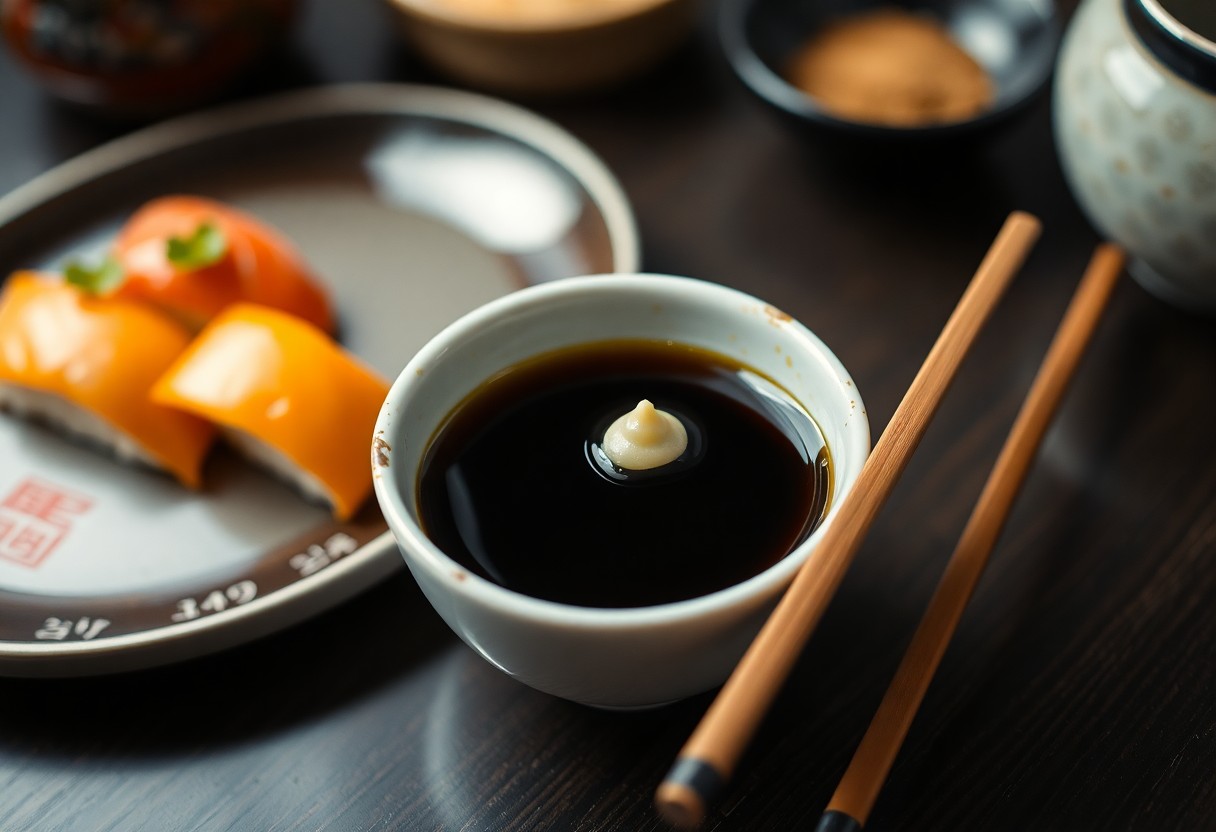
There’s a common practice among sushi lovers that might degrade your dining experience: mixing wasabi into soy sauce. While it may seem convenient for flavor enhancement, this combination can obscure the distinct tastes of both components and alter the traditional dining etiquette associated with sushi. Understanding the reasons behind this culinary guideline will not only elevate your sushi experience but also enhance your appreciation for Japanese cuisine. By keeping wasabi and soy sauce separate, you allow the unique characteristics of each to shine, providing you with a more authentic and satisfying meal.
Key Takeaways:
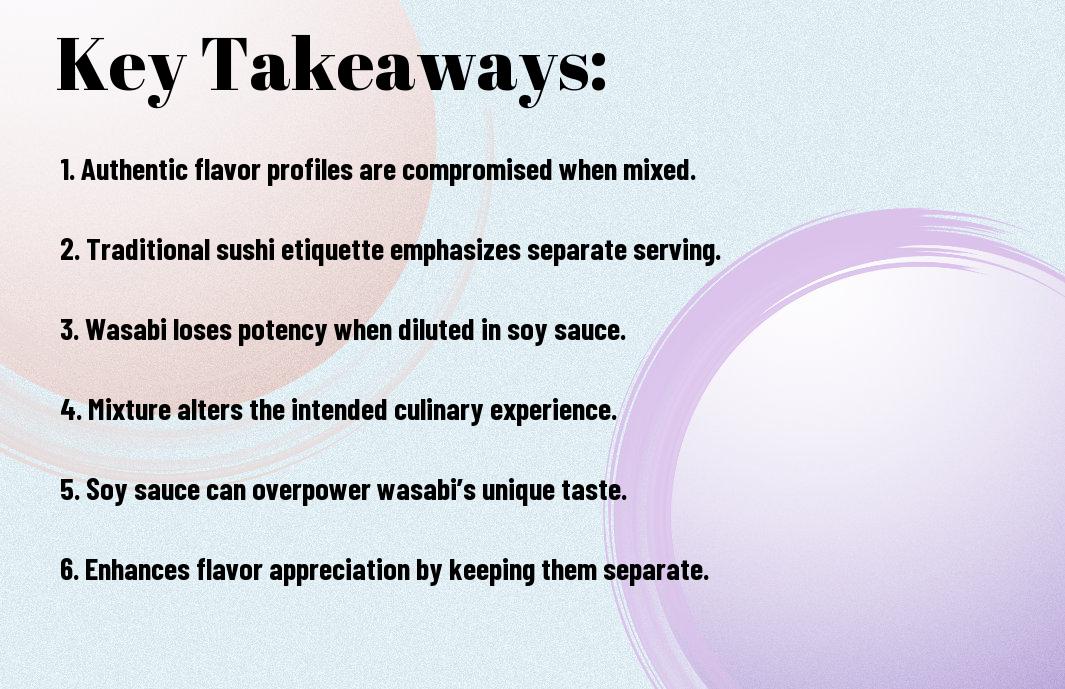
- Flavor Balance: Mixing wasabi with soy sauce can compromise the delicate balance of flavors traditionally found in sushi and sashimi.
- Cultural Tradition: In Japanese cuisine, serving wasabi separately honors the presentation and cultural significance of the meal.
- Heat Sensitivity: Combining wasabi with soy sauce may affect the heat intensity, resulting in an uneven experience of the spice.
- Textural Considerations: The consistency of wasabi can change when mixed with liquid, potentially altering the intended texture of the dish.
- Optimal Enjoyment: Using wasabi and soy sauce independently enhances the overall dining experience by allowing diners to control the level of spice and saltiness.
The Cultural Significance of Wasabi and Soy Sauce
To truly appreciate the flavors of sushi, understanding the cultural significance of wasabi and soy sauce is important. Each serves a distinct purpose, enhancing not only the taste but also the experience of enjoying sushi. Mixing them diminishes their unique roles and undermines the respect for traditional culinary practices. For more information on how to savor sushi with wasabi, check out Eating Sushi with Wasabi | Asian Fusion Restaurant Sarasota.
Historical Context
After tracing the origins of sushi and its accompaniments, you’ll discover that wasabi has been an integral ingredient for centuries, often used for its antibacterial properties, and soy sauce has a long history as a flavor enhancer in Asian cuisine.
Traditional Usage
Before indulging in sushi, you should know that wasabi and soy sauce are traditionally used separately, with wasabi enhancing the flavor of the fish and soy sauce complementing the dish without overpowering it.
Hence, when you enjoy sushi, it’s important to apply just a small amount of wasabi directly onto the fish, allowing it to heighten the dish’s natural flavors. Soy sauce can be used for dipping, providing a savory balance that respects the delicate taste of the sushi. In this manner, you honor the culinary traditions that have been passed down through generations.
Flavor Profiles and Pairing
You might not realize that wasabi and soy sauce each bring distinct characteristics to your dish. While soy sauce offers a deep, umami-rich taste, wasabi introduces a sharp, peppery heat. When combined improperly, these profiles can clash rather than complement each other—altering the intended flavor experience of your meal.
Distinct Tastes of Wasabi and Soy Sauce
Profiles of wasabi and soy sauce highlight their unique contributions to flavor. Soy sauce is savory and salty, enhancing the umami notes of your dish. In contrast, wasabi delivers a pungent zing that can overpower more subtle flavors. This disparity in taste is why mixing them can undermine the overall dining experience.
Culinary Harmony vs. Conflict
Any dish thrives on balance, and the interaction between flavors can either elevate or detract from your meal. The combination of wasabi and soy sauce often creates a dish that is disjointed, where the heat of wasabi overwhelms the mellow saltiness of soy sauce. Instead, allowing them to shine individually preserves their culinary integrity.
Sauce blends should aim for a symphony of flavors rather than a jarring clash. When you use wasabi to accentuate the dish, you allow that zest to lift your meal’s essence while soy sauce adds depth. By keeping these profiles separate, you open yourself to a richer, more pleasurable tasting experience that highlights the best of both worlds.
Health Considerations
After considering the culinary implications, it’s important to examine the health risks associated with mixing wasabi into soy sauce. The combination may alter your body’s response to either ingredient, potentially leading to discomfort or adverse reactions. It’s vital to be mindful of how these elements can impact your digestive health and overall well-being.
Potential Digestive Issues
Behind the enjoyable flavor fusion, mixing wasabi with soy sauce can result in gastrointestinal discomfort. The strong compounds in wasabi, when combined with soy sauce’s sodium content, may lead to bloating, gas, or even acid reflux in sensitive individuals. Paying attention to how your body reacts is necessary for maintaining digestive health.
Allergies and Sensitivities
The combination of wasabi and soy sauce poses risks for those with specific food allergies or sensitivities. Both ingredients can trigger reactions in individuals sensitive to certain food compounds, such as soy or mustard, which are commonly found in wasabi. It’s advisable to familiarize yourself with your own dietary limits to avoid potential allergic responses.
Sensitivities can manifest in various ways, from mild discomfort to severe allergic reactions. If you have known allergies or intolerances, always check ingredient labels carefully. Additionally, consult with your healthcare provider about safe consumption practices, especially if you’re exploring new foods or flavor combinations like wasabi and soy sauce. Prioritizing your health should guide your culinary choices.
Alternative Ways to Enjoy Wasabi
Despite the temptation to mix wasabi with soy sauce, there are many better ways to appreciate its unique flavor. You can enjoy wasabi as a condiment with grilled meats, seafood, or even vegetables. If you want to understand the drawbacks of combining wasabi and soy sauce, check out What are the downsides to smashing the wasabi into …. By exploring these alternatives, you elevate your tasting experience beyond the norm.
Recommended Pairings
Alternative pairings for wasabi include using it alongside grilled salmon, seared steak, or even as a zesty addition to your sushi rolls. Wasabi can also complement pickled vegetables or a fresh salad, adding a delightful kick that enhances the dish without overpowering it.
Creative Recipes
Against the grain of traditional usage, you can incorporate wasabi into various recipes for an unexpected flavor boost. Think wasabi mashed potatoes, spicy wasabi mayonnaise for sandwiches, or even wasabi-infused dressings to elevate your salads.
Also, consider using wasabi in marinades for chicken or tofu, or whip up a wasabi dipping sauce perfect for fresh spring rolls. The versatility of wasabi allows you to experiment creatively in the kitchen, adding a punch of flavor that your taste buds are sure to love.
Common Misconceptions
Now, many people believe that mixing wasabi into soy sauce enhances the flavor of their sushi experience. This misconception stems from a desire to simplify the culinary experience, but it often leads to overpowering the delicate taste of the fish and the rice. Understanding the separate roles of each condiment can elevate your sushi enjoyment instead of masking it with a single mixture.
Myths about Mixing
Above all, some think that combining wasabi and soy sauce is a traditional practice that enriches the dish. In reality, this belief perpetuates a myth that overlooks the cultural nuances of sushi preparation and consumption. You may think this mix elevates flavors, but it can actually overwhelm the subtleties inherent in quality sushi.
Regional Variations
Mixing wasabi with soy sauce can vary significantly from one region to another. In Japan, many chefs specifically advise against this practice, preferring to serve wasabi on top of the sushi to maintain its unique flavor profile. However, in other parts of the world, you may find this mix more commonly accepted, revealing a blend of culinary traditions that differ greatly from their Japanese origins.
At the heart of these regional variations is not just preference, but also an understanding of the ingredients used. In Japan, sushi is often prepared with fresh wasabi and high-quality soy sauce, both of which are meant to enhance the natural flavors of the fish. When you mix them, you may be diluting the overall quality and complexity of your meal, especially if the soy sauce includes additives that aren’t present in traditional recipes. By respecting these variations, you can fully appreciate the intended culinary experience.
Expert Opinions
Your culinary experience is enhanced when you understand the insights of professionals in the field. Experts often advise against mixing wasabi into soy sauce due to the potential to overpower the delicate flavors of sushi. They believe that each component should shine individually, allowing you to appreciate the distinctiveness of both the wasabi and the soy sauce.
Chef Insights
Chef opinions consistently emphasize the importance of enjoying wasabi and soy sauce separately. By keeping them distinct, you elevate your tasting experience, allowing each ingredient to complement the sushi rather than compete with one another.
Food Scientists’ Views
Across various studies, food scientists point out the chemical reactions that occur when wasabi mixes with soy sauce. These reactions can alter the flavor compounds, leading to a diminished experience of both ingredients.
Indeed, food scientists argue that the pungency of wasabi, which contains allyl isothiocyanate, can interact unfavorably with the amino acids in soy sauce. This interaction can mask the umami flavor that makes soy sauce so appealing. By keeping wasabi separate, you allow your palate to experience the full spectrum of flavors, preserving the intended taste experience of your meal.
Summing up
Considering all points, you should think twice before mixing wasabi into your soy sauce. This combination can dilute the distinctive flavors of each ingredient, diminishing your overall sushi experience. Wasabi provides a unique kick that complements sushi, while soy sauce enhances umami. By keeping them separate, you can appreciate the full spectrum of flavors, ensuring that each bite is as enjoyable as possible. Ultimately, savoring these elements individually allows you to respect traditional practices and enhance your dining experience.
Q: Why is it considered a bad practice to mix wasabi into soy sauce?
A: Mixing wasabi into soy sauce can diminish the distinct flavors of both condiments. Wasabi provides a sharp, pungent heat that is meant to complement the umami flavor of the soy sauce when used separately. By blending them together, the individual characteristics get lost, leading to a less enjoyable dining experience. In traditional Japanese cuisine, each component serves its own purpose and enhances the overall taste of the meal when used correctly.
Q: How do the flavors of wasabi and soy sauce interact when mixed?
A: When wasabi is mixed with soy sauce, it can overwhelm the delicate balance of flavors that soy sauce brings. The strong heat from wasabi can mask the savory notes of the soy sauce, resulting in a blander overall taste. Additionally, wasabi’s volatile compounds can dissipate quickly once mixed, reducing its impact. Instead of maximizing flavor, the combination may lead to a one-dimensional taste that lacks complexity.
Q: What are the traditional ways to enjoy wasabi with sushi or sashimi?
A: Traditionally, wasabi is served alongside sushi or sashimi in its pure form, often placed directly on top of the fish or rolled inside sushi. Diners can choose to dip their sushi into soy sauce and then take a small amount of wasabi separately. This method allows each ingredient to shine and ensures that the heat from the wasabi enhances, rather than overpowers, the flavor of the fish. Enjoying them in this way respects the culinary customs and maximizes flavor enjoyment.