With the rising popularity of sushi, you might find yourself wondering how to introduce this delicious cuisine to someone who’s a bit hesitant. Whether it’s a child, a friend, or even yourself, getting a picky eater to embrace sushi can feel like a challenge. This guide will provide you with practical tips and tricks to make sushi more appealing, helping you navigate their taste preferences while still enjoying the diverse flavors and textures that sushi has to offer. Let’s look into the world of sushi and transform it into an exciting culinary adventure!
Key Takeaways:
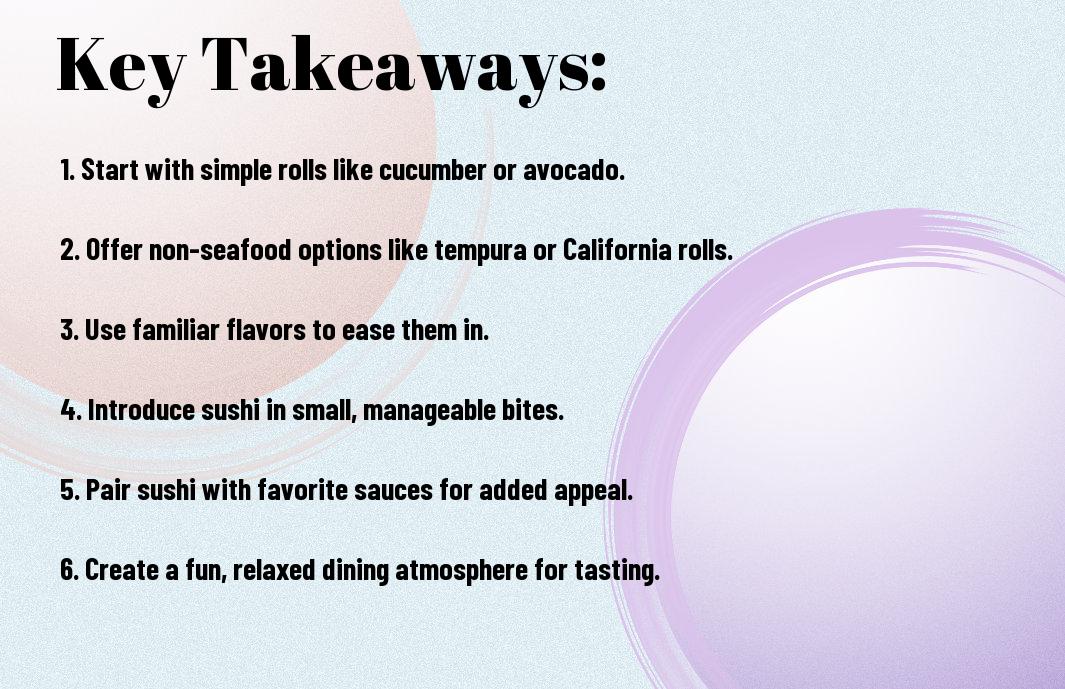
- Introduce Gradually: Start with familiar flavors to ease picky eaters into sushi.
- Creative Presentation: Make sushi visually appealing and fun, which can entice children and picky eaters.
- Offer Variety: Provide different types of sushi, including rolls with non-seafood ingredients for more options.
- Involve Them: Encourage picky eaters to help make sushi at home, fostering a sense of ownership and adventure.
- Sauce and Dips: Use sauces and dips to enhance flavor and make sushi more appealing to those hesitant to try it plain.
Understanding Picky Eaters
While every child has unique taste preferences, picky eating often stems from various influences, including genetics, past experiences, and developmental stages. As a parent, understanding your picky eater’s personality can be key to introducing new foods effectively, particularly something like sushi. The goal is to create a positive and open dialogue about food, allowing your child to feel comfortable exploring unfamiliar flavors and textures.
The Psychology Behind Picky Eating
Eating habits are often shaped by sensory experiences. Many picky eaters are sensitive to textures and flavors, which can make trying new foods intimidating. You’ll find that understanding these sensitivities can guide your approach, making sushi more relatable and enjoyable for your child.
Common Food Preferences
Between familiar favorites and texture aversions, picky eaters gravitate towards foods that feel safe and comfortable. Your child may prefer bland, non-spicy options and limit themselves to a narrow range of flavors, often resisting anything new or different.
And when it comes to sushi, noting these common preferences can help you select options that resonate with your child’s existing taste. For instance, choosing sushi rolls that feature milder ingredients like cucumber or avocado may appeal more than those with stronger flavors such as raw fish. You can gradually introduce new elements, allowing your child to explore the sushi experience without overwhelming them.
Sushi Basics for Beginners
There’s a world of flavors waiting for you in sushi, making it an exciting culinary discovery. If you’re hesitant about trying it, check out A Picky Eater Tries Sushi for the First Time for an encouraging perspective. Sushi is not just raw fish; it encompasses a variety of styles that can cater to various tastes.
Types of Sushi
Among the diverse sushi offerings, you will encounter flavors and textures sure to pique your interest. Here are some common types:
| Type | Description |
| Nigiri | Hand-formed rice topped with fish or seafood. |
| Sashimi | Thin slices of fresh, raw fish, without rice. |
| Maki | Rice and fillings rolled in seaweed. |
| Temaki | Hand-rolled cones of seaweed filled with rice and ingredients. |
Recognizing the variety can help you choose what to try first.
Ingredients Used in Sushi
One of the keys to enjoying sushi is knowing the ingredients it commonly incorporates. Sushi features a mix of fresh fish, seasoned rice, and a variety of fillings and toppings, ranging from vegetables to sauces.
Beginners may find the ingredient list vast, but understanding the basics can enhance your experience. Sushi rice is typically seasoned with vinegar to give it a slight tang. Fresh fish options, like salmon, tuna, and shrimp, are popular choices, along with plant-based ingredients such as avocado, cucumber, and carrots. The addition of seaweed and sauces like soy sauce or wasabi can further elevate the flavors, making your sushi experience enjoyable and satisfying.
Tips to Encourage Sushi Tasting
All sushi lovers know that trying new foods can be daunting for picky eaters. Here are some tips to make the experience enjoyable:
- Start with a fun sushi-themed event.
- Involve them in the selection process.
- Keep it light and positive.
- Encourage them to try just a bite.
Knowing how to create a welcoming experience will make any sushi tasting adventure smoother.
Introducing Familiar Flavors
Before venturing into sushi, introduce your picky eaters to familiar flavors they already enjoy. This could involve selecting sushi rolls that feature ingredients they love, such as avocado, cream cheese, or cooked seafood. Consider highlighting these familiar elements to build their confidence in trying new dishes.
Starting with Non-Fish Options
To ease into the world of sushi, begin with non-fish options that can help your picky eater feel more comfortable. This strategy involves introducing rolls featuring vegetables, tofu, or cooked proteins like chicken or shrimp. By focusing on these flavors, you can help them discover the sushi experience without overwhelming them with raw fish right away.
Further, non-fish sushi options often appeal to those who are wary of seafood. Vegetable rolls packed with cucumbers, carrots, and avocado present a colorful and crunchy experience, while tempura rolls offer a crispy texture that many find delightful. Pairing these non-fish rolls with flavorful sauces or dipping them in soy sauce can enhance their taste and make the transition to trying sushi seamless and enjoyable.
Creating a Fun Sushi Experience
Your approach to introducing sushi can make all the difference. By creating a fun and engaging environment, you can help picky eaters feel more comfortable trying something new. Consider incorporating games, educational elements, or even themed nights. The goal is to foster excitement and curiosity about sushi, turning the dining experience into a memorable adventure for everyone involved.
Sushi Making at Home
The process of making sushi at home can be a fantastic bonding activity. Gather your picky eaters and choose various ingredients that appeal to their taste buds, encouraging them to customize their rolls. This hands-on experience not only demystifies sushi but also allows them to experiment with flavors without the pressure of dining out.
Taking Them to a Sushi Restaurant
Creating the right atmosphere at a sushi restaurant can also encourage your picky eaters to broaden their horizons. Opt for a casual, welcoming spot where you can share dishes and make the experience interactive. Allow them to explore different types of sushi, from classic rolls to unique specials that might pique their interest.
The positive energy of dining out can help them feel more open to new tastes. Consider ordering a variety of sushi styles so they can sample before committing to a full piece. This ‘try before you buy’ approach, combined with the experience of dining out, can transform their perception of sushi, making it less intimidating and more enticing.
Addressing Common Concerns
Despite the apprehension many picky eaters may have towards sushi, understanding and addressing common concerns can ease their fears. You can help them feel more comfortable by discussing their specific worries, whether it’s about food safety, allergies, or texture. By providing clear information and options, you can open the door to new culinary experiences that might have once seemed intimidating.
Food Safety and Allergies
For those concerned about food safety and allergies, it’s important to choose reputable restaurants or buy sushi prepared by trusted sources. Many sushi options are made with cooked ingredients, such as shrimp tempura or eel, which eliminate concerns about raw fish. Always communicate any allergies to ensure safe dining experiences.
Overcoming Texture Issues
Between the rice, fish, and seaweed, sushi presents a unique texture that might be off-putting to picky eaters. However, you can introduce sushi with textures that align more closely with their preferences. For instance, sushi made with cooked seafood or avocado might be more appealing, as these ingredients offer creaminess rather than the chewiness of raw fish.
And exploring various textures can increase your comfort level with sushi. Consider offering sushi rolls with crunch, like those containing tempura flakes or vegetables. Additionally, sushi burritos or hand rolls allow for a more customizable experience, letting you control the texture and ingredients more easily. Engaging your taste buds in this way can help bridge the gap between familiar and unfamiliar foods while making the experience enjoyable.
Success Stories
For many picky eaters, trying sushi can seem intimidating. However, there are numerous success stories that demonstrate how straightforward approaches can lead to positive experiences. You can explore these inspiring transformations in the Sushi for Picky Eaters – The COMPLETE Guide!
Case Studies of Picky Eaters
Behind each success story, there are individuals who took the leap. Here are some compelling case studies:
- Case 1: A 7-year-old girl tried sushi for the first time and loved the simplicity of cucumber rolls, increasing her sushi interest by 75%.
- Case 2: A teenage boy initially rejected sushi but found his favorite dish through tempura rolls, leading to a 50% increase in trying different flavors.
- Case 3: A mother introduced sushi night, helping her two picky eaters try at least three different sushi types over one month.
Encouragement from Parents and Chefs
Studies show that encouragement from parents and chefs plays a significant role in overcoming picky eating habits. From sharing your enthusiasm for trying new foods to creating a fun and relaxed environment, these strategies can significantly influence your child’s willingness to embrace sushi.
To wrap up
Conclusively, introducing sushi to picky eaters can be a rewarding experience if approached thoughtfully. Start by selecting familiar ingredients and gradually expanding their palate with various types. Utilizing fun presentations and educational opportunities can pique their interest, making sushi less intimidating. Don’t forget the importance of positive reinforcement; encouraging your eater’s curiosity can lead to new culinary adventures. With patience and creativity, you can transform sushi into an enjoyable dining option that satiates their taste buds.
Sushi for Picky Eaters – Tips to Get Them to Try It
Q: What types of sushi are best for kids or picky eaters?
A: For kids or picky eaters, sushi varieties that feature familiar ingredients tend to be more appealing. Options like California rolls, which contain imitation crab and avocado, or cucumber rolls (kappa maki) are often well-received. Sushi made with tempura (fried shrimp or vegetables) can also be a hit, as the crispy texture is usually more acceptable. Additionally, sushi that avoids strong flavors or raw fish is a safer choice. Consider making sushi rolls at home where you can customize the ingredients to suit personal preferences.
Q: How can you introduce sushi to someone who is resistant to trying new foods?
A: Start by creating a fun and engaging atmosphere around the sushi experience. You can begin with sushi-themed nights at home where everyone is encouraged to build their own rolls with a selection of safe ingredients. Offer a taste-testing plate with small portions of various sushi types to encourage trying without pressure. Discuss the textures, flavors, and presentation to pique their interest. It might also help to serve sushi alongside a dip that they enjoy, such as soy sauce or a mild ponzu sauce, to ease the transition into new flavors.
Q: Should I focus on traditional sushi or fusion styles for picky eaters?
A: Fusion sushi can often be more appealing to picky eaters since it incorporates familiar flavors and ingredients. For instance, sushi burritos or sushi bowls are fun alterations that can include traditional sushi components in a less intimidating format. Introducing more classic forms of sushi can always be done later once someone is more comfortable with sushi in general. Ultimately, gauge the preferences of the individual and adjust accordingly to find the right balance that encourages trying new things.
Q: What are some easy, homemade sushi recipes for beginners?
A: Homemade sushi can be a great way to let picky eaters participate in the sushi-making process. Start with simple recipes like avocado rolls, using just sushi rice, nori, and ripe avocado. Vegetable rolls with carrots, cucumber, and cream cheese are also easy to make. If the person is willing to try fish, consider cooked shrimp or crab in a roll. Provide various dipping sauces and toppings so they can personalize their sushi. Online resources often have step-by-step videos, making it easy to follow along while creating fun and simple sushi rolls.
Q: How can I make sushi more visually appealing to entice a picky eater?
A: Presentation plays a key role in making sushi enticing. Arrange the sushi in colorful and artistic ways, using garnishes like sesame seeds or slices of colorful vegetables to enhance the visual appeal. Creating a sushi platter with a variety of shapes and colors can draw attention. Use bright plates or serving boards to contrast against the sushi and make it stand out. Encouraging playfulness with shapes—like rounds or triangles—can also make sushi more fun and appealing for someone who is hesitant to try it.