Sushi is a popular and delicious delicacy enjoyed by many, but it often comes with hidden risks, particularly when it comes to mercury content. As a sushi lover, you need to be aware of the types of fish frequently used in sushi and their potential mercury levels. Understanding these risks can help you make safer choices when dining out or preparing sushi at home. In this post, you’ll learn about the fish types to watch for, their mercury levels, and tips to enjoy your sushi responsibly.
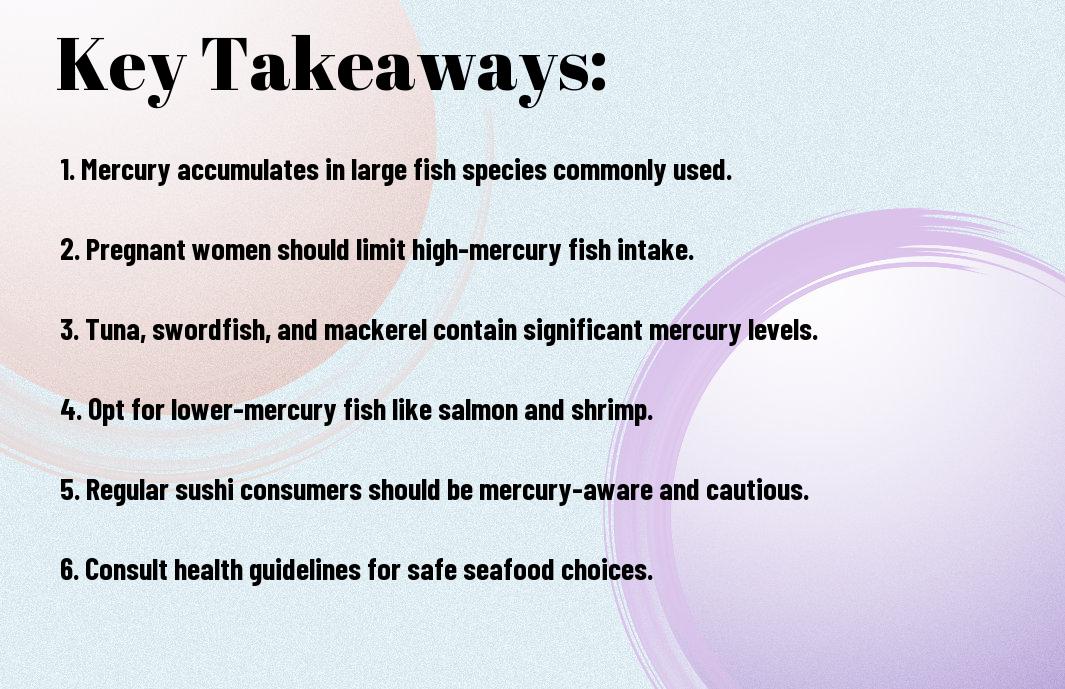
Key Takeaways:
- Mercury Levels: Some sushi fish, such as tuna and swordfish, can contain high levels of mercury, which may pose health risks.
- Health Risks: Elevated mercury exposure can lead to neurological issues and other health problems, especially in pregnant women and young children.
- Moderation is Key: Enjoying sushi in moderation can reduce the risk of mercury exposure while still allowing you to savor your favorite dishes.
- Choosing Wisely: Opt for sushi made with lower-mercury fish like salmon, shrimp, and eel to minimize health concerns.
- Consult Guidelines: Follow dietary recommendations from health organizations regarding seafood consumption, particularly for vulnerable populations.
Understanding Mercury
To navigate the world of sushi safely, it’s vital to understand what mercury is and how it affects your health. Mercury is a heavy metal that can accumulate in fish and seafood due to environmental contamination. When consuming sushi, you need to be aware of the mercury levels in various types of seafood and how they may impact your well-being, particularly with frequent consumption.
What is Mercury?
Before delving into the specifics of sushi, it’s important to define mercury. It is a naturally occurring element that can become toxic in high concentrations. While it exists in various forms, methylmercury is the most concerning when it comes to seafood, as it is the type that accumulates in fish and can pose health risks to humans.
Sources of Mercury in Seafood
By understanding where mercury in seafood comes from, you can make informed choices about your diet. Mercury typically enters marine environments through industrial pollution, such as coal-burning power plants, mining, and waste incineration. Once in the water, it is converted by bacteria into methylmercury, which then enters the food chain. Larger fish that are higher up the food chain, such as tuna and swordfish, tend to have higher concentrations of methylmercury due to bioaccumulation.
It is important for you to recognize that smaller fish consume plankton and other organisms that are exposed to mercury, which leads to mercury accumulating in their bodies. As larger fish prey on these smaller ones, the concentration of mercury increases. This means that when you eat larger fish, you are more likely to consume higher levels of mercury. Being aware of these dynamics helps you make smarter choices when enjoying sushi and other seafood dishes.
Mercury Levels in Sushi
If you’re considering enjoying sushi, it’s crucial to be aware of the mercury levels found in various fish. Mercury exposure can lead to health issues, especially for pregnant women, nursing mothers, and young children. Different species of fish contain different levels of mercury, and some sushi varieties may pose higher risks than others. Being informed will help you make better choices when indulging in this popular dish.
Types of Fish Commonly Used in Sushi
If you’re curious about which fish are typically used in sushi, you should be mindful of their mercury levels. Here are a few common types:
- Tuna
- Salmon
- Mackerel
- Yellowtail
- Snapper
Any fish type can have varying mercury content depending on age and size.
| Fish Type | Mercury Level (ppm) |
|---|---|
| Tuna (Bluefin) | 0.358 |
| Salmon | 0.022 |
| Mackerel (King) | 0.730 |
| Yellowtail | 0.424 |
| Snapper | 0.112 |
Mercury Content in Popular Sushi Varieties
An understanding of mercury content in popular sushi varieties is vital for your health decisions. Some sushi dishes, particularly those made with larger fish species like tuna, have higher mercury levels, while others, like salmon, tend to have lower levels. Knowing this can guide your sushi choices and help you avoid excessive mercury intake.
Plus, being aware of the mercury levels in your favorite sushi varieties allows you to enjoy them responsibly. Options such as salmon or shrimp offer lower mercury content, making them safer choices. By diversifying your sushi selections and opting for fish with lower mercury levels, you can still relish this tasty cuisine without the health risks associated with higher mercury fish.
Health Risks of Mercury Exposure
All fish, including those commonly found in sushi, can contain mercury, which poses various health risks to you. High levels of mercury can lead to serious health issues affecting your nervous system, immune response, and even your cardiovascular health. Understanding the potential dangers is necessary for making informed choices about the sushi you consume.
Short-term Effects
An exposure to elevated mercury levels can result in short-term effects such as fatigue, headache, and gastrointestinal disturbances. You may experience these symptoms shortly after consumption of contaminated fish, and they can be quite uncomfortable if you have a sensitivity to mercury.
Long-term Health Concerns
Between the immediate symptoms, long-term mercury exposure can result in more severe health implications, affecting cognitive and motor functions. You may face challenges with memory, attention, and coordination, which can significantly impact your daily life.
Effects of long-term mercury exposure extend beyond cognitive issues; it may also lead to developmental problems in children, potential reproductive harm, and increased risk of chronic illnesses later in life. Regular consumption of high-mercury fish can accumulate toxins in your body, emphasizing the need for moderation. It’s vital for you to choose sushi options wisely to mitigate these risks and prioritize your health.
Who is at Risk?
Keep an eye on your sushi intake, as certain groups are more susceptible to the harmful effects of mercury found in fish. Pregnant women, young children, and individuals with specific health conditions should be particularly cautious. For further insights, check out this Sushi question : r/sushi that sheds light on this important topic.
Vulnerable Populations
For some individuals, the risks associated with mercury exposure are heightened. Pregnant women can experience adverse effects on fetal development, while infants and young children may face impairments in cognitive and motor skills. Additionally, those with existing health issues should consult a physician for tailored dietary guidance to mitigate potential exposure.
Frequency of Sushi Consumption
Vulnerable populations should limit their sushi consumption to reduce mercury exposure. While sushi can be an enjoyable meal, moderation is key, especially for those at risk. Consider how often you indulge in sushi and choose fish varieties known for lower mercury levels whenever possible.
Consumption frequency plays a significant role in your overall mercury exposure. If you enjoy sushi regularly, it’s wise to vary the types of fish you eat, opting for selections with lower mercury content like shrimp and salmon. By being mindful of your choices and understanding the risks, you can continue to enjoy sushi while safeguarding your health.
Guidelines for Safe Sushi Consumption
Many sushi lovers often wonder how to enjoy their favorite dish while minimizing mercury exposure. You should aim to diversify your sushi choices, limiting high-mercury fish such as tuna and swordfish, and opt for alternatives like salmon, shrimp, or eel. For further insights, you may want to explore whether Will I actually get mercury poisoning if I eat too much sushi…
Recommendations from Health Authorities
Sushi is enjoyed by many, but guidelines from health authorities suggest that you limit consumption of high-mercury seafood, especially for pregnant women and young children. Aim for two servings of low-mercury fish per week while avoiding high-mercury varieties to maintain your health without sacrificing your sushi experience.
Choosing Lower-Mercury Options
On your next sushi outing, consider selecting fish known for lower mercury levels, such as salmon, cod, and pollock. These alternatives not only help reduce mercury exposure but are also packed with nutrients and omega-3 fatty acids that are beneficial for your overall health.
Consequently, you can enjoy sushi without the worry of excessive mercury intake by sticking to a varied menu. Incorporating different seafood types and opting for vegetarian rolls can enhance your sushi experience while keeping mercury levels in check. Always check the source of your sushi, as sustainable practices can also influence mercury levels, making your meal both tasty and safe.
Alternatives to High-Mercury Sushi
Unlike high-mercury sushi options, there are several delicious alternatives that you can enjoy without the health risks associated with consuming excessive mercury. Choosing sushi made from fish known for lower mercury levels, such as salmon or shrimp, allows you to indulge in flavorful dishes while keeping your health in mind. Additionally, vegetarian and plant-based sushi could provide a delightful variation, giving you the taste of sushi without the fish altogether.
Low-Mercury Fish Choices
To make informed choices, focus on low-mercury fish options when selecting your sushi. Fish such as salmon, sardines, and trout are not only delicious but also pack necessary nutrients. You can enjoy these choices in various sushi forms, from rolls to sashimi, providing a safer and nutritious dining experience.
Other Satisfying Sushi Ingredients
Ingredients like avocado, cucumber, and pickled vegetables are excellent alternatives that can enhance your sushi experience. These ingredients add refreshing flavors and unique textures, making your sushi meal both nutritious and satisfying without relying solely on fish.
Sushi isn’t just about fish; it can be a canvas for creativity. You might consider rolls filled with avocado, cream cheese, or sweet potato, complementing the rice with vibrant vegetables. Tempeh or tofu can also serve as excellent protein sources. With the right combination of ingredients, you can create a satisfying sushi experience that caters to your taste without compromising your health.
Summing up
So, as you enjoy sushi, it’s imperative to be aware of mercury levels found in various fish. By choosing lower-mercury options like shrimp, salmon, and tuna, you can indulge in sushi while minimizing health risks. Educating yourself on the types of fish consumed in your sushi will empower you to make informed decisions that protect your well-being. With this knowledge, you can savor your sushi experience without compromising your health.
FAQ
Q: What is mercury, and why is it a concern in sushi?
A: Mercury is a heavy metal found in the environment, primarily from industrial pollution and certain natural processes. In sushi, particularly those containing large fish like tuna, mercury can accumulate in significant amounts due to biomagnification. This means larger fish, which eat smaller fish, tend to have higher mercury levels. Consuming sushi with high mercury content can pose health risks, especially for pregnant women, nursing mothers, and young children.
Q: Which types of sushi are likely to have higher mercury levels?
A: Sushi varieties made from larger fish species typically have higher mercury levels. This includes items like tuna (especially bluefin and bigeye), swordfish, king mackerel, and tilefish. On the other hand, sushi made from smaller fish such as salmon, shrimp, or eel usually contain lower mercury levels, making them safer options for regular consumption.
Q: How can I minimize my mercury exposure from sushi?
A: To minimize mercury exposure, you can choose sushi made from smaller fish known to have lower mercury levels, such as shrimp, salmon, or crab. It’s also advisable to limit the consumption of high-mercury fish like tuna to no more than a couple of times a month, particularly if you are part of a vulnerable group. Additionally, seeking out sushi restaurants that source their fish responsibly can also help in making safer choices.
Q: Are there any specific recommendations for pregnant women regarding sushi consumption?
A: Pregnant women are advised to be cautious about sushi consumption due to the potential health risks associated with high mercury levels. It is generally recommended that pregnant women avoid raw fish altogether and limit their intake of cooked fish to those known to have lower mercury levels. Cooking fish can also help eliminate parasites and bacteria that could pose risks during pregnancy.
Q: What are the symptoms of mercury poisoning, and when should I seek medical attention?
A: Symptoms of mercury poisoning can vary but may include numbness, muscle weakness, cognitive impairments, and sensory disturbances. If you experience unusual symptoms after consuming sushi or if you suspect significant mercury exposure, it is important to seek medical attention. A healthcare provider can assess your symptoms and might recommend blood tests to evaluate mercury levels in your body.