Just when you think you understand sushi, there’s often more to the experience than meets the eye. To truly enjoy this Japanese delicacy, you should be aware of the proper etiquette and techniques. From selecting the right type of sushi to mastering the use of chopsticks and wasabi, knowing how to navigate your sushi meal can enhance your appreciation for this culinary art. For a comprehensive guide, check out this resource on How to Eat Sushi the Correct Way.
Key Takeaways:
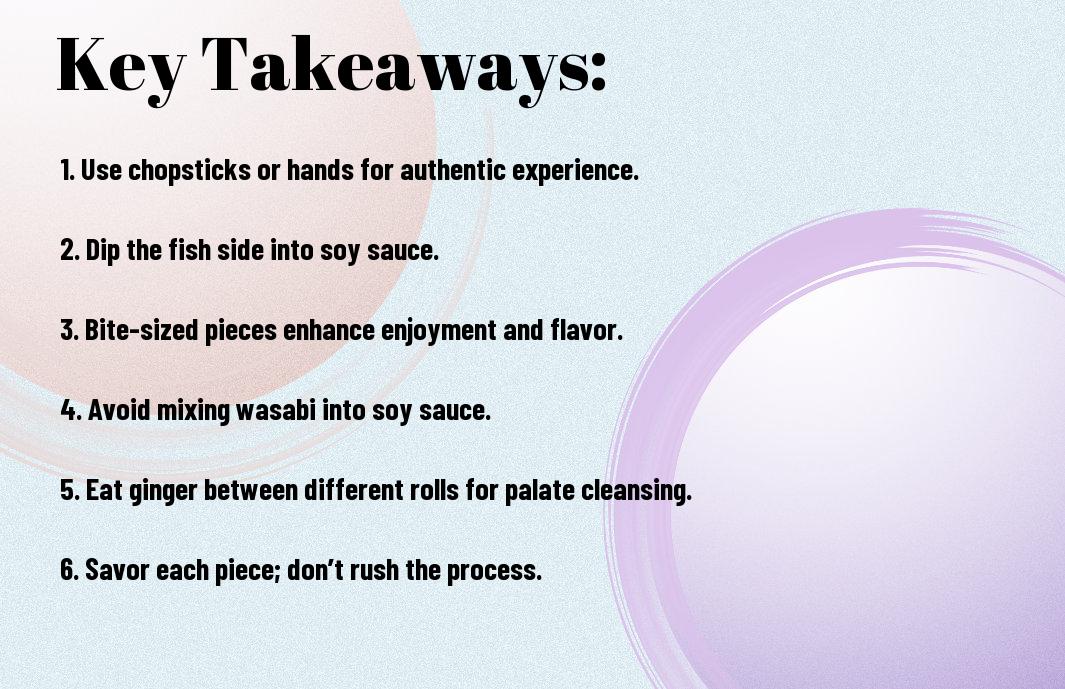
- Use Your Hands – It’s perfectly acceptable to eat sushi with your fingers, especially nigiri, as it encourages a more authentic experience.
- Dip Like a Pro – When using soy sauce, dip the fish side of the sushi instead of the rice to avoid overwhelming the delicate flavor and preventing the rice from soaking up too much sauce.
- Wasabi Wisely – Instead of adding wasabi directly into soy sauce, a small dab on the fish or to the side is the traditional method that preserves the true flavors of the sushi.
- Order Graciously – When dining at a sushi restaurant, order a variety of pieces, starting from light to more flavorful ones, and consider having them prepared in a specific order for the best tasting experience.
- Follow Etiquette – Show appreciation for the chef by being polite and engaging in a pleasant dining experience, which can enhance the overall enjoyment of your sushi meal.
Understanding Sushi Types
To fully appreciate sushi, it’s vital to understand the different types that exist. Sushi isn’t a one-size-fits-all dish; each type offers a unique experience that can elevate your dining. Here’s a brief overview:
| Type | Description |
| Nigiri | Hand-formed rice topped with various ingredients. |
| Sashimi | Thinly sliced raw fish or seafood. |
| Maki | Rolled sushi with rice and fillings. |
| Temaki | Hand-rolled sushi in a cone shape. |
| Urameshi | Inside-out rolls with rice on the outside. |
The sushi you choose can greatly affect your culinary experience.
Nigiri
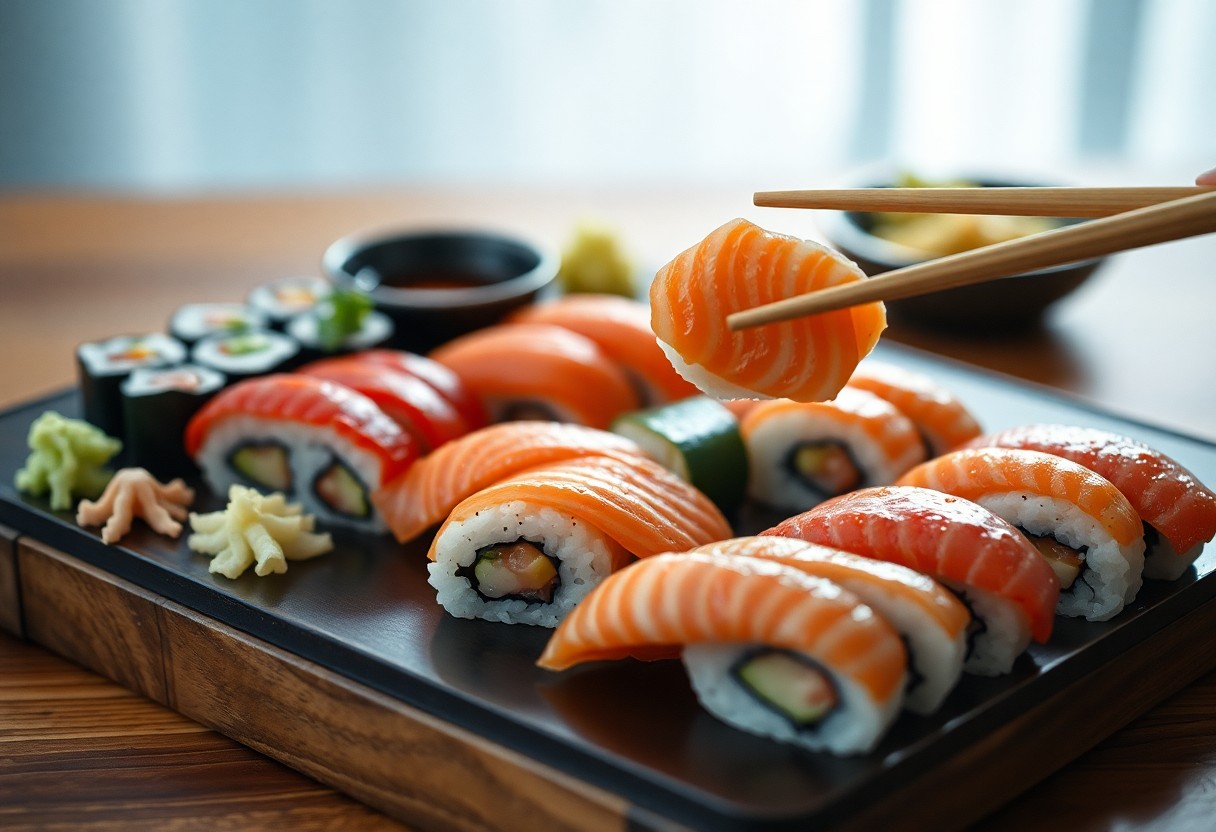
One of the simplest forms of sushi, nigiri consists of a small mound of rice shaped by hand and topped with a slice of fish or seafood. This type of sushi lets you appreciate the flavor of each ingredient, often complemented by a dab of wasabi.
Sashimi
Understanding sashimi is about recognizing that it’s not technically sushi. Sashimi features thinly sliced raw fish or seafood, served without rice. It’s often enjoyed with soy sauce and wasabi, focusing solely on the purity of the ingredients.
In addition, sashimi can include a variety of seafood such as tuna, salmon, and octopus, often showcasing the chef’s skill in presentation. It’s important to savor each piece slowly to appreciate the freshness and quality of the fish.
Maki
Types of maki involve rolling sushi rice and fillings inside a seaweed sheet. This dish can range from simple cucumber and avocado rolls to elaborate combinations of fish, vegetables, and sauces.
It’s common to find maki cut into bite-sized pieces, making it easy to share or enjoy individually. The various fillings and rolling techniques allow for versatility, pleasing different tastes and preferences.
Temaki
On the other hand, temaki is a hand-rolled version of sushi, characterized by its cone shape. The outer layer typically consists of nori, with fillings of sushi rice, fish, and vegetables tucked inside.
Sushi is not only a meal but an experience. Hand-rolling your own temaki allows you to personalize your sushi by selecting your favorite ingredients, making it a fun and interactive dining option. Enjoy crafting your unique rolls!
Proper Sushi Etiquette
Assuming you want to enjoy your sushi experience to the fullest, it’s necessary to understand the etiquette associated with this traditional Japanese cuisine. Proper sushi etiquette not only enhances your dining experience but also shows respect for the craft of sushi making and the culture behind it. From how you handle your chopsticks to how you interact with your chef, these nuances contribute to a more authentic and enjoyable meal.
Chopstick Usage
Behind the use of chopsticks lies a rich tradition that signifies both elegance and skill in Japanese dining. Make sure you hold your chopsticks correctly, using your thumb and index finger to grip the top stick while the bottom stick rests against your middle finger. Avoid using your chopsticks for anything other than eating, and never stick them upright in your rice, as this resembles a funeral ritual.
Soy Sauce Dipping Techniques
Along with chopstick usage, understanding soy sauce dipping techniques can significantly elevate your sushi experience. Always dip the seafood side of the sushi into the soy sauce rather than the rice side. This helps prevent the rice from absorbing too much soy sauce, ensuring a balanced flavor. Additionally, it maintains the integrity of the sushi piece, allowing you to enjoy each ingredient as intended.
To further enhance your sushi experience, consider how much soy sauce you apply. A gentle dip is sufficient, allowing the natural flavors of the fish to shine without being overpowered by the salty sauce. If you’re enjoying nigiri, try to keep the soy sauce ratio minimal—just enough to accentuate the seafood. Always avoid pouring soy sauce directly onto your sushi, as this can lead to an overwhelming taste and distract from the chef’s careful preparation.
Using Wasabi
Chopstick placement also applies when handling wasabi. Traditionally, should you want to add wasabi to your sushi, place a small amount on top of the fish. Avoid mixing wasabi directly into your soy sauce, as this diminishes the flavor balance of your meal. Instead, use it sparingly to heighten the flavors without overpowering the delicate taste of the fish.
Techniques for using wasabi can vary according to personal preference, but the key is moderation. A small dollop is usually enough to complement the sushi. If you’re uncertain, taste the sushi first, then adjust the wasabi level to your liking. This approach ensures that you’re not overwhelming the subtle flavors that the chef has crafted with care. Enjoy the sensation it brings, but let the sushi remain the star of the meal.
Savoring Sushi Flavors
After you place the sushi in your mouth, allow the flavors to unfold without rushing. Each ingredient is thoughtfully selected, contributing to an exquisite balance of taste and texture. Focus on the interplay of fresh fish, vinegared rice, and any additional seasonings. By chewing gently and savoring each bite, you can fully appreciate the intricate flavors and craftsmanship that define quality sushi.
Pairing with Beverage
Below, you’ll find that choosing the right beverage can enhance your sushi experience. Traditional options like sake or green tea complement the subtle flavors of sushi perfectly. If you prefer something different, consider light white wines or even a crisp lager—each can harmonize beautifully with the dish. Experiment to discover what works best for your palate.
Tasting Techniques
Among the methods to appreciate sushi, specific tasting techniques can elevate your experience significantly. Techniques such as focusing on aroma can enhance your understanding of the dish before it even reaches your palate.
Understanding how to taste sushi involves engaging all your senses. Start by observing the presentation and aroma; this sets the stage for what’s to come. As you taste, try to identify individual ingredients, considering their flavors and textures. Pay attention to the umami elements, which will linger on your palate. This enhances not only your enjoyment but also your knowledge of sushi, allowing you to explore its intricacies more deeply.
Choosing Quality Sushi
Your sushi experience starts with selecting high-quality ingredients. To help you understand how to identify top-notch sushi, take a look at this guide on How To Eat Sushi The Right Way. Look for establishments that prioritize freshness and have a good reputation among locals, as this often reflects the quality of their sushi.
Selecting a Sushi Restaurant
Choosing the right sushi restaurant can enhance your dining experience. Look for places that are busy, as a high customer turnover typically indicates freshness. Online reviews and recommendations from friends can also guide you to sushi spots known for their quality and authentic preparation methods.
Recognizing Fresh Ingredients
With a few simple tips, you can quickly identify fresh sushi ingredients. Always check the vibrant colors; fresh fish should look bright and glossy, while rice should feel slightly warm and sticky, not hard or cold. A good sushi chef will maintain cleanliness and have an organized workspace, further indicating the freshness and quality of the food being prepared.
Sushi relies heavily on the quality of its ingredients. Fresh fish should have a slight ocean aroma and be firm to the touch. When examining the rolls, look for bright vegetables that are crisp, as wilted greens can signal age. Tuna should be ruby red, salmon should have a gradient of orange, and shellfish should be glistening. These indicators not only show freshness but also contribute to your overall enjoyment and safety while indulging in sushi.
Sushi Restrictions and Preferences
Not everyone can enjoy sushi in the same way. Various dietary restrictions and personal preferences can influence your sushi experience. Whether you are vegetarian, allergic to seafood, or following a specific diet, it’s necessary to consider your needs while exploring sushi options. Understanding what to look for can enhance your enjoyment without compromising your health or values.
Dietary Considerations
Restrictions can significantly shape your sushi choices. If you have food allergies, such as shellfish or gluten sensitivities, always inquire about ingredients and preparation methods. Sushi restaurants often offer alternatives, such as vegetable rolls or rice paper wraps, ensuring you can enjoy delicious options without risking your health.
Personal Preferences
Along with dietary needs, personal preferences play an important role in your sushi consumption. You might have a taste for specific flavors, textures, or even presentation styles that resonate with your palate, influencing your selections while dining.
Another aspect to consider is exploring various types of sushi beyond the traditional rolls. Experiment with nigiri, sashimi, or even fusion sushi to discover what you love most. Customizing your meal by choosing your favorite fish or asking for less sauce can lead to a more satisfying sushi experience tailored to your individual taste.
Common Mistakes to Avoid
Unlike what you may think, enjoying sushi goes beyond just delicious flavors; it involves subtle etiquette too. Many diners unknowingly commit errors that can enhance or ruin their experience. To elevate your sushi knowledge, take a moment to check this resource on How to Eat Sushi and Dining Etiquette in Japan.
Overdipping
Against popular belief, dunking your sushi extensively in soy sauce can overpower the delicate flavors intended by the chef. Instead of submerging the entire piece, use the dipping sauce sparingly, focusing on just the fish or placing a small amount on the rice side.
Mixing Flavors Incorrectly
One common mistake is combining flavors inappropriately. For instance, adding wasabi directly into your soy sauce alters the balance intended in sushi. Instead, place a small dollop of wasabi on the sushi piece itself for a more harmonious taste.
Another point to consider is when it comes to condiments. Using pickled ginger as a sushi topping or mixing it in your soy sauce can disrupt the experience. Instead, enjoy pickled ginger as a palate cleanser between different types of sushi to fully appreciate each unique flavor profile.
To wrap up
Ultimately, mastering the art of eating sushi enhances your dining experience and shows respect for this culinary tradition. When you enjoy sushi, use your chopsticks or fingers with confidence, savor each piece in one bite, and appreciate the unique flavors of wasabi and soy sauce, applied in moderation. Be mindful of the etiquette, such as not mixing your wasabi into soy sauce, to fully honor the craftsmanship behind your meal. By following these guidelines, you’ll not only enjoy sushi more but also embody the rich cultural dining experience it represents.
Q: What is the proper way to use chopsticks when eating sushi?
A: When using chopsticks, it’s important to hold them correctly for both comfort and precision. Grip the top stick like a pen, using your thumb, index, and middle fingers to control it. The bottom stick should rest between your middle finger and the base of your thumb. You should only move the top stick to pick up sushi, while the bottom stick remains stationary. This method provides better control when handling delicate sushi pieces.
Q: Should I dip sushi in soy sauce and how much should I use?
A: Yes, dipping sushi into soy sauce can enhance its flavor, but it’s important to do so properly. Instead of pouring soy sauce directly over the sushi, which can mask its taste, dip just the fish side lightly into the sauce. This technique helps to complement the ingredients without overwhelming them. Additionally, be mindful of how much sauce you use; a little goes a long way!
Q: Is it acceptable to eat sushi with my hands?
A: Absolutely! Eating sushi with your hands is perfectly acceptable, especially with nigiri and rolls. Many traditional sushi chefs prefer this method as it allows you to better appreciate the texture and flavor. If you choose to use your hands, simply pick up the sushi gently and bring it directly to your mouth. Just be sure your hands are clean, and don’t be shy—enjoy!