restaurant

A Beginner’s Guide to Ordering Sushi at a Restaurant

Just stepping into a sushi restaurant can be both exciting and a little daunting, especially if you’re unfamiliar with the menu. Understanding the basics of sushi can enhance your dining experience, ensuring you make informed choices that suit your palate. From different types of sushi to how to choose your rolls, this guide will help you navigate the sushi scene with confidence. For a more detailed overview, check out A Beginner’s Guide To Ordering And Eating Sushi.
Key Takeaways:

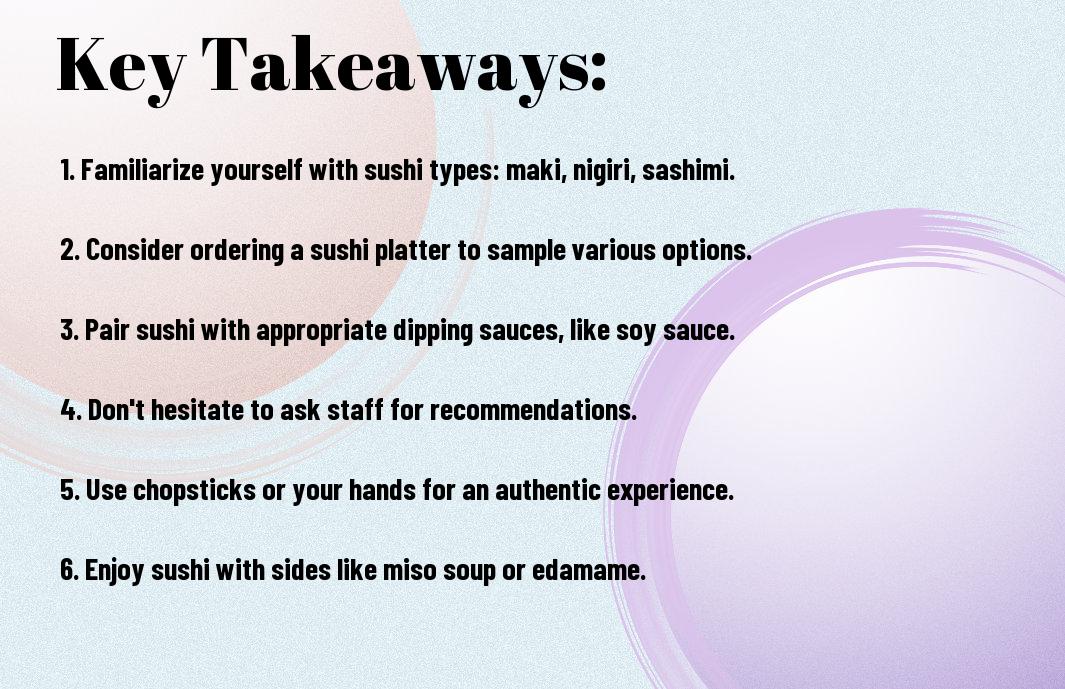
  • Types of Sushi: Familiarize yourself with different types of sushi, such as nigiri, sashimi, and maki rolls, to enhance your dining experience.
  • Sauce and Condiments: Learn about common accompaniments like soy sauce, wasabi, and pickled ginger, and how to use them appropriately.
  • Ordering Etiquette: Understand the etiquette of ordering sushi, including the importance of being specific about your preferences and being polite to the staff.
Understanding Sushi Varieties

The world of sushi offers a diverse range of options that can be overwhelming for beginners. Familiarizing yourself with these varieties ensures a more enjoyable dining experience. Each type has its distinct characteristics, allowing you to explore different flavors and textures that sushi has to offer.

Types of Sushi

The following list outlines some of the most popular types of sushi:

  • Sashimi: Thinly sliced raw fish served without rice.
  • Nigiri: A topping of raw fish over a small bed of rice.
  • Maki: Sushi rolls wrapped in seaweed and filled with rice and various ingredients.
  • Temaki: Hand-rolled cones of seaweed filled with sushi rice and selected ingredients.
  • Uramaki: Inside-out rolls where the rice is on the outside.

Knowing these types will enhance your ordering experience and broaden your appreciation for sushi.

Sashimi Thin slices of raw fish, served plain.
Nigiri Hand-formed rice topped with fish.
Maki Rolled sushi with seaweed outside.
Temaki Hand-rolled sushi in a cone shape.
Uramaki Inside-out roll, rice on the outside.

Common Ingredients

At a sushi restaurant, you’ll come across various ingredients that contribute to the unique flavors of sushi. Fresh fish, vinegared rice, seaweed, and a selection of vegetables are foundational elements. Understanding these components will help you better appreciate each dish you order.

In fact, fresh fish such as salmon and tuna are commonly used, alongside vegetables like cucumber and avocado. The vinegared rice provides a slightly tangy flavor, while nori (seaweed) adds a unique texture. You may also encounter wasabi and pickled ginger, which are often served on the side for seasoning and palate cleansing. Having a grasp of these ingredients empowers you to make informed choices and enhances your overall sushi experience.

Sushi Etiquette

Some basic sushi etiquette can enhance your dining experience. Always treat your sushi chef and waitstaff with respect, as they are skilled artisans. When dining, it’s customary to eat sushi pieces in one bite, and refrain from mixing wasabi into your soy sauce unless it’s specifically requested. Engaging in polite conversation and expressing appreciation for the meal goes a long way in sushi culture.

How to Use Chopsticks

At a sushi restaurant, correctly using chopsticks is part of the experience. Hold the upper chopstick between your thumb and index finger, allowing it to pivot, while resting the lower chopstick against your ring finger for steady support. Practice picking up small items like edamame to get comfortable before exploring into your sushi.

Proper Dining Manners

Between enjoying your sushi and savoring the flavors, maintaining proper dining manners is important. Avoid speaking with your mouth full, and place your chopsticks in the designated holder when not in use. Say “arigato gozaimasu” when you finish your meal to express gratitude to the chef and staff.

To further enhance your dining experience, keep your phone on silent and avoid distractions that might disturb your fellow diners or the atmosphere. Chewing quietly and engaging in pleasant conversation can make your meal more enjoyable for both you and those around you. Showing appreciation for the ingredients and the craftsmanship involved in sushi-making adds depth to your dining experience.

Navigating the Menu

Many first-time diners can feel overwhelmed by the diverse options available on a sushi menu. It’s vital to familiarize yourself with the various categories and types of sushi to make informed choices. From nigiri and sashimi to maki rolls and temaki, understanding the differences can elevate your dining experience and help you discover flavors that suit your palate.

Reading the Sushi Menu

Below the surface of each sushi menu lies a world of options that can be exciting yet intimidating. Look for categories like “Nigiri,” which features fish served on small rice balls, or “Maki,” which includes rolled sushi. Pay attention to the chef’s recommendations, as these can highlight the freshest ingredients available that day.

Popular Dishes to Try

Menu options like California rolls, spicy tuna rolls, and salmon nigiri are fantastic choices for newcomers. These classics offer a great introduction to sushi as they blend familiar flavors with the unique aspects of Japanese cuisine.

But exploring popular dishes doesn’t have to stop there. Beyond the well-known rolls, consider trying a rainbow roll, which showcases a variety of fresh fish, or a chirashi bowl, where sushi ingredients are beautifully arranged over a bed of rice. These dishes not only provide a taste of traditional sushi but also offer a visual feast, making them perfect for anyone eager to dive deeper into the flavorful world of sushi.

Making Your Order

Despite feeling overwhelmed by the options, placing your order at a sushi restaurant can be straightforward. Start by deciding on your preferred type of sushi, whether it’s nigiri, rolls, or even sashimi. Don’t hesitate to ask your server for recommendations based on seasonal specials or popular items. With each bite representing a blend of tradition and flavor, your journey into sushi dining is meant to be enjoyable and accessible.

Choosing Between Nigiri and Rolls

Nigiri consists of hand-formed sushi rice topped with a slice of fresh fish or seafood, providing a pure taste of the ingredients. Rolls, or maki, typically offer a combination of various ingredients wrapped in rice and seaweed, presenting a more complex flavor profile. Consider your preferences—if you want a simple, elegant experience, go for nigiri; if you desire variety and creativity, rolls will be your go-to.

Customizing Your Order

About customizing your order, it’s entirely acceptable to make slight adjustments based on your tastes. Sushi chefs often appreciate it when you express your preferences, whether it’s asking for less wasabi, switching out certain ingredients, or opting for more sesame seeds.

Your sushi experience can be shaped by communicating what you like. Don’t hesitate to request specific fish, dietary options, or any allergens you may have. Many restaurants also allow you to modify rolls or create your own unique combinations. Engage with your server or the sushi chef to explore a menu that suits your palate and enhances your meal.

Pairing Sushi with Drinks

Your choice of drink can enhance your sushi dining experience. Traditional pairings like sake and green tea complement the delicate flavors of sushi, while beer can balance the saltiness of soy sauce. Experimenting with different beverages will elevate your meal and help you discover new taste combinations that suit your palate.

Traditional Pairings

For a classic sushi experience, sake is the go-to beverage. This Japanese rice wine comes in various styles, from sweet to dry, and pairs beautifully with the umami flavors of sushi. Additionally, green tea not only refreshes your palate but also enriches the meal with its subtle earthy notes.

Modern Beverage Options

After traditional beverages, consider exploring modern drink options like craft beers, cocktails, and even wine. These beverages can offer unique flavor profiles that complement the freshness of your sushi while providing a contemporary twist to your meal.

At many sushi restaurants, you’ll find a diverse selection of craft beers and artisanal cocktails specifically crafted to pair well with sushi. For instance, a light lager can enhance the freshness of sashimi, while a zesty gin and tonic might perfectly accompany spicy rolls. Alternatively, try a fruit-forward white wine that contrasts with the savory notes in sushi, creating an exciting dining experience. Don’t hesitate to ask your server for recommendations tailored to your specific dish choices.

Special Dietary Considerations

Once again, when it comes to ordering sushi, it’s important to be mindful of any dietary restrictions you may have. Many sushi restaurants offer options suitable for various diets, including vegetarian, vegan, and gluten-free. Make sure to communicate with your server about your preferences to ensure you enjoy your meal fully while adhering to your dietary needs.

Vegetarian and Vegan Options

Between the vibrant colors and fresh ingredients, sushi can be a delightful experience for vegetarians and vegans. Most sushi restaurants offer a variety of rolls that are filled with vegetables, tofu, or even fruit. Options like avocado rolls, cucumber rolls, or vegetable tempura rolls allow you to enjoy sushi without fish. Just be sure to specify that you want vegan sauces, as some may contain animal products.

Gluten-Free Choices

Before plunging into your sushi ordering adventure, it’s helpful to know which options are gluten-free. Many sushi ingredients are naturally gluten-free, yet some sauces and marinades may contain gluten or cross-contamination may occur. Always ask your server for gluten-free alternatives and verify which options are safe for you.

Options like sashimi, nigiri with rice, and simple rolls without soy sauce can make for a delicious gluten-free meal. Many restaurants offer tamari as a gluten-free soy sauce alternative, which can enhance the flavor without compromising your dietary needs. Requesting your sushi without certain ingredients, such as imitation crab or certain sauces, can ensure a gluten-free dining experience. Don’t hesitate to communicate openly with your server to create a meal that suits your needs.

Summing up

Following this guide ensures that you navigate the sushi menu with ease and confidence. By familiarizing yourself with different types of sushi, understanding the etiquette, and knowing how to customize your order, you can enhance your dining experience. Whether you opt for nigiri, maki, or sashimi, embrace the opportunity to explore new flavors and ingredients. With each visit to the sushi restaurant, you’ll gain a deeper appreciation for this exquisite cuisine and find joy in the art of sushi ordering.

Q: What are the different types of sushi I should know about before ordering?

A: There are several popular types of sushi that beginners may want to familiarize themselves with. The main categories include Nigiri, which consists of a slice of fish or seafood atop a small mound of rice; Sashimi, which features sliced raw fish served without rice; and Maki, which is sushi rolled with rice and other ingredients in seaweed. Additionally, you might come across Temaki, or hand rolls, which are cone-shaped rolls that are easy to eat. Each type offers a unique experience, so trying a variety can enhance your sushi meal.

Q: How should I choose what to order if I’m not familiar with sushi?

A: If you’re unsure of what to order, consider starting with a sushi platter or combination dish, which often includes a sampling of different types of sushi. You can also ask the server for recommendations based on your taste preferences—if you like fish, certain types like salmon or tuna are popular choices. Many restaurants also offer cooked options, such as shrimp tempura or eel, which can be less intimidating for first-timers. Don’t hesitate to ask questions; staff are usually happy to help you find something you’d enjoy.

Q: What are the etiquette tips I should follow when enjoying sushi at a restaurant?

A: Sushi etiquette can enhance your dining experience. First, if you’re using chopsticks, it’s best to avoid sticking them vertically into your rice, as this is associated with funerary rites in Japanese culture. Secondly, you can dip nigiri in soy sauce by holding it upside down to prevent the rice from absorbing too much sauce. If you are provided with wasabi, mix a small amount into soy sauce for added flavor. Lastly, it’s acceptable to eat sushi in a single bite; this is preferred for nigiri. Enjoying sushi is about appreciating the flavors, so take your time and savor each piece.
How to Spot an Authentic Sushi Restaurant

There’s a world of difference between genuine sushi and its imitations, and knowing how to distinguish them can elevate your dining experience. When you’re on the hunt for authentic sushi, you’ll want to pay attention to factors like the quality of ingredients, the skill of the chef, and the overall ambiance of the restaurant. For insights on sushi authenticity, check out Answerman – Is My Sushi Authentic?. In this post, you’ll explore key indicators that will guide you to making the right choice for your sushi cravings.

Key Takeaways:

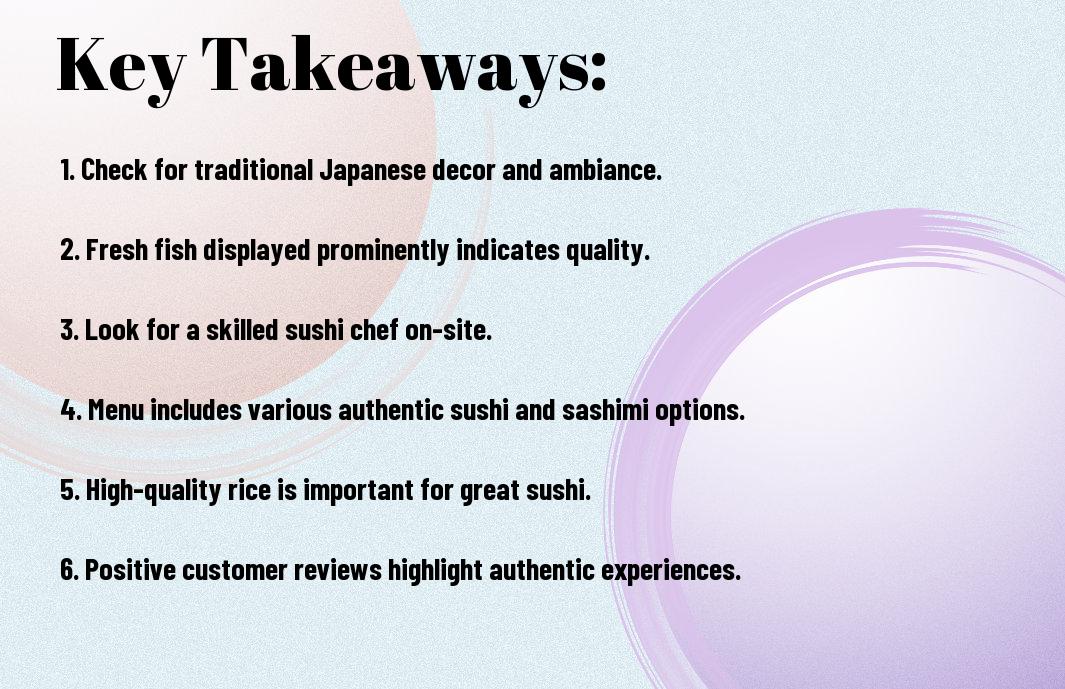
  • Fresh Ingredients: An authentic sushi restaurant prioritizes the use of high-quality, fresh fish and other ingredients, ensuring a superior dining experience.
  • Omakase Menu: A legitimate sushi establishment often offers an omakase menu, showcasing the chef’s specialty and seasonal ingredients, allowing for a unique culinary journey.
  • Skilled Sushi Chefs: Look for well-trained sushi chefs, usually wearing traditional attire, who have honed their skills over years of practice, reflecting artistry and dedication.
  • Traditional Atmosphere: Authentic sushi restaurants often feature minimalistic decor and a serene ambiance that complements the dining experience, including bar seating for direct chef interaction.
  • Respect for Craft: Observe the level of care and respect shown by the staff towards the sushi, including proper slicing techniques and plating, which signifies commitment to the craft.

Recognizing the Quality of Ingredients

A key indicator of an authentic sushi restaurant is the quality of ingredients used in its dishes. You should seek out establishments that prioritize fresh, high-grade fish and produce. Inspecting the freshness and sourcing of these ingredients can help you evaluate authenticity. You can learn more about this in our guide on How to Spot An Authentic Japanese Restaurant.

Freshness of Fish

With sushi, the freshness of the fish is paramount. Look for restaurants that offer daily deliveries of fish, and take note of the color, smell, and texture. Fresh fish will have a bright color and a clean, oceanic aroma, while fish that is past its prime may appear dull or have a strong, unpleasant smell.

Sourcing Practices

With an increasing awareness of sustainability, the sourcing practices of sushi restaurants matter greatly. Seek out places that prioritize seasonal fish and are transparent about their sources. Authentic sushi chefs often have relationships with trusted suppliers and may even display certifications or sourcing information on their menus.

And engaging with the restaurant staff can provide insight into their sourcing standards. Ask where the fish comes from, and if they follow sustainable practices. A restaurant that takes pride in its sourcing will be eager to share this information, ensuring that you are not only enjoying quality sushi but also supporting responsible seafood practices.

Understanding the Menu

There’s a distinct difference between authentic sushi restaurants and their imitations, starting with the menu. When reviewing the offerings, look for an emphasis on traditional Japanese dishes that showcase both simplicity and quality ingredients. Authentic menus typically reflect a commitment to genuine flavors and preparation methods, allowing you to appreciate the essence of Japanese cuisine.

Authentic Japanese Dishes

Dishes like nigiri, sashimi, and temaki should take center stage, as they embody the true spirit of sushi. You may also find seasonal items that highlight the freshness and quality of ingredients used. A focus on these established staples indicates the restaurant’s dedication to preserving culinary traditions.

Specialty Items

One aspect that distinguishes authentic sushi restaurants is their specialty items, often featuring unique and regional offerings. These items typically showcase innovation while still adhering to traditional techniques. By exploring these selections, you enhance your dining experience and gain insight into the chef’s creativity.

Consequently, specialty items can provide a deeper connection to Japanese culinary culture. Think of local fish varieties seldom found in typical sushi spots or exclusive rolls that incorporate seasonal ingredients. These dishes not only elevate your meal but also serve as a testament to the chef’s expertise and passion for authentic Japanese cuisine.

Evaluating the Atmosphere

For an authentic sushi experience, the restaurant’s atmosphere plays a vital role. You should look for a clean, well-maintained space that reflects the Japanese dining culture, showcasing a balance between simplicity and elegance. Ambient lighting, calming colors, and subtle decorations can all enhance your dining experience, immersing you in a true sushi atmosphere.

Traditional Decor

One of the first elements to notice is the traditional decor, which typically includes bamboo accents, washi paper, and art with a Japanese influence. These design features are intentional, creating a warm and inviting environment that honors the cultural significance of sushi.

Dining Experience

Behind the decor, the dining experience itself is a hallmark of authenticity. You should expect attentive service that enhances your meal, as well as an ambiance that encourages appreciation of the food.

To elevate your experience, pay attention to how the staff interacts with you and the attention to detail in service. Authentic sushi restaurants often emphasize the art of dining, where you can savor each dish at a leisurely pace. This approach allows you to appreciate the presentation and flavors as they were intended, creating an unforgettable culinary journey.

Observing the Chef’s Skills

To determine the authenticity of a sushi restaurant, take a moment to observe the chef at work. An experienced sushi chef will deftly handle every aspect of sushi preparation, showcasing their mastery of knife skills, rice precision, and ingredient selection. Look for their focus on technique and the pride they take in crafting each piece of sushi, as these qualities are indicative of a genuine commitment to their craft.

Techniques and Presentation

Below are critical indicators of an authentic sushi experience. Pay attention to the chef’s knife techniques—watch how they slice fish with precision and manage the rice with care. A true sushi artist will ensure that each piece looks visually appealing, with an eye for detail that elevates the presentation, maximizing your enjoyment of the food.

Interaction with Patrons

At authentic sushi restaurants, chefs often engage with patrons, sharing their knowledge and passion for sushi. A welcoming demeanor and readiness to answer inquiries about the ingredients or preparation process foster a genuine connection. This interaction not only enhances your dining experience but also reflects the chef’s commitment to creating a warm, inviting atmosphere.

Plus, when chefs interact with you, it demonstrates their confidence and enthusiasm about their craft. They may share insights into the origins of different sushi styles, recommend pairings, or even teach you about seasonal ingredients. This personal engagement enhances your appreciation for the meal and creates a memorable experience, showing that the restaurant values not just the food, but also the relationships built with its customers.

Checking Customer Reviews

All the information you gather about a sushi restaurant will help you assess its authenticity. Customer reviews provide valuable insights, highlighting both the quality of the food and the overall dining experience. Whether they rave about the freshness of the fish or the skill of the sushi chef, these reviews can help you make an informed decision before stepping inside.

Online Feedback

Customer reviews found online, on platforms like Yelp or Google, are a great tool for gauging the reputation of a sushi restaurant. Take note of the frequency and consistency of positive comments regarding specific dishes, as well as any criticisms that may suggest a lack of authenticity or poor practices.

Word of Mouth

Mouth-to-mouth recommendations from family and friends can be powerful indicators of a genuine sushi dining experience. Personal experiences often provide a sense of trust that online reviews might not convey. You can learn about hidden gems in your area or avoid places that may not meet your expectations.

Even if a restaurant has glowing online reviews, word of mouth from those you trust can offer unique perspectives that aren’t captured in online feedback. Friends and family might share stories about their dining experiences or even the specific sushi chef’s expertise, helping you find establishments that consistently deliver authentic flavors and quality. When seeking sushi, be sure to ask around—those personal anecdotes can guide you toward a memorable meal.

Assessing Service Quality

Once again, the service quality at a sushi restaurant can offer great insight into its authenticity. An attentive and knowledgeable staff can enhance your dining experience, making you feel welcome and informed about the dishes being served. Pay attention to how the servers interact with you; they should be eager to share their expertise and guide you through your meal, ensuring you get the full sushi experience.

Knowledge and Attentiveness

Above all, a knowledgeable staff plays a significant role in assessing the authenticity of a sushi restaurant. You should expect your servers to be well-versed in the menu, including different types of sushi, ingredients, and preparation methods. Their attentiveness to your needs and questions will indicate a commitment to providing a genuine dining experience.

Cultural Practices

Among the key elements to consider are the cultural practices observed by the restaurant. Authentic sushi restaurants often adhere to traditional Japanese customs, from the way sushi is presented to the etiquette followed during meal service.

And, these cultural practices can manifest in several ways. For instance, some restaurants may offer a traditional omakase experience, where the chef hand-selects dishes tailored to your tastes. You might also notice specific rituals, such as proper chopstick etiquette or a bow upon entering. The attention to detail in these practices not only enriches your meal but also reflects the restaurant’s dedication to preserving the authentic sushi dining culture.

Summing up

Presently, spotting an authentic sushi restaurant involves a few key observations. You should pay attention to the restaurant’s decor, which often reflects traditional Japanese aesthetics, and gauge the freshness and quality of the fish, as well as the variety offered. Notice how the chefs prepare your sushi; skilled chefs demonstrate craftsmanship and passion for the art. Additionally, examining the clientele can provide insights—locals often favor genuine establishments. By considering these factors, you can enhance your sushi dining experience and confidently choose a restaurant that offers true authenticity.

FAQ

Q: What are the signs of an authentic sushi restaurant?

A: Look for a focus on traditional Japanese techniques and ingredients. An authentic sushi restaurant often features a limited menu with fresh, high-quality fish and vinegar-seasoned rice. Additionally, the presence of a sushi chef with experience in traditional preparation methods can indicate authenticity.

Q: How does the atmosphere help determine if a sushi restaurant is authentic?

A: An authentic sushi restaurant typically has a warm, inviting atmosphere that reflects Japanese culture. Look for traditional decorations, such as calligraphy or Japanese art, and a clean, minimalist aesthetic. Comfortable seating at the sushi bar where you can observe the chefs at work is another positive sign.

Q: What should I look for in the menu of a sushi restaurant?

A: An authentic sushi restaurant will offer a concise menu that highlights seasonal fish and authentic preparations, like nigiri, sashimi, and rolls that are true to Japanese tradition. Avoid places with overly elaborate or fusion dishes, as this may deviate from authentic sushi preparations.

Q: How important is the fish quality in an authentic sushi restaurant?

A: The quality of fish is one of the most significant indicators of an authentic sushi restaurant. Fresh, high-quality fish should have a vibrant color and a clean, ocean-like smell. Sushi chefs take great care in sourcing their fish, often specializing in particular types or regions, so inquire about their fish sourcing methods to gauge authenticity.

Q: What role does the sushi chef play in identifying an authentic sushi restaurant?

A: The sushi chef’s skill and knowledge are vital in determining the authenticity of a sushi restaurant. An experienced chef will have undergone years of training in traditional sushi preparation and etiquette. Engaging the chef in conversation can provide insight into their background, the techniques they use, and their approach to sourcing ingredients, which can all help establish authenticity.

How To Make Simple And Delicious Sushi(1/2)

http://www.facebook.com/fortunecooking. How To Make Simple And Delicious Sushi At Home.

How to make simple and delicious sushi (2/2)

1. 2 cups of short grain sushi rice, 2 cups of water, wash and rinse for a couple of times and soak the rice for 1 hour.
2. Use the rice cooker or a pot of water over medium heat to cook the rice. Bring to boil, turn to low heat for 10 minutes and turn off the heat, cover and sit for another 15 minutes until the rice cooked.
3. Making rice vinegar: 1/3 cup of rice vinegar, 2 TBS of white sugar, 1/2 tsp of salt, 1 tsp of dashi.
4. Pour the vinegar mixture on rice and stir well.
5. Let rice cool down for a few minutes until within the room temperature.

Basic ingredients needed: sushi wrapper, cucumber, avocado, wasabi, ginger, salmon, yellow fin tuna, cooked shrimp, mayo, shicimi, ponzu sauce, eel sauce.

You can make: cucumber roll, avocado roll, salmon cucumber roll, salmon avocado roll,
tuna cucumber roll, tuna avocado roll, shrimp cucumber roll, shrimp avocado roll. You can also add spicy mayo and drizzle eel sauce. Enjoy.

How To Make Sushi

Today I show you how to correctly make Sushi. In this video I explain exactly how you should Prepare, cut and serve your sushi for the best possible results. This recipe is used by thousands of chefs all around the world including Gordon Ramsay.

–INGREDIENTS–
Rice
Fish
Beans
Seaweed Sheets
Mixed Vegetables
Sushi

Click Here To Eggscribe! –►
http://bit.ly/Eggscribe

Have a video Suggestion? Post it in the Comments Section, or Contact me through my Facebook page!

T-Shirts & Merchandise – http://howtobasic.spreadshirt.com/

Follow me on Instagram! – 'HowToBasic'

Like me on Facebook! http://www.facebook.com/HowToBasic

Follow me on Twitter! http://www.twitter.com/HowToBasic

Check out my 2ND Channel! – http://www.youtube.com/howtobasic2

HowToBasic howtobasic How To Basic

How to Eat Sushi: You’ve Been Doing it Wrong

Click here to learn all the rules of eating sushi: http://bit.ly/1p8UQ3p

Coming to you straight from the sushi chef’s mouth, MUNCHIES presents the dos and don’ts of eating sushi, as taught by Tokyo's Naomichi Yasuda. Be warned: You’ve been doing it wrong.

Subscribe to Munchies here: http://bit.ly/Subscribe-to-MUNCHIES

Click here for more How-To videos: http://bit.ly/1tT33ut

Check out http://munchies.tv for more!

Follow Munchies here:
Facebook: http://facebook.com/munchies
Twitter: http://twitter.com/munchies
Tumblr: http://munchies.tumblr.com
Instagram: http://instagram.com/munchiesvice

Skip to content