japanese

How Sushi Fits Into Japanese Cuisine as a Whole

There’s a fascinating world of flavors and techniques in Japanese cuisine, and sushi stands out as one of its most iconic elements. As you explore this culinary landscape, you’ll discover how sushi not only reflects regional ingredients and traditions but also serves as a window into Japan’s rich cultural heritage. By understanding sushi’s place in the broader spectrum of Japanese food, you can gain deeper insights into its significance and the artistry behind its preparation, making your culinary experience even more enriching.

Key Takeaways:

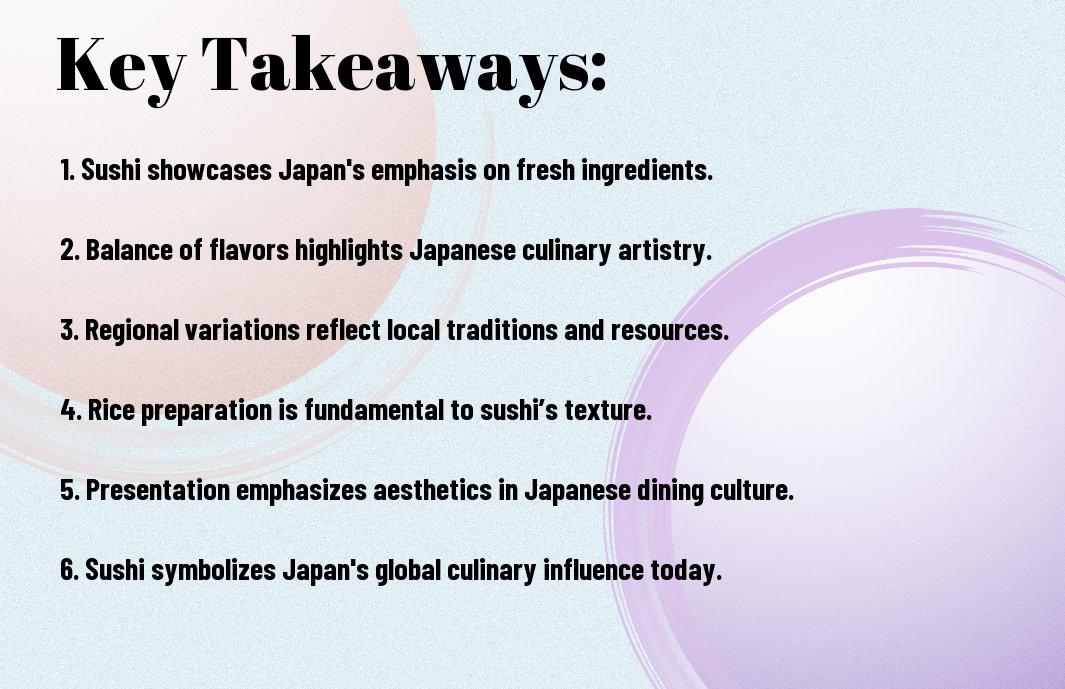
  • Sushi’s Evolution: Sushi has evolved from a means of preserving fish to a celebrated culinary art, reflecting Japan’s history and cultural shifts.
  • Regional Variations: Different regions of Japan offer unique sushi styles, showcasing local ingredients and traditional techniques that enrich the nation’s diverse cuisine.
  • Seasonality and Freshness: Sushi emphasizes the importance of seasonal ingredients and freshness, aligning with the broader Japanese culinary principle of harmony with nature.
The Historical Roots of Sushi

The historical roots of sushi reveal a fascinating journey that dates back centuries, intertwining with Japan’s agricultural and cultural practices. Originating as a method of preserving fish using fermented rice, sushi has transformed into a celebrated cuisine that showcases the freshness of its ingredients while maintaining its cultural significance within Japanese society.

Origins of Sushi in Japan

One of the earliest forms of sushi, known as narezushi, emerged in Japan around the 8th century. This preservation method involved fermenting fish with rice, allowing the fish to be stored for an extended period. This technique spread through various regions, gradually evolving as sushi became a reflection of local ingredients and tastes.

Evolution of Sushi Over Time

Around the 15th century, sushi underwent significant changes, moving away from rice fermentation and towards modern preparation methods. The introduction of vinegared rice laid the foundation for the sushi types you enjoy today, like nigiri and maki. This shift not only enhanced flavor but also catered to the growing demand for fresh, quick meals in urban settings.

In addition to the culinary advancements, sushi has also adapted through cultural exchanges and globalization. As you travel or explore different regions, you may notice various interpretations of sushi, incorporating local ingredients and styles. This evolution has allowed sushi to transcend cultural barriers, becoming a beloved dish worldwide while retaining its roots in Japanese history.
Sushi Varieties and Their Cultural Significance

Assuming you probe deeper into sushi, you’ll uncover a myriad of varieties, each with its own unique cultural significance. Sushi isn’t just a dish; it’s a reflection of Japan’s geography, history, and even social structure. Whether it’s nigiri, futomaki, or chirashi, every type serves a purpose and tells a story about the local ingredients, traditions, and craftsmanship that define Japanese cuisine.

Nigiri, Maki, and Sashimi

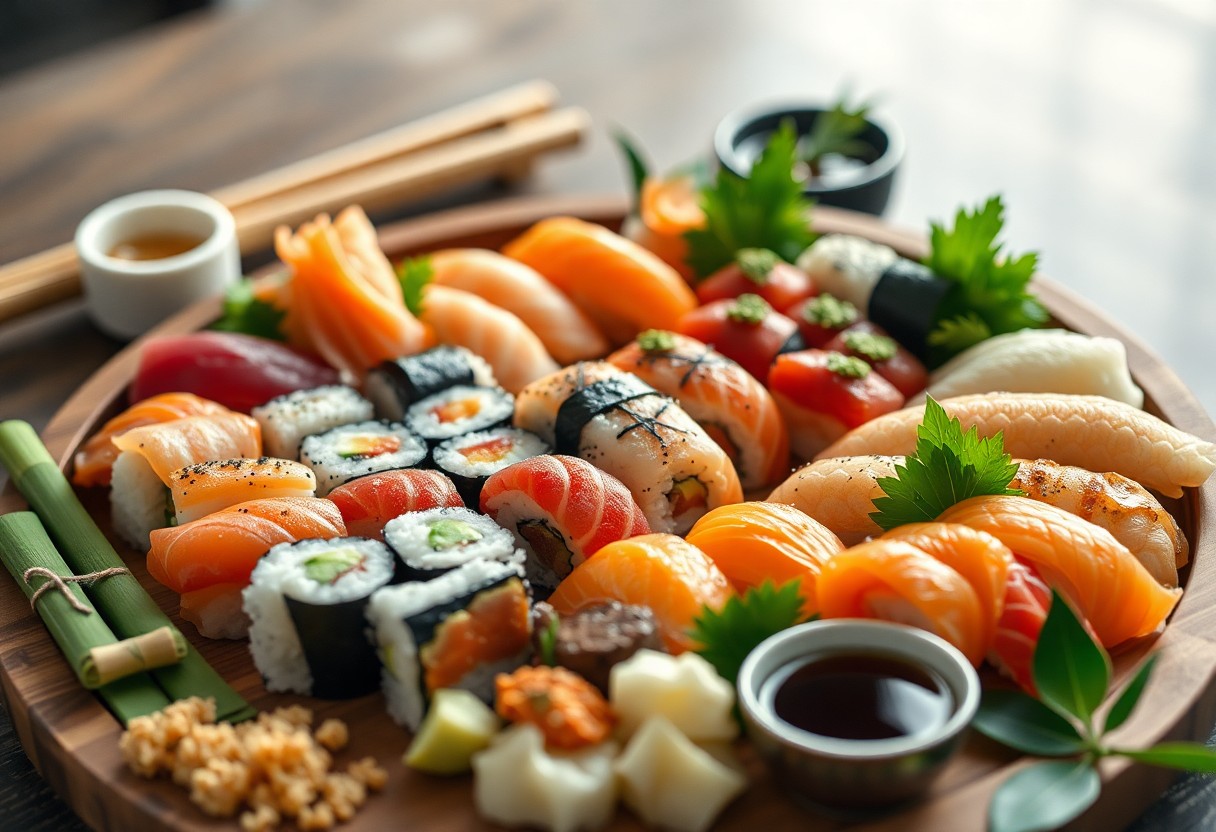
Any sushi enthusiast will recognize nigiri, maki, and sashimi as key players in the sushi landscape. Nigiri consists of hand-formed rice topped with fish or other ingredients, while maki involves rolling sushi rice and fillings in seaweed. Sashimi, on the other hand, is a selection of thinly sliced raw fish, showcasing the fresh flavors of the ocean. Each variety highlights different aspects of sushi culture and reflects regional preferences.

Regional Differences in Sushi Preparation

Between the bustling streets of Tokyo and the serene coastline of Hokkaido, regional differences in sushi preparation are striking. Variations often stem from local ingredients, traditions, and seasonal availability, influencing the way sushi is crafted and enjoyed across Japan.

Differences in sushi preparation not only reflect regional palettes but also local customs and fishing practices. For example, in Kansai, you may find pressed sushi, or oshizushi, while the eastern regions lean towards nigiri. Additionally, the seafood available dictates specific flavors; for instance, fresh tuna from Tsukiji market is a prized catch in Tokyo, while seafood from the Sea of Japan lends itself to different styles in the western regions. Exploring these variations can enrich your understanding of sushi and its place in Japanese culture.

Sushi’s Role in Japanese Dining Practices

Once again, sushi serves as a fundamental element of Japanese dining culture, showcasing the artistry and precision behind traditional culinary practices. In Japan, dining is often viewed as a ritual that emphasizes seasonality, balance, and aesthetics, and sushi embodies these values. It creates a unique dining experience that encourages sharing and appreciation of the food, fostering a sense of community and connection with others at the table.

Sushi in Traditional Japanese Meals

The integration of sushi into traditional Japanese meals reflects a rich history of culinary refinement and cultural significance. Sushi often accompanies other dishes in a kaiseki meal, where various seasonal ingredients are harmoniously combined to create a balanced dining experience. This not only highlights the skill of the chef but also enhances your appreciation for the flavors and textures unique to Japanese cuisine.

Modern Sushi Dining Experiences

Dining at a modern sushi establishment offers a contemporary twist on traditional practices, blending innovation with classic techniques. Sushi bars often emphasize omakase, where you entrust the chef to create a personalized experience tailored to your tastes. This approach not only showcases the culinary artistry involved but also creates a more intimate and engaging dining atmosphere.

A visit to a modern sushi bar can introduce you to a variety of dining formats, such as conveyor belt sushi or upscale establishments offering tasting menus. These experiences allow you to explore an array of flavors and presentations while enjoying a relaxed yet elegant atmosphere. Whether you opt for traditional nigiri, sashimi, or more adventurous combinations, modern sushi dining encourages experimentation and a deeper understanding of the diverse nuances within Japanese cuisine.

Ingredients Essential to Sushi

Now that you are exploring the intricate world of sushi, it’s vital to understand the key ingredients that make this cuisine truly unique. Sushi relies on a harmonious blend of flavors and textures, resulting in a dining experience that is both delightful and culturally significant. The selection and quality of ingredients directly influence the authenticity and taste of your sushi, making them fundamental to your culinary journey.

Rice and Fish: The Cornerstones

Between the two primary ingredients of sushi—rice and fish—lies a delicate balance that defines its essence. The rice, seasoned with vinegar, sugar, and salt, provides a tangy foundation, while the fresh fish contributes richness and flavor. Selecting quality ingredients elevates your sushi, creating an authentic experience that honors traditional practices.

Accompaniments and Condiments

Across the sushi landscape, accompaniments and condiments enhance your experience, adding depth and contrast to the main elements. Common additions like wasabi, soy sauce, and pickled ginger not only enrich the flavors but also cleanse your palate between different types of sushi, allowing you to savor every bite fully.

Understanding the role of these accompaniments and condiments can significantly enhance your sushi experience. Wasabi offers a spicy kick that complements the fish, while soy sauce adds umami and depth of flavor. Pickled ginger acts as a palate cleanser, refreshing your senses and preparing you for the next taste. Familiarizing yourself with these elements allows you to appreciate the thoughtful balance of flavors in each sushi dish and enhances your overall culinary experience.

Sushi and Japanese Festivities

All across Japan, sushi plays a significant role in various festivities, symbolizing celebration and unity. During festivals, families and friends come together to enjoy beautifully arranged sushi platters, where the art of presentation is just as important as the flavors. These gatherings not only highlight the culinary skills of the chef but also strengthen bonds among loved ones, reflecting the communal spirit of Japanese culture.

Sushi in Celebratory Events

To mark special occasions, sushi often takes center stage as a dish that embodies joy and prosperity. Whether it’s a wedding, a birthday, or a new year celebration, elegant sushi displays are crafted to enhance the festive atmosphere. Your experience of dining is elevated as you partake in the traditional custom of enjoying these delicacies with friends and family, reinforcing your social connections.

Seasonal Sushi Traditions

Among the many ways sushi is celebrated in Japan, seasonal traditions stand out, bringing unique flavors that reflect the time of year. Each season offers a special selection of fish and ingredients, infusing your sushi experience with a sense of freshness and authenticity that is tied to the land’s bounty.

It is during spring, for instance, that you might enjoy sushi featuring sakura (cherry blossoms), while summer brings a variety of lighter fish suited to the warmer climate. In autumn and winter, the sushi showcases seasonal catches and comforting flavors to warm your palate. Understanding these seasonal traditions allows you to appreciate the rich tapestry of Japanese cuisine while savoring the distinct tastes available at different times of the year.

Global Influence of Sushi

Many would agree that sushi’s allure has transcended Japanese borders, leading to a remarkable global influence. Nations around the world have embraced sushi, adapting traditional methods and ingredients to craft unique variations that reflect local tastes and cultures. Sushi has evolved into a multifaceted culinary phenomenon that connects people from diverse backgrounds through a shared appreciation for its delicate flavors and artistic presentation.

Sushi’s Popularity Worldwide

Before sushi became a staple in Western dining, it was primarily enjoyed in Japan. Its introduction to international markets has significantly boosted its popularity, making it accessible to your palate through sushi bars, restaurants, and home kits. You can now find sushi in countless forms, from classic rolls to creative interpretations that incorporate regional ingredients, appealing to a wider audience.

Fusion Trends in Sushi Cuisine

Against the backdrop of traditional sushi, fusion trends have emerged that blend various culinary styles and flavors, creating innovative dishes that challenge the norm. These trends allow you to explore sushi in ways that merge diverse cuisines, appealing to your adventurous taste buds.

Further pushing the boundaries of sushi, chefs worldwide are infusing global flavors into this time-honored Japanese dish. You may encounter sushi rolls featuring ingredients like smoked salmon, jalapeño, or even mango and cream cheese. This creative approach has cultivated exciting hybrid dishes, such as the California roll, which uses avocado and crab, showcasing how sushi can adapt and thrive in a variety of cultural contexts. The fusion trend makes sushi not just a meal but an experience, inviting you to discover your unique palate preferences.

Final Words

With these considerations, you can appreciate how sushi embodies the essence of Japanese cuisine, highlighting the country’s strong connection to fresh, seasonal ingredients and a deep respect for culinary traditions. Sushi is not just a dish; it represents a philosophy of simplicity and balance that permeates Japanese cooking. Understanding sushi’s role allows you to explore the broader culinary landscape of Japan, enriching your appreciation for its diverse flavors and techniques.

FAQ

Q: What role does sushi play in the broader spectrum of Japanese cuisine?

A: Sushi serves as a significant representation of Japanese cuisine, showcasing the artistry and precision that characterize traditional Japanese cooking. It highlights the importance of fresh, high-quality ingredients, such as fish and vegetables, and emphasizes techniques like rice preparation and seafood handling. Sushi can be seen as a celebration of seasonality and regionality, often reflecting the local environment and flavors. This alignment with culinary practices in Japan underscores sushi’s importance as not just a dish but as a cultural icon that embodies the values and aesthetics of Japanese cooking.

Q: How has sushi evolved within Japanese cuisine over time?

A: Sushi has evolved dramatically from its origins centuries ago, transitioning from a method of preserving fish in fermented rice to the diverse array of sushi types we see today. Initially known as ‘narezushi,’ the dish was primarily a way to store fish. As Japan’s culinary practices developed, so did sushi. The Edo period saw the emergence of ‘nigiri-zushi,’ where fresh fish is placed atop vinegared rice, reflecting a shift towards immediate consumption and culinary precision. This evolution showcases the adaptability of Japanese cuisine and how traditional methods can be transformed to fit contemporary tastes while still honoring historical roots.

Q: In what ways does sushi reflect cultural values in Japan?

A: Sushi embodies several cultural values central to Japanese society, such as respect for nature, seasonality, and the importance of tradition. The meticulous preparation of sushi, from sourcing the ingredients to the precise cutting of fish, illustrates a deep respect for the natural resources that Japan has to offer. Additionally, sushi often highlights the concept of ‘ichiju-sansai,’ which signifies a balance of flavors and ingredients in a meal, echoing the Japanese philosophy of harmony in food. This cultural understanding not only enriches the dining experience but also illustrates how sushi is more than a dish; it is a reflection of the Japanese way of life and its respect for artistry in culinary tradition.
The Role of Sushi in Japanese Festivals

Most people may not realize the deep connection between sushi and Japanese festivals. As you explore various celebrations across Japan, you’ll encounter sushi not just as a meal, but as a symbol of community, sharing, and heritage. Originating from ancient preservation methods, sushi brings people together during festive occasions, showcasing regional variations and artisanal craftsmanship. Understanding this role can enrich your appreciation of Japanese culture and its culinary traditions, making your festival experiences even more meaningful.

Key Takeaways:

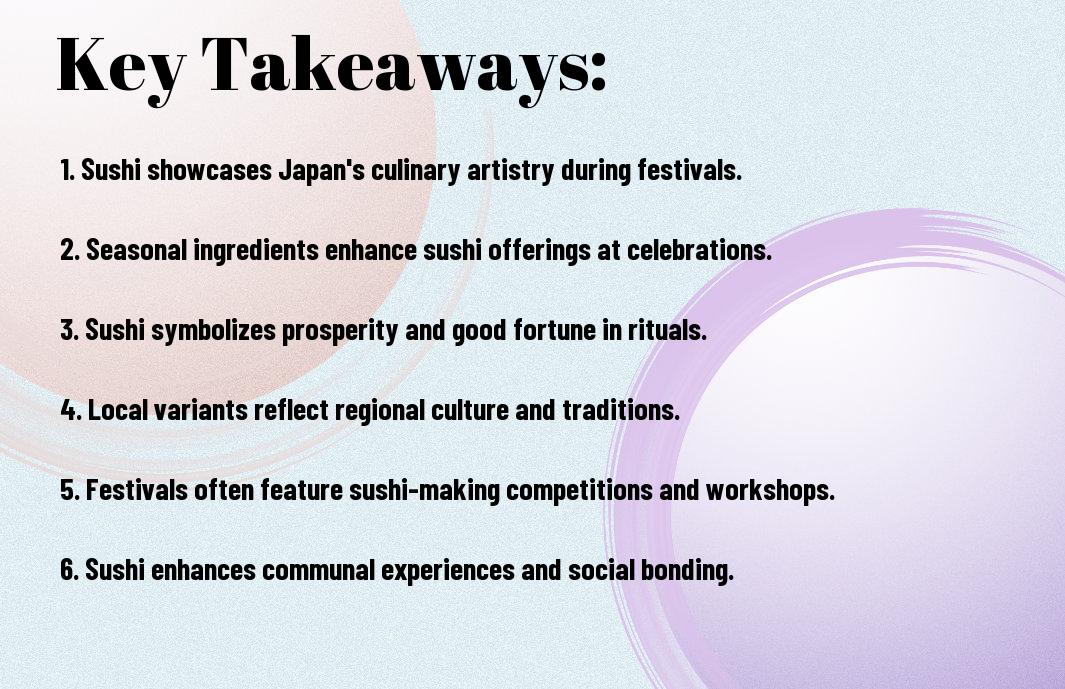
  • Cultural Significance: Sushi plays an important role in celebrating Japanese festivals, often symbolizing prosperity, community, and the sharing of food traditions.
  • Variety in Preparation: Different types of sushi, such as nigiri, maki, and chirashi, are prepared and enjoyed during festivals, showcasing regional ingredients and culinary practices.
  • Social Gathering: Festivals provide an opportunity for social interaction, with sushi often served at communal events, reinforcing bonds among families and communities.

Historical Significance of Sushi in Japanese Culture

For centuries, sushi has played a vital role in Japanese culture, evolving from a simple preservation technique to a symbol of culinary artistry. Its historical roots are deeply intertwined with traditional practices and local customs, making it an integral part of Japanese festivals and celebrations. Sushi not only represents a delightful culinary experience but also showcases the cultural values of harmony, seasonality, and craftsmanship inherent in Japanese society.

Origins of Sushi

Sushi traces its origins back to antique methods of preserving fish, particularly in Southeast Asia. This early form of sushi, known as narezushi, involved fermenting fish with rice for preservation. It was not until sushi made its way to Japan that it underwent transformations, becoming a staple that would eventually capture the hearts and palates of many.

Evolution Through the Ages

Any discussion of sushi’s evolution reveals a fascinating timeline, showcasing how it adapted to different eras and tastes. In the Edo period, sushi as we know it began to take shape, transitioning from fermented fish to the hand-formed nigiri that became synonymous with Japanese dining.

Through the ages, sushi has adapted to trends and societal changes, with various styles emerging across regions. The arrival of sushi bars in the Edo period made sushi accessible to the masses, while later innovations introduced sushi rolls and fusion variations, catering to international palates. Today, sushi not only retains its cultural essence but also serves as a culinary ambassador, connecting your taste buds to the rich history of Japan. This journey reflects the resilience and creativity of Japanese cuisine while highlighting how sushi has preserved its identity amidst globalization.

Types of Sushi Featured in Festivals

Even during Japanese festivals, sushi takes center stage with various types to delight attendees. Some of the most common include:

  • Nigiri – Hand-formed rice topped with fresh seafood
  • Maki – Rolled sushi with various fillings
  • Sashimi – Sliced raw fish served without rice
  • Temaki – Hand rolls filled with ingredients
  • Chirashi – A bowl of sushi rice topped with assorted ingredients

This diverse range of sushi enhances the festive atmosphere and offers something for every palate.

Type of Sushi Description
Nigiri Hand-formed rice topped with fresh seafood.
Maki Rolled sushi with various fillings.
Sashimi Sliced raw fish served without rice.
Temaki Hand rolls filled with ingredients.
Chirashi A bowl of sushi rice topped with assorted ingredients.

Regional Variations

With Japan’s rich culinary landscape, different regions put their unique spin on sushi offered during festivals. For instance, in Hokkaido, seafood is abundant, leading to a focus on fresh, local fish. Meanwhile, in Kansai, you’ll find a preference for vinegared rice in their sushi. Each area’s specialties reflect its culture and available resources, providing you with a taste of regional diversity during festivities.

Seasonal Ingredients

One of the exciting aspects of sushi at festivals is the use of seasonal ingredients. Festivals often coincide with specific seasons, allowing you to enjoy the freshest and most vibrant flavors available. For example, spring might bring cherry blossom-themed sushi, while summer features seafood like tuna and bonito, which are at their peak. Festivals highlight these seasonal gems, turning each bite into a reflection of nature’s bounty.

Festivals celebrate not only tradition but also the seasonal flavors that define Japanese cuisine. As ingredients vary throughout the year, festivals present a wonderful opportunity for you to explore these evolving tastes in sushi. Seasonal delicacies, such as fatty tuna in summer or vibrant vegetables in autumn, showcase the connection between the food and Japan’s rich agricultural heritage, making each event a gourmet experience.

Sushi as a Symbol in Japanese Festivals

All across Japan, sushi plays a vital role in festivals, symbolizing unity, celebration, and cultural heritage. You will often find beautifully crafted sushi served at local festivities, where it not only delights the taste buds but also embodies the spirit of sharing and togetherness among communities. This culinary art form transcends mere food, becoming a significant part of life’s joyous moments.

Representation of Prosperity

With its vibrant colors and meticulous craftsmanship, sushi serves as a representation of prosperity during festivals. You may notice that certain types of sushi, such as eel and tuna, are specifically chosen for their symbolism of good fortune and wealth. In your experiences at these events, savoring these delicacies can evoke a sense of hope for abundant blessings in the coming year.

Cultural Significance in Ceremonies

On numerous occasions, sushi takes center stage in traditional Japanese ceremonies, where its presence accentuates the importance of the event. You will find it featured in celebrations like weddings and New Year festivities, where it contributes to the ambiance and enhances the ritual’s meaning.

Indeed, sushi transcends merely being a meal; it encapsulates your connection to the cultural values and traditions of Japan. At weddings, for instance, sushi embodies shared joy and harmony between families. During New Year celebrations, it’s believed to bring enduring luck and prosperity. Your enjoyment of sushi in these contexts not only satisfies the palate but also enriches your understanding of its cultural relevance, intertwining food, festivity, and tradition in a beautiful tapestry of Japanese life.

The Role of Sushi in Popular Festivals

To appreciate the cultural significance of sushi in Japanese festivals, you should acknowledge how it reflects the community’s identity and traditions. Sushi is not just a culinary delight; it embodies the spirit of celebration and togetherness that marks various festivities throughout Japan. From street stalls to formal gatherings, sushi plays a pivotal role in enhancing the festive atmosphere, allowing you to connect with your heritage while savoring these delicious offerings.

Matsuri Celebrations

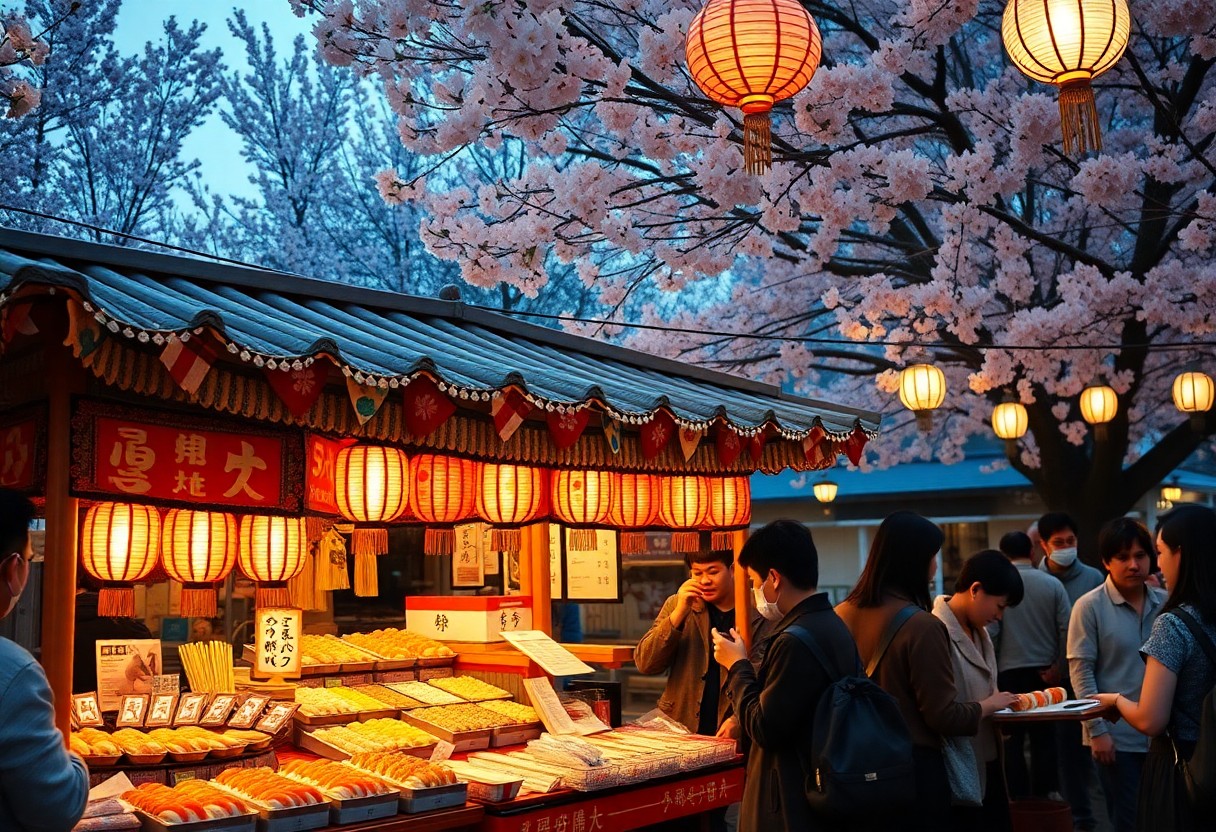
Sushi is a prominent feature during Matsuri celebrations, where vibrant festivals take place throughout Japan. You will find stalls lined with different types of sushi, attracting both locals and visitors alike. This culinary staple enhances the celebratory mood, inviting you to indulge in the flavors and textures while partaking in traditional rituals and enjoying the festive atmosphere.

Community and Family Gatherings

Festivals are an opportunity for communities and families to come together, and sushi serves as a centerpiece of these gatherings. You’ll often find families preparing sushi at home, turning it into a shared activity that fosters bonds and creates lasting memories. The act of rolling sushi together allows you to engage in conversations and storytelling, making it a delightful way to strengthen relationships while enjoying a beloved dish.

This communal aspect is deeply rooted in Japanese culture, where food is often a medium for connecting with loved ones. During family gatherings, you may find an array of sushi platters that cater to varying tastes, ensuring that everyone feels appreciated and included. The joy of sharing sushi enhances the communal spirit, reminding you of the warmth and connection that is the essence of any festival. Enjoying sushi as part of these gatherings enriches your experience, allowing you to celebrate not just the food, but the bonds that bring people together.

The Preparation and Ritual of Making Sushi

Despite its simple appearance, the preparation of sushi is steeped in tradition and ritual. Each step, from selecting the finest fish to cooking the rice, serves a purpose and reflects a deep respect for the ingredients. You will find that making sushi is not just about combining flavors but also about creating a visual and sensory experience that connects you to the culture and artistry behind this beloved dish.

Traditional Techniques

On your journey to master sushi making, you’ll encounter time-honored techniques that have been passed down through generations. Each aspect, like the delicate slicing of fish and the perfect seasoning of rice, requires practice and precision. By following these methods, you will not only enhance your skills but also honor the rich heritage of Japanese cuisine.

Modern Innovations

Along with traditional techniques, modern innovations have revolutionized sushi making, introducing new flavors and creative presentations. You might explore fusion sushi that combines diverse culinary influences, making sushi more accessible and appealing to varied palates.

In fact, many chefs now utilize technology and innovative ingredients to enhance sushi preparation. Advanced tools, such as precision cookers and sushi-making machines, streamline the process, allowing you to experiment with unique flavor combinations. Additionally, the incorporation of plant-based ingredients and sustainable practices showcases an evolving dietary landscape, making sushi a modern culinary haven for both traditionalists and newcomers alike.

Sushi in Contemporary Japanese Festivals

Your experience of Japanese festivals is incomplete without the vibrant presence of sushi, which has evolved to reflect modern tastes while retaining its traditional essence. During various celebrations, you may find various sushi offerings that cater to both locals and tourists alike, showcasing an array of colors and flavors that appeal to diverse palates. Events celebrating sushi have become prominent, emphasizing not only the culinary artistry but also the cultural significance of this beloved dish within the context of contemporary festivities.

Adaptations to Global Trends

Across the globe, sushi has adapted to suit changing consumer preferences and lifestyles, becoming a staple at contemporary Japanese festivals. Sushi presentations have shifted to include more sustainable and locally sourced ingredients, aligning with global movements towards health and environmental awareness. As you attend these festivals, you will notice innovative sushi styles that reflect dietary trends, such as vegan and gluten-free options, ensuring that everyone can partake in this iconic cuisine.

Fusion with Other Cuisines

Adaptations have also been seen in the merging of sushi with various other culinary traditions, creating exciting flavor combinations that intrigue your taste buds.

Other cultural influences have led to unique sushi fusions, such as sushi burritos or California rolls, which incorporate ingredients like avocado and crab that resonate with global cuisine. At festivals, you might encounter creative sushi variations like tempura sushi or even sushi tacos, marrying traditional Japanese elements with popular flavors from around the world. This culinary experimentation not only enhances your festival experience but also enriches the appreciation and understanding of sushi as a versatile dish, bridging cultures and creating community through food.

To wrap up

Summing up, you can see that sushi plays a significant role in Japanese festivals, enriching your cultural experience and connection to tradition. From the elaborate displays at Hanami to the communal enjoyment during matsuri, sushi is not just food—it embodies the spirit of celebration. As you participate in these events, you gain a deeper appreciation for the artistry involved in sushi-making and its place in Japan’s rich heritage. Embrace these festivities, and let sushi enhance your journey through Japan’s vibrant cultural landscape.

Q: How is sushi incorporated into Japanese festivals?

A: Sushi plays a significant role in various Japanese festivals, where it is often enjoyed as a communal dish. Different types of sushi may be featured based on the region and the specific festival. For example, during festivals like Hanami (cherry blossom viewing), people often create elaborate bento boxes that include sushi, symbolizing the enjoyment of nature and the arrival of spring. At other local festivals, sushi-making competitions might be held, showcasing skills and creativity in this beloved culinary art.

Q: What types of sushi are commonly associated with Japanese festivals?

A: Various types of sushi are associated with different festivals. In coastal regions, fresh nigiri or sashimi made from seasonal fish is popular, reflecting the local bounty. During festivals like New Year (Shogatsu), osechi ryori, which may include sushi like keisuke (sushi rolls) or chirashi-zushi (scattered sushi), is served. Each ingredient in osechi symbolizes good fortune, prosperity, and health. Additionally, regional specialties may also be available, such as inari-zushi in certain areas, which features sushi rice wrapped in sweetened tofu pockets.

Q: What cultural significance does sushi hold during these celebrations?

A: Sushi transcends mere sustenance during Japanese festivals; it embodies tradition, community, and the celebration of seasonal ingredients. Sharing sushi among family and friends fosters a sense of togetherness. Festivals also serve as a platform for showcasing regional flavors and techniques, allowing communities to express their identity through food. The aesthetic presentation of sushi is also considered an art form, emphasizing the importance of beauty and harmony in Japanese culture, which is highlighted during festive gatherings.

How to Make Sushi

Watch more Introduction to Sushi Making videos: http://www.howcast.com/videos/270-How-to-Make-Sushi

You may think sushi is just raw fish, but you’d only be half right. It’s actually the combination of fish and rice – and how it’s combined is an art form in itself.

Step 1: Slice fish
With a very sharp knife, slice the trimmed fish slab into individual portions so each piece is a rectangle approximately 2-inches long and ¼-inch thick.

Tip
To make things easier, cut all your fish at one time, but keep the pieces cold until you use them —put them on a plate and keep it in the refrigerator or on top of some ice.

Step 2: Roll rice into ball
Moisten your hands with water from your bowl, and scoop an ounce of sushi rice—about the amount that will fit into your palm—and roll it into a ball.

Step 3: Shape rice ball
Shape the rice ball into an oblong by squeezing it with firm but gentle pressure.

Tip
Your rice should be about the same size as your cut piece of fish.

Step 4: Dab wasabi on fish
Pick up a piece of sliced fish. While palming the shaped rice, scoop up a tiny amount of wasabi with your index finger and gently dab it onto the middle of the fish.

Step 5: Press rice against fish
Press the shaped rice against the fish and gently but firmly cup the two together until they adhere.

Step 6: Squeeze together
Firmly squeeze the sushi together until the fish and rice become one. Tap with your right index finger as you go to create a uniform shape.

Step 7: Continue process
Place the finished sushi on a serving plate or sushi board, and continue making pieces until all the fish is used.

Step 8: Garnish plate
Garnish the plate with a mound of Japanese pickled ginger and a smaller mound of wasabi. Pour some soy sauce into a small dish and get ready to dunk.

Did You Know?
Real wasabi is notoriously expensive, so most sushi restaurants just use a mixture of horseradish, mustard powders, and food coloring.

Japanese Street Food – BLUEFIN TUNA CUTTING SHOW & SUSHI / SASHIMI MEAL

Bluefin tuna is one of the most highly prized fish used in Japanese raw fish dishes. About 80% of the caught Atlantic and Pacific bluefin tunas are consumed in Japan. The fish is renowned for fetching high bids at the first auction of the year in Tokyo's Tsukiji Market. The world’s most expensive fish is the 222-kilogram bluefin tuna that sold for $1.8 Million (155.4 million yen) in January 2017.

In this video, a large tuna is separated into sections of differing grades and prepared into a delicious sushi meal.

Japanese began eating tuna sushi in the 1840s, when a large catch came into Edo [old Tokyo] one season. A chef marinated a few pieces in soy sauce and served it as nigiri sushi. At that time, these fish were nicknamed shibi — "four days" — because chefs would bury them for four days to mellow their bloody taste.

Sushi Lovers Guess Cheap Vs. Expensive Sushi

This is such an orgasmic experience.

Check out more awesome videos at BuzzFeedVideo!
http://bit.ly/YTbuzzfeedvideo

GET MORE BUZZFEED:
www.buzzfeed.com
www.buzzfeed.com/video
www.buzzfeed.com/videoteam
www.youtube.com/buzzfeedvideo
www.youtube.com/buzzfeedyellow
www.youtube.com/buzzfeedblue
www.youtube.com/buzzfeedviolet
www.youtube.com/buzzfeed

BuzzFeedVideo
BuzzFeed Motion Picture’s flagship channel. Sometimes funny, sometimes serious, always shareable. New videos posted daily!

MUSIC
Build It Up
Licensed via Warner Chappell Production Music Inc.

Made by BFMP www.buzzfeed.com/videoteam.

How America’s First 3 Star Michelin Sushi Chef Serves His Fish

Rarely does chef Masa Takayama of Manhattan sushi shrine Masa allow cameras into his restaurant. But Eater's Kat Odell scored a seat at his bar to taste through America's best omakase.

Like Madonna, chef Masa Takayama is a mononmyous character known by fans simply as "Masa," also the name of his eponymous restaurant in New York's Time Warner Center. And after three decades of cutting fish and helping to shape (and refine) America's sushi culture, it's a moniker well-deserved.

At Masa, the show is sushi, and it's one that has received countless accolades for Chef's near-perfect, and extremely pricey fish. Actually, Masa is the single most expensive restaurant in the country and one that replicates, in many ways, a classic Japanese omakase experience. While dishes many not always be entirely traditional, the service, energy and overall thought behind the meal is totally Japanese.

On very few occasions does chef Masa allow cameras into his restaurant and, in fact, he's notorious for his no photography policy. Regardless, Eater's Kat Odell scored a prime seat to experience the best sushi in this country.

7 Sushi Rules You're Probably Breaking ►►►► https://goo.gl/JBAFny

After Ten Years of Masa, a Sushi Legend Surveys His Kingdom ►►►► http://goo.gl/zcmFZl
"'I'm not a snob,' says renowned Japanese chef Masayoshi Takayama of his decision to never eat sushi in New York City, unless it comes from his own kitchens. 'Just, the thing is my ingredients. I don't think they have equals.""

————————–

Eater is the one-stop-shop for food and restaurant obsessives across the country. With features, explainers, animations, recipes, and more — it's the most indulgent food content around. So get hungry.

Subscribe to our YouTube Channel now!: http://goo.gl/hGwtF0

Check out more on Eater: http://www.eater.com/

Eater on Twitter: https://twitter.com/eater

Kat Odell on Twitter: https://twitter.com/katodell

Like Eater on Facebook: http://goo.gl/TA4Usd

Like Eater LA on Facebook: https://www.facebook.com/eaterla?_rdr=p

View our full video catalog: http://goo.gl/plZhhc

Visit our playlists: http://goo.gl/I7tTMO

Follow on Pinterest: http://goo.gl/Gyr7XL

More at Eater Los Angeles: http://la.eater.com/

More at Eater New York: http://ny.eater.com/

More at Eater Chicago: http://chicago.eater.com/

How To Make Sushi

Today I show you how to correctly make Sushi. In this video I explain exactly how you should Prepare, cut and serve your sushi for the best possible results. This recipe is used by thousands of chefs all around the world including Gordon Ramsay.

–INGREDIENTS–
Rice
Fish
Beans
Seaweed Sheets
Mixed Vegetables
Sushi

Click Here To Eggscribe! –►
http://bit.ly/Eggscribe

Have a video Suggestion? Post it in the Comments Section, or Contact me through my Facebook page!

T-Shirts & Merchandise – http://howtobasic.spreadshirt.com/

Follow me on Instagram! – 'HowToBasic'

Like me on Facebook! http://www.facebook.com/HowToBasic

Follow me on Twitter! http://www.twitter.com/HowToBasic

Check out my 2ND Channel! – http://www.youtube.com/howtobasic2

HowToBasic howtobasic How To Basic

Sushi Chef Reviews Cheap Sushi

“Bad shrimp smell…I have to eat this one?”

Check out more awesome videos at BuzzFeedVideo!
http://bit.ly/YTbuzzfeedvideo

MUSIC
Koto Swang
Licensed via Warner Chappell Production Music Inc.

SFX provided by Audioblocks. 
(https://www.Audioblocks.com)

Made by BFMP www.buzzfeed.com/videoteam
+
Yoya Takahashi
http://hamasakula.com/
@HamasakuLA

STILLS
Vector gold star
nidwlw / Thinkstockphotos.com
Salmon sushi
Creatas / Thinkstockphotos.com
Sushi set
ksyfoto / Thinkstockphotos.com

GET MORE BUZZFEED:
www.buzzfeed.com
www.buzzfeed.com/video
www.buzzfeed.com/videoteam
www.youtube.com/buzzfeedvideo
www.youtube.com/buzzfeedyellow
www.youtube.com/buzzfeedblue
www.youtube.com/buzzfeedviolet
www.youtube.com/buzzfeed

BUZZFEED VIDEO
BuzzFeed is the world's first true social news organization. Featuring tasty, short, fun, inspiring, funny, interesting videos from the BuzzFeed. /BuzzFeedVideo is BuzzFeed's original YouTube Channel, with a focus on producing great short-form BuzzFeed videos for YouTube (and the world!). BuzzFeed Video will entertain, educate, spark conversation, inspire and delight. Subscribe to BuzzFeedVideo today and check us out at http://buzzfeed.com

Skip to content