Over the years, sushi has gained immense popularity as a delicious and often trendy dining option. But as you indulge in this culinary delight, you may wonder about its health implications. This blog post will explore the nutritional benefits of sushi, helping you understand how it can fit into your healthy eating habits. From its protein-packed ingredients to the abundance of vitamins and minerals, you’ll discover why sushi can be not only satisfying but also a nutritious choice for your meals.
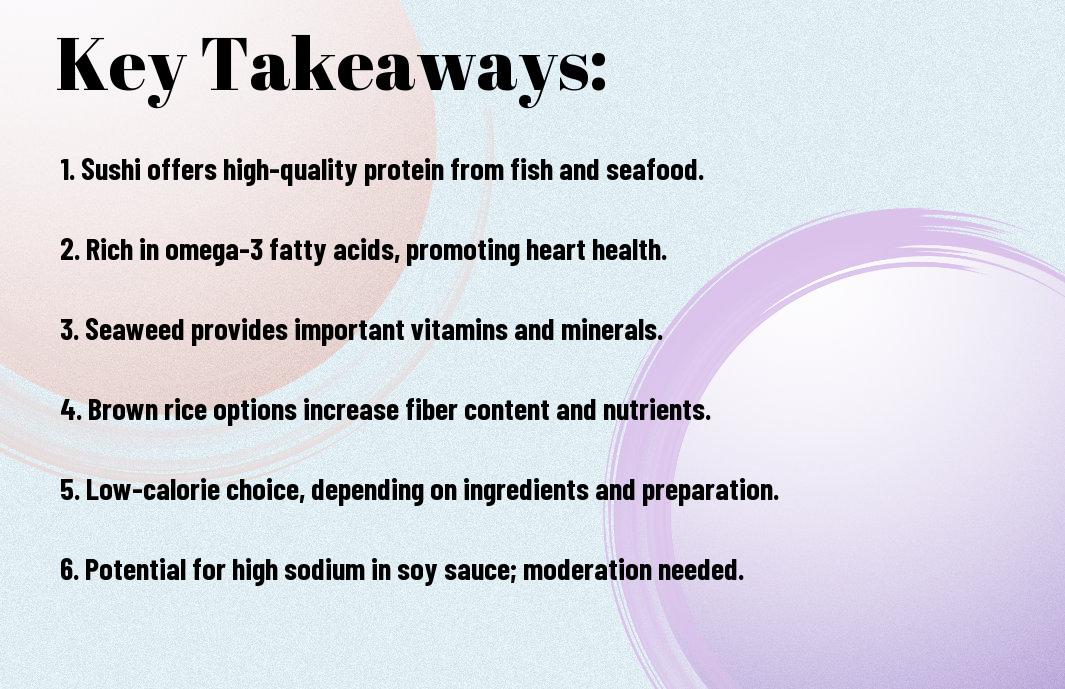
Key Takeaways:
- Rich in Omega-3 Fatty Acids: Sushi, especially when made with fish like salmon and mackerel, provides a good source of omega-3 fatty acids, which are beneficial for heart health.
- Low in Calories: Many sushi options are low in calories, making it a suitable choice for those looking to manage their weight while enjoying flavorful meals.
- Contains Nutrients: Sushi ingredients, such as seaweed and vegetables, contribute important vitamins and minerals, enhancing the dish’s overall nutritional profile.
- Potential for Anti-Inflammatory Benefits: The ingredients in sushi, particularly fish and seaweed, may help reduce inflammation in the body, contributing to better overall health.
- Balance is Key: While sushi has many health benefits, it’s important to balance portion sizes and choose options with less sugar and sodium for optimal health.
The Nutritional Components of Sushi
Before submerging into the health benefits of sushi, it’s important to understand its nutritional components. Sushi typically combines protein, carbohydrates, fats, and a variety of vitamins and minerals. The balance of these ingredients not only contributes to its delicious taste but also enhances its nutritional profile, making sushi a popular option for those seeking a wholesome meal.
Protein Content
One of the standout features of sushi is its impressive protein content. Fish, one of the primary ingredients in sushi, is an excellent source of high-quality protein, helping to support muscle repair and overall body function. If you’re looking to maintain or build muscle mass, sushi can effectively contribute to your daily protein needs.
Essential Fatty Acids
Acids found in various types of sushi, particularly those made with fatty fish like salmon and mackerel, supply vital fatty acids, specifically omega-3s. These fatty acids play a significant role in supporting heart health, reducing inflammation, and enhancing brain function. By choosing sushi with fatty fish, you ensure that your body receives these benefits, contributing to overall well-being.
Even beyond immediate health benefits, the omega-3 fatty acids provided through sushi can have long-term positive effects on your cardiovascular health and cognitive function. Incorporating sushi into your diet not only satisfies your palate but supports your body by offering vital nutrients needed for optimal performance and vitality.
Vitamins and Minerals in Sushi
Some of the most nutritious components of sushi come from the variety of ingredients integrated into each roll. The combination of fish, seaweed, and rice provides important vitamins and minerals, including omega-3 fatty acids, vitamin D, and iodine. To discover more about the Sushi Health Benefits: Nutritional Benefits, you will find that sushi can be a delicious way to enhance your diet and promote overall wellness.
Key Nutrients Found in Fish
Across the spectrum of sushi, fish such as salmon, tuna, and mackerel are rich in key nutrients. These seafood varieties are excellent sources of protein and omega-3 fatty acids, which are known to support heart health and brain function. Additionally, fish contains vitamins like B12 and D, both important for maintaining energy levels and promoting bone health.
Nutritional Value of Seaweed and Rice
Behind the delicious taste and texture of sushi lies the nutritional value of seaweed and rice. Seaweed offers an abundance of vitamins and minerals, including iodine, calcium, and antioxidants, which are beneficial for thyroid function and overall health. Meanwhile, sushi rice is a source of carbohydrates that provides energy, plus it contains some proteins and vitamins that contribute to your daily nutritional needs.
Minerals found in seaweed, such as magnesium and iron, are vital for various bodily functions, including metabolism and oxygen transport. Seaweed is also a notable source of dietary fiber that aids digestion. Sushi rice, often seasoned with vinegar, adds flavor while serving as a nourishing base that helps balance the meal. Together, these components combine not only for taste but also for a nutrient-rich food option.
The Role of Sushi in a Balanced Diet
For anyone looking to incorporate diverse foods into your meal plan, sushi can be an excellent option that contributes positively to a balanced diet. It offers a variety of ingredients, including lean proteins, fresh vegetables, and healthy fats. By consuming sushi, you not only enjoy a range of flavors but also gain vital nutrients that can enhance your overall well-being when combined with other food groups.
Portion Control and Moderation
Any food can be part of a healthy diet when consumed in appropriate portions. While sushi can be nutritious, it’s necessary to be mindful of serving sizes and the toppings you choose. Opting for a mix of sashimi, rolls, and nigiri allows you to enjoy the benefits without overindulging.
Sushi as a Source of Healthy Fats
Healthy fats found in sushi, particularly from fish like salmon and avocado, provide necessary fatty acids that support heart health and brain function. These fats are known to reduce inflammation and improve cholesterol levels, making sushi a beneficial addition to your diet.
And, by choosing sushi options that include these ingredients, you’re not only satisfying your taste buds but also enhancing your nutrient intake. The omega-3 fatty acids found in fish can contribute to improved cognitive function and may even lower the risk of chronic diseases. Coupled with the fiber from seaweed and veggies, sushi becomes a well-rounded meal that nourishes your body effectively.
Common Misconceptions About Sushi
Your understanding of sushi might be clouded by common misconceptions. Many people assume that all sushi is unhealthy due to its association with raw fish or high-calorie ingredients. In reality, sushi can be quite nutritious, offering a diverse range of flavors and health benefits. By exploring these myths, you can make more informed choices about enjoying sushi as a part of your diet.
Sushi and Mercury Levels
Beside enjoying its delicious taste, you may have concerns about mercury levels in sushi. While it’s true that some fish can contain higher levels of mercury, not all sushi options carry the same risk. Opting for fish that are lower in mercury, such as shrimp and salmon, can help you enjoy sushi while minimizing potential health issues.
The Myth of Sushi’s Caloric Content
The perception that sushi is always high in calories can be misleading. Many sushi options are low in calories, especially those made with fresh vegetables and lean fish. It’s important to consider the specific ingredients used, as some rolls can be more calorie-dense while others are quite light and nutritious.
Also, it’s beneficial to evaluate the preparation methods and toppings used in your sushi choices. Rolls that are fried or topped with creamy sauces often have higher calories, while simpler varieties like sashimi or nigiri can provide a satisfying meal without excessive caloric intake. By selecting wisely, you can enjoy sushi comfortably within your dietary goals.

Health Risks Associated with Sushi Consumption
To fully understand sushi’s health impact, it’s important to explore potential risks. While sushi can be a nutritious choice, certain factors like raw fish and allergens may pose challenges. You should be aware of how these considerations can affect your dining experience and overall health.
Food Safety and Raw Fish
With sushi often featuring raw fish, food safety is a significant concern. Improper handling and storage of raw ingredients can lead to foodborne illnesses. Make sure to choose reputable restaurants that follow strict hygiene protocols to minimize your risk.
Allergies and Dietary Restrictions
Before indulging in sushi, consider potential allergies and dietary restrictions that may affect your choices. Common allergens in sushi include fish, shellfish, and soy, which could cause adverse reactions in sensitive individuals.
The variety of ingredients in sushi can make it challenging for someone with specific dietary restrictions. For instance, if you’re gluten-sensitive, be cautious with soy sauce, as it often contains gluten. Similarly, if you have seafood allergies, you need to communicate your needs clearly. Always check ingredient lists and consult with the staff at sushi restaurants to ensure your meal aligns with your dietary restrictions and safety requirements.
Variations of Sushi and Their Health Impacts
Unlike traditional sushi, which often features raw fish and seafood, modern variations can include an array of ingredients that impact their nutritional value. For instance, sushi rolls loaded with cream cheese or fried components can add unnecessary calories and fat. To learn more about healthier options, check out Is Sushi Healthy? The Best Rolls to Order.
Traditional vs. Modern Sushi Styles
One of the significant differences between traditional and modern sushi styles lies in the ingredients used. Traditional sushi typically emphasizes simplicity, focusing on high-quality fish, rice, and minimal garnishes. In contrast, modern sushi may incorporate diverse toppings, sauces, and even fusion elements, which can alter the dish’s overall health profile.
Vegetarian and Vegan Sushi Options
Across various sushi menus, vegetarian and vegan options have gained popularity, allowing you to enjoy this cuisine without consuming fish or seafood. Ingredients such as avocado, cucumber, and pickled vegetables provide not only flavor but also nutritional benefits.
Hence, incorporating vegetarian and vegan sushi options can be a fantastic choice for health-conscious individuals. These alternatives often contain fresh vegetables that are rich in vitamins, minerals, and antioxidants. Additionally, they can be lower in calories and fat compared to traditional sushi rolls, making them an excellent option for your meals without sacrificing taste.
Final Words
Drawing together the various nutritional benefits of sushi, you can see that it offers a range of healthy options that contribute positively to your diet. With ingredients rich in omega-3 fatty acids, vitamins, and minerals, sushi can support your overall well-being when consumed mindfully. By choosing quality ingredients and balancing your choices, you can enjoy the delicious flavors of sushi while reaping its potential health benefits, making it a wise addition to your culinary repertoire.
Q: What are the main nutritional benefits of eating sushi?
A: Sushi can offer several nutritional benefits, depending on its ingredients. Many types of sushi contain fish, which is a great source of high-quality protein and healthy omega-3 fatty acids that are beneficial for heart health. Additionally, sushi typically includes vegetables, such as avocado and cucumber, providing dietary fiber, vitamins, and minerals. Sushi rice may also provide carbohydrates for energy. Overall, sushi can be a balanced choice here, combining protein, healthy fats, and important nutrients.
Q: Are there any health risks associated with eating sushi?
A: While sushi can be healthy, there are some health risks to consider. Raw fish may harbor parasites or bacteria, which can lead to foodborne illnesses. It’s important to consume sushi from reputable sources that follow proper food safety practices. Additionally, some sushi varieties can be high in sodium due to soy sauce or other seasonings, which could be a concern for those managing blood pressure. Choosing sushi made with cooked fish or vegetables can help mitigate these risks.
Q: How can I make sushi a healthier option when dining out or making it at home?
A: To enhance the healthiness of sushi, you can opt for rolls that include more vegetables and lean proteins, such as tuna or salmon, rather than those that are fried or include high-calorie ingredients like mayonnaise. When making sushi at home, using brown rice instead of white rice can increase fiber content. Consider adding extra veggies and using less soy sauce or opting for low-sodium varieties. Overall, being mindful of portions and ingredients can help create a healthier sushi experience.