Cooking

How to Roll Sushi Like a Master Chef

With the right techniques and a few necessary tips, you can elevate your sushi-making skills to a master chef level. This guide will walk you through the process of rolling sushi, from selecting the perfect ingredients to mastering the rolling technique. You’ll learn about the various types of sushi rolls and how to personalize them according to your taste. Get ready to impress your friends and family with your newfound culinary prowess!

Key Takeaways:

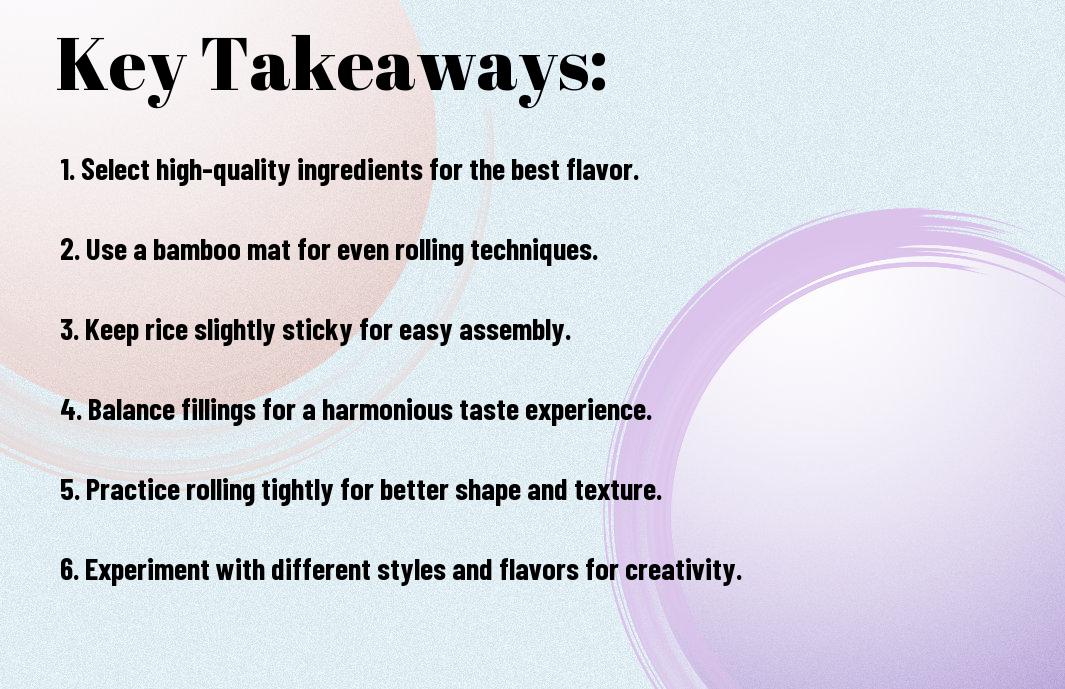
  • Preparation: Gather all ingredients, tools, and a clean workspace to ensure efficiency and creativity while rolling sushi.
  • Technique: Master the rolling technique by applying even pressure and using a bamboo mat to achieve uniform shapes and tight rolls.
  • Presentation: Focus on the visual appeal by cutting sushi rolls into even pieces and arranging them beautifully on a plate.
Understanding Sushi Fundamentals

For anyone aspiring to roll sushi like a master chef, understanding the fundamental components is vital. These elements will lay the groundwork for your sushi-making skills and enhance your appreciation for this culinary art. As you progress, you’ll discover the balance of flavors, textures, and presentation that define sushi mastery.

Types of Sushi

For sushi enthusiasts, it’s important to grasp the variety of sushi types. Each offers unique flavors and techniques that contribute to the overall experience.

  • Nigiri – Hand-formed rice topped with fish.
  • Maki – Rolled sushi with fillings, wrapped in seaweed.
  • Sashimi – Sliced raw fish served without rice.
  • Uramaki – Inside-out rolls with rice on the outside.
  • Temaki – Hand-rolled cones filled with ingredients.

Perceiving these distinctions will deepen your understanding and appreciation of sushi craftsmanship.

Sushi Type Description
Nigiri Rice with hand-formed topping of fish.
Maki Rice and fillings rolled in seaweed.
Sashimi Raw fish slices without rice.
Uramaki Rolled sushi with rice on the outside.
Temaki Hand-rolled sushi cone.

Essential Ingredients

An enjoyable sushi-making experience begins with selecting the important ingredients. Familiarizing yourself with these will elevate your sushi creations and enhance their authenticity.

Fundamentals of sushi revolve around quality ingredients. You’ll need sushi rice, a vital element that is sticky and short-grained. Fresh fish, such as tuna or salmon, is necessary for flavor, while nori provides that signature wrap. Additional toppings and fillings—like avocado, cucumber, or pickled vegetables—contribute to the overall taste. Don’t overlook rice vinegar, which enhances your sushi rice with a pleasant tang. Balancing these ingredients is key to creating delicious sushi that delights the palate.
Equipment Needed for Rolling Sushi

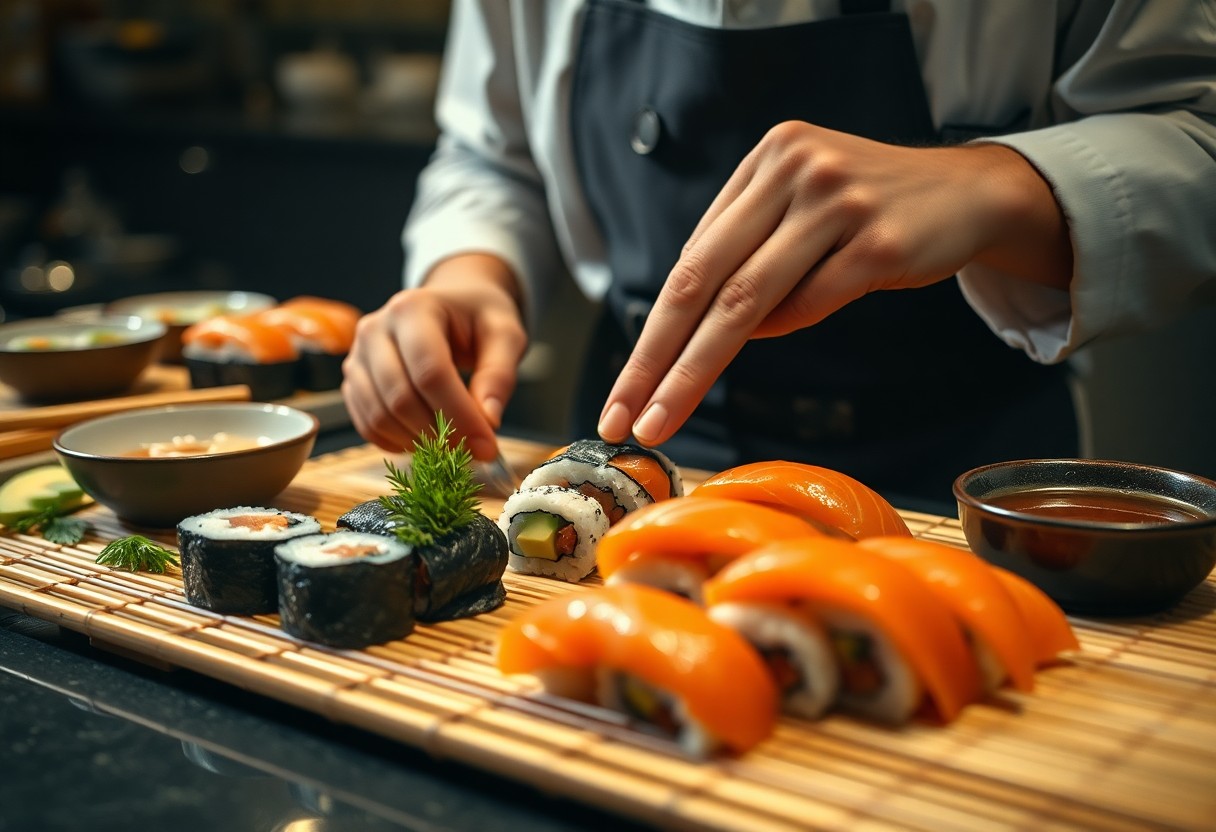
Clearly, having the right equipment is crucial for mastering the art of sushi rolling. To create beautifully crafted sushi rolls, you’ll need a few key tools that simplify the process and enhance your technique. Investing in high-quality equipment will not only elevate your sushi-making experience but also lead to impressive results that will delight your family and friends. Let’s investigate the must-have tools and optional accessories that will help you roll sushi like a master chef.

Must-Have Tools

Any sushi enthusiast should have a bamboo rolling mat, known as a makisu, which helps you achieve a tight roll. Additionally, a sharp, elongated knife is crucial for cutting your rolls cleanly, while a rice cooker can simplify the preparation of perfect sushi rice. You will also need high-quality sushi nori and a small bowl of water mixed with vinegar to help prevent sticking during the rolling process.

Optional Accessories

Tools like sushi molds or cutters can enhance your sushi-making experience by providing uniform shapes and sizes for your rolls. A sushi rolling guide may also assist you in achieving an even pressure while rolling, resulting in a more professional appearance. Other optional accessories, such as a sushi mat cover for easy cleanup and decorative plates for presentation, can take your sushi preparations to the next level.

Needed accessories can elevate your sushi rolling game and make the process easier. For instance, using sushi molds allows you to create consistent shapes and sizes with minimal effort. Additionally, decorative utensils and platters can enhance the visual appeal of your finished rolls, making for an impressive dining experience. Consider adding these optional accessories to your toolkit as you become more confident in your sushi-making abilities.

Preparing Sushi Rice

Your sushi journey begins with preparing the perfect sushi rice. This necessary component sets the foundation for all your sushi creations, providing the right texture and flavor to complement fresh ingredients. By following the correct techniques, you’ll ensure your sushi rice is both fluffy and slightly sticky—attributes that make it ideal for rolling and shaping. With the right preparation, your sushi will not only taste amazing but look stunning as well.

Cooking the Rice

Below, you’ll find a method for cooking sushi rice that will yield the desired consistency. Start by rinsing your sushi rice thoroughly under cold water, until the water runs clear. This removes excess starch and prevents the rice from becoming gummy. Then, use a rice cooker or pot, adding the correct water-to-rice ratio (typically 1:1.2) and cooking according to your device’s instructions. Once cooked, let it rest for 10-15 minutes to allow the grains to firm up.

Seasoning Techniques

Against popular belief, seasoning sushi rice is not merely about adding vinegar. The combination of vinegar, sugar, and salt creates a balance that enhances the rice’s flavor profile. To season your rice, gently fold in the mixture while the rice is still warm, being careful not to mash the grains. This technique ensures that every bite of your sushi is perfectly flavored, enhancing your overall sushi experience.

Cooking sushi rice is an art that requires careful attention to detail. After your rice has cooked, prepare a seasoning mixture of rice vinegar, sugar, and salt. Heat it slightly to dissolve the ingredients, but not to boil. Once combined, gently fold the seasoning into the warm rice using a wooden spatula, in a cutting motion rather than stirring, to maintain the grain integrity. The warmth of the rice will absorb the flavors, resulting in beautifully seasoned sushi that enhances your rolls.

Selecting and Preparing Fillings

Once again, the choice of fillings can elevate your sushi-making game. Opt for a range of textures and flavors, such as fresh vegetables, seafood, and proteins. Combining colors and tastes will not only create appealing sushi but also excite your palate. Be open to experimenting with different fillings; this is where your creativity shines. Prepare your ingredients in advance to ensure a smooth sushi rolling process.

Choosing Fresh Ingredients

Among the key factors for delightful sushi is the freshness of your ingredients. Look for bright, vibrant vegetables and fish that have a clean, ocean-like scent. Visit your local market or preferred fishmonger to select your items. The quality of your fillings directly influences the taste and overall experience of your sushi.

Cutting Techniques for Fillings

Among the necessary skills in sushi preparation, mastering cutting techniques enhances both aesthetics and flavor. Properly cut fillings ensure even distribution of ingredients and a cohesive roll. Aim for uniform sizes to maintain balanced flavor combinations. Additionally, sharp knives minimize bruising and oxidation, preserving the integrity of your fillings.

Considering the importance of cutting techniques, focus on using a sharp, quality knife to achieve clean, precise slices. For vegetables, cut them into thin julienne strips or small cubes, which will improve both presentation and ease of rolling. For proteins like fish, aim for slices of about 1/4 inch thick, allowing for a perfect balance in your sushi. Practice different techniques to find what works best for your favorite fillings, and don’t hesitate to experiment with shapes and sizes that suit your culinary style.

Mastering the Rolling Technique

Keep your focus on the rolling technique, as it’s the key to creating perfectly shaped sushi. Start by ensuring your ingredients are evenly distributed and your rice is spread thinly on the nori. Utilize a gentle yet firm pressure when rolling, making sure to tuck the ingredients securely while maintaining a cylindrical shape. The more you practice, the more your skills will refine, allowing you to create sushi that looks as impressive as it tastes.

The Use of Bamboo Mats

Along with mastering your technique, using a bamboo mat (makisu) is vital for achieving uniform rolls. The mat provides a stable surface and helps maintain consistent pressure while rolling. It’s beneficial to keep your mat clean and dry, and to place a layer of plastic wrap over it before rolling, which will prevent the rice from sticking and ensure easy cleanup after your sushi-making sessions.

Step-by-Step Rolling Process

Rolling sushi involves several steps that need to be followed for best results. Here’s a structured approach:

Step-by-Step Rolling Process

1. Prepare your ingredients and tools, including nori, rice, and fillings. 2. Place a sheet of nori shiny-side down on the bamboo mat.
3. Moisten your hands and spread an even layer of rice over the nori. 4. Add your desired fillings in a line across the center of the rice.
5. Lift the edge of the bamboo mat closest to you and gently roll. 6. Roll tightly while tucking in the ingredients until the roll is complete.
7. Use a sharp knife to slice your roll into bite-sized pieces. 8. Serve your sushi with soy sauce or your favorite dipping sauce.

Even though the rolling process can seem intricate, following these steps will lead you to delicious results. Start by properly preparing all your ingredients while ensuring the workspace is clean. Begin with a firm and even pressure during the initial roll, and gradually apply more as you tuck the ingredients. With practice, you’ll find your rhythm and discover how to customize rolls with various fillings and flavors, making every sushi session a unique experience.

Presentation and Serving Suggestions

Not only does sushi taste incredible, but its presentation can elevate your dining experience significantly. To wow your guests, arrange your sushi on a clean, white plate to emphasize the vibrant colors of the fish and ingredients. You may also want to garnish the dish with edible flowers or sliced radishes to create an inviting visual contrast, ensuring your culinary creation is as pleasing to the eye as it is to the palate.

Plating Techniques

Suggestions for plating include layering your sushi pieces in a fan-like arrangement or stacking them vertically to create height on the plate. Use different plate sizes for variation, and don’t shy away from incorporating elements of your cooking style into each dish, which adds a personal touch to your presentation.

Accompaniments and Sauces

Behind every perfect sushi roll lies an array of delicious accompaniments and sauces that enhance the flavor profiles of your dish. Pairing your sushi with items like pickled ginger, wasabi, and soy sauce not only complements the taste but also adds texture and variety to the meal.

Hence, consider serving small dishes with soy sauce, spicy mayo, or ponzu for dipping. Fresh wasabi can be a delightful alternative to the common paste. Additionally, creating a simple cucumber salad or edamame on the side can provide freshness, while a sprinkle of sesame seeds can add a subtle crunch. These elements work together to transform your sushi presentation into a complete culinary experience.

Final Words

Conclusively, mastering the art of rolling sushi requires practice and precision. By following the techniques outlined, including proper rice preparation, ingredient selection, and rolling methods, you can elevate your sushi-making skills to a professional level. Engage with your ingredients, experiment with flavors, and enjoy the creative process as you refine your technique. With dedication and passion, you will be able to impress family and friends with your culinary creations that reflect the essence of authentic sushi craftsmanship.

Q: What ingredients do I need to roll sushi at home?

A: To roll sushi like a master chef, you’ll need a few key ingredients. First, sushi rice is necessary; it should be short-grain rice that becomes sticky when cooked. You’ll also need rice vinegar, sugar, and salt to season the rice. For fillings, you can use fresh fish like salmon or tuna, vegetables such as cucumber and avocado, and other items like crab meat or pickled radish. Nori, the seaweed sheets used to wrap the sushi, is also necessary. Don’t forget a sharp knife for slicing your rolls and a bamboo mat to help with the rolling process!

Q: How do I properly prepare sushi rice?

A: Preparing sushi rice is an important step for making great rolls. Start by rinsing 2 cups of short-grain rice under cold water until the water runs clear, which removes excess starch. Then, cook the rice according to the package instructions, usually combining it with 2 cups of water. Once cooked, let it sit for about 10 minutes off the heat. After that, transfer the rice to a large bowl and gently fold in a mixture of 1/4 cup rice vinegar, 2 tablespoons sugar, and 1 teaspoon salt, which should be heated lightly to dissolve the sugar. Allow the rice to cool to room temperature before using it to roll your sushi.

Q: What techniques should I use to roll sushi effectively?

A: Rolling sushi takes a bit of practice, but there are some techniques that can help you get it right. Start by placing a sheet of nori on your bamboo mat, shiny side down. Wet your hands with a mixture of water and rice vinegar to prevent sticking, then take a handful of sushi rice and spread it evenly across the nori, leaving about an inch at the top. Place your fillings in a line at the bottom of the rice. Using the bamboo mat, start rolling away from you while applying gentle pressure to shape the roll. Continue to roll until the nori edges overlap and seal the roll with a little water. Finally, use a sharp knife to slice the roll into bite-sized pieces for serving. Consistent practice and adjusting your technique will improve your rolling skills over time!
Making Sushi Without a Bamboo Mat

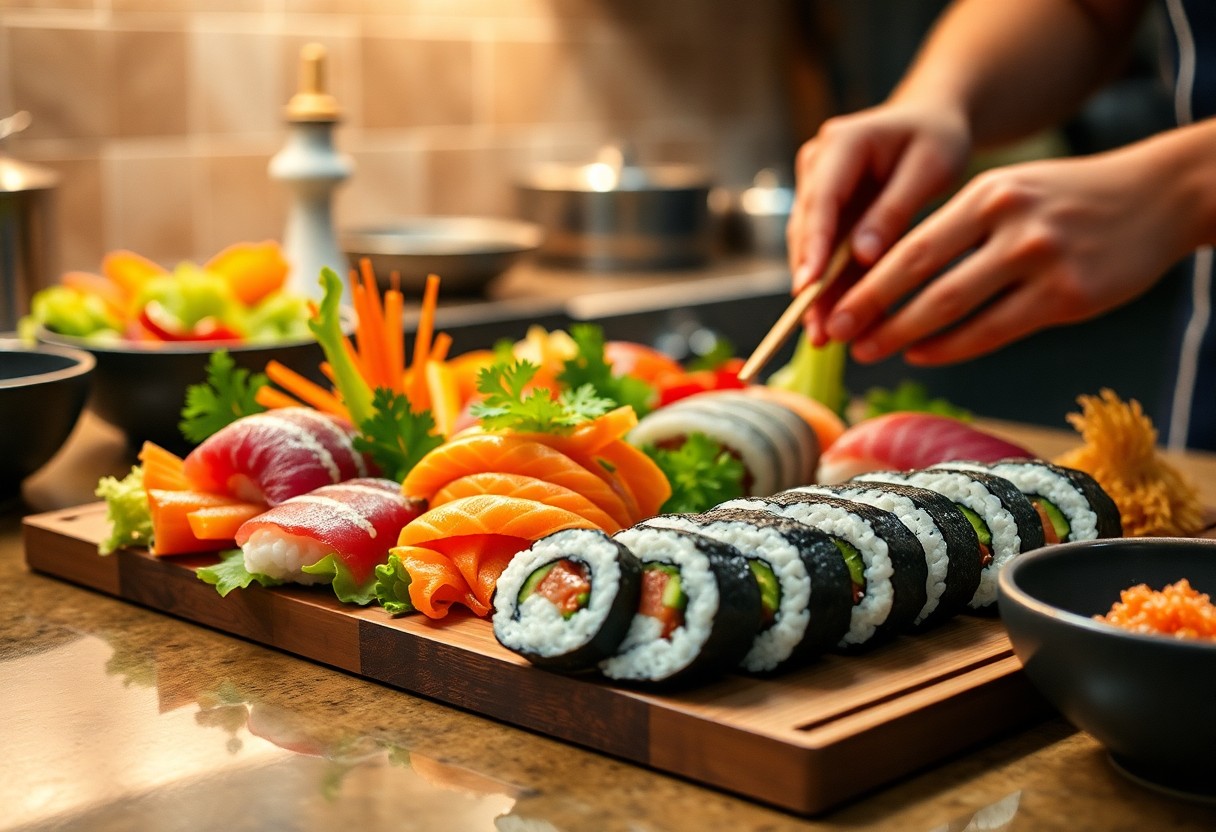
Most homemade sushi enthusiasts think a bamboo mat is important for perfect rolls, but you can easily create delicious sushi without one. This guide will show you how to utilize common kitchen tools and techniques to roll sushi effectively. Whether you’re in a pinch or just prefer a simpler approach, you’ll discover that with a little creativity and practice, your homemade sushi can be just as rewarding and visually appealing, all without the need for a traditional bamboo mat.

Key Takeaways:

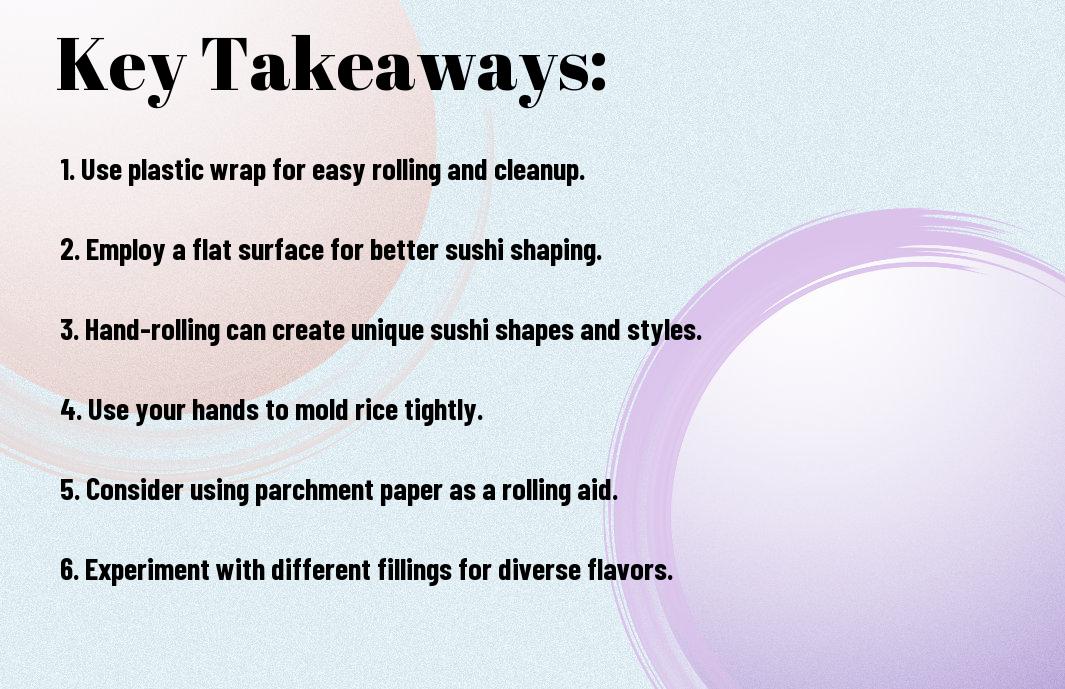
  • Alternative Surfaces: You can effectively create sushi using a variety of flat surfaces, such as a cutting board or plastic wrap, eliminating the need for a bamboo mat.
  • Rolling Techniques: Master rolling by using your hands or a clean towel to guide and shape the sushi, ensuring a tight and even roll without compromising texture.
  • Ingredient Preparation: It’s imperative to prepare your ingredients, such as rice and fillings, properly to achieve the best results and maintain sushi integrity while rolling.

Understanding Sushi Ingredients

Before you commence on your sushi-making adventure, it’s important to familiarize yourself with the various ingredients that contribute to this delicious dish. The key components of sushi include sushi rice, fresh fish, and an assortment of vegetables. For a comprehensive guide on assembling your sushi without the need for a bamboo mat, check out How to Make Sushi Without a Mat.

Rice Selection and Preparation

To create the perfect sushi roll, you need to select high-quality sushi rice. Look for short-grain rice, which becomes sticky when cooked, allowing it to hold its shape in rolls. Rinse the rice thoroughly before cooking to remove excess starch, then steam it with the right ratio of water to achieve the desired consistency. Season your cooked rice with a mixture of rice vinegar, sugar, and salt to enhance its flavor and prepare it for rolling.

Fish and Vegetable Choices

One of the joys of making sushi is selecting fresh fish and vibrant vegetables to fill your rolls. Opt for sushi-grade fish such as salmon, tuna, or yellowtail, ensuring it’s sourced from a reputable supplier. For vegetables, consider picking options like cucumber, avocado, or bell peppers for added flavor and texture. Make sure all ingredients are prepared meticulously to create the best sushi experience.

Considering the variety of fish and vegetables available, your sushi possibilities are endless. You can experiment with textures and tastes by combining different ingredients in new ways. For example, try mixing creamy avocado with crunchy cucumber, or pair rich tuna with a hint of spicy mayonnaise for a unique flavor profile. The key to outstanding sushi lies in your creativity and the freshness of the ingredients you choose.

Essential Tools for Sushi Making

Some tools are indispensable when making sushi at home. While you may not have a bamboo mat, you’ll need items that help you roll and shape your sushi effectively. Consider alternatives and kitchen crucials that will allow you to create delicious sushi in your own kitchen without the need for specialized equipment.

Alternatives to a Bamboo Mat

Essential tools can help you replicate the sushi experience without using a bamboo mat. Items like a clean kitchen towel, parchment paper, or even a cutting board can serve as makeshift mats. By getting creative with what you have at home, you can roll sushi just as effectively.

Kitchen Utensils You’ll Need

At a minimum, you should gather a sharp knife, a cutting board, and a bowl of water. You might also want a rice paddle or a spoon for handling the rice, as well as a small dish for soy sauce. These utensils will help you prepare and present your sushi with ease.

In fact, having the right kitchen utensils makes a significant difference in your sushi-making experience. A sharp knife is crucial for cutting both fish and finished rolls cleanly, while a cutting board provides a stable surface for your work. The rice paddle is particularly helpful for keeping your rice from sticking to your hands, ensuring a smooth preparation process. Gathering these tools beforehand will streamline your efforts and enhance your overall sushi-making capabilities.

Step-by-Step Guide to Rolling Sushi

Many people believe that a bamboo mat is necessary for rolling sushi, but you can successfully create delicious rolls without one. Follow these simple steps for a perfect sushi roll:

Steps Description
1. Prepare your rice Cook sushi rice and let it cool to room temperature.
2. Gather your fillings Choose fresh fish, vegetables, and other ingredients.
3. Create your rolling surface Use a clean, flat surface or a cutting board.
4. Assemble your ingredients Place rice and fillings on a sheet of nori.
5. Roll the sushi Carefully roll the nori into a cylinder shape.
6. Cut and serve Slice your roll into pieces and enjoy!

Preparing Your Ingredients

After you have your sushi rice cool and your fillings selected, it’s time to prepare everything for assembly. Ensure your vegetables are sliced thinly, and your fish is fresh and ready to go. Organizing your ingredients in front of you will save time and make the rolling process more efficient.

Rolling Techniques Without a Bamboo Mat

The key to rolling sushi without a bamboo mat lies in using your hands effectively. Start by placing a sheet of nori on your flat surface, then layer a thin even spread of rice followed by your fillings. Use your fingers to tuck the edge of the nori closest to you over the rice and fillings, rolling firmly as you go to create a tight roll.

Due to the absence of a bamboo mat, you might need to adjust your technique slightly. Use your fingers to apply pressure on the roll while guiding it with your other hand to ensure it maintains its shape. Use a quick motion to seal the edge of the nori with a little water, which helps in holding the roll together once it is cut. It may take a bit of practice, but soon you’ll master the art of rolling sushi without a mat.

Creative Sushi Variations

Once again, sushi gives you a canvas for creativity beyond traditional rolls. Experiment with different proteins like grilled chicken or tofu, and explore vibrant toppings like avocado, mango, or spicy mayo. You can even play with the rice, using cauliflower or brown rice for a twist on the classic. The key is to let your imagination guide you, resulting in a personal sushi masterpiece that reflects your tastes and preferences.

Sushi Bowls

For a more casual approach, consider assembling sushi bowls. These bowls combine all your beloved sushi ingredients—sushi rice, fish, vegetables, and sauces—layered beautifully in one dish. This method allows you to customize each element, making it easy to cater to different dietary preferences while still enjoying the flavors you love.

Hand Rolls and Other Styles

Behind the scene of traditional sushi lies the delightful world of hand rolls and other creative styles. Hand rolls, or temaki, are a fun way to enjoy sushi by wrapping ingredients in a cone of nori. They are not only visually appealing but also great for bringing friends together for a sushi-making experience. With hand rolls, you can enjoy a fresh burst of flavor while allowing each person to customize their own roll with their favorite ingredients.

At the core of making hand rolls is the flexibility of ingredient choices. Fill them with raw sushi-grade fish, cooked shrimp, or even vibrant vegetables to suit your tastes. You can also wrap them in larger sheets of nori for added crunch or opt for rice paper for a gluten-free option. This style encourages creativity, as you can experiment with various combinations and presentations, making it a fantastic way to explore sushi without a mat. Your hand rolls can become signature creations that embody your own culinary style and preferences, offering a unique twist to your sushi feasts.

Common Mistakes to Avoid

After you’ve decided to make sushi without a bamboo mat, it’s vital to steer clear of some common pitfalls that can ruin your experience. Problems such as overcooked rice, messy rolling, and improper fillings can diminish the quality and aesthetic of your sushi. By being mindful of these errors, you can elevate your sushi-making skills and enjoy a successful and tasty outcome.

Overcooking the Rice

Before starting your sushi-making adventure, ensure that you pay attention to the rice cooking process. Overcooked rice can become mushy and difficult to work with, ruining the texture of your sushi. Aim for a fluffy consistency, letting the rice cool without losing its stickiness, which is imperative for holding your sushi together.

Poor Rolling Techniques

Avoid rushing through the rolling process, as improper techniques can lead to loose and falling apart sushi. Focus on applying even pressure while rolling to create a tight, secure roll. Don’t be afraid to experiment and find what works best for you, as mastering your technique will significantly improve your sushi presentation and taste.

And as you practice your rolling, consider the placement of your fillings. Avoid overstuffing your sushi, which can lead to difficulty in rolling and tearing of the seaweed. Instead, aim for balanced portions of fillings, distributing them evenly across your rice. This approach not only enhances the flavor of your sushi but also makes rolling much easier, resulting in a more enjoyable sushi experience.

Serving and Storing Sushi

All sushi is best enjoyed fresh, so serving and storing it properly helps maintain its flavor and texture. When presenting your sushi, you’ll want to keep it looking appetizing and vibrant. Use a clean plate and arrange the sushi pieces aesthetically, ensuring that the colors contrast nicely. You may also consider incorporating garnishes, such as slices of cucumber, a sprinkle of sesame seeds, or decorative wasabi and pickled ginger. This will enhance the visual appeal of your dish.

Presentation Tips

Below are some helpful tips for presenting your sushi beautifully:

  • Use a contrasting plate color to highlight the sushi.
  • Group sushi pieces in odd numbers or stacks for visual interest.
  • Add fresh herbs or edible flowers for an elegant touch.

This will make your sushi visually irresistible.

Proper Storage Techniques

Serving sushi should be done right away, but if you have leftovers, proper storage is imperative. In fact, sushi should be stored in an airtight container in the refrigerator to prevent it from drying out or absorbing other odors. Be mindful that sushi should ideally be consumed within 24 hours for the best quality. If your sushi contains raw fish, it’s imperative to minimize exposure to warm temperatures to ensure food safety. Moreover, do not freeze sushi, as this can ruin its texture.

Summing up

With this in mind, making sushi without a bamboo mat is entirely possible and can be a fun, creative process. You can utilize alternatives like parchment paper or even your hands to shape the sushi rolls. Focus on using the right amount of rice and filling, and practice your rolling technique to achieve a satisfying result. Whether you’re crafting sushi for a special occasion or just experimenting in your kitchen, these tips will help you create delicious rolls that showcase your culinary skills, all without needing specialized tools.

FAQ

Q: Can I use plastic wrap instead of a bamboo mat for rolling sushi?

A: Yes, plastic wrap can be an excellent alternative to a bamboo mat when making sushi. To use plastic wrap, lay it out flat on a clean surface and place your nori sheet on top of it. After adding your fillings, use the plastic wrap to help you roll the nori tightly. The wrap acts as a barrier, making it easier to shape your sushi without leaving sticky residue on your hands or surfaces.

Q: What if I don’t have a sushi mat or plastic wrap. Can I still roll sushi?

A: Absolutely! If you don’t have a bamboo mat or plastic wrap, you can use a clean kitchen towel or a cutting board to help shape your sushi. Lay the nori on the towel or cutting board and add your rice and fillings. To roll, use your hands to gently lift and fold the edges of the nori over the fillings, rolling it away from you. With some practice, you can achieve a tight roll without specific tools.

Q: Are there other techniques for shaping sushi without a mat?

A: Indeed, there are several methods you can use for shaping sushi without a mat. One popular technique is the “hand roll” method, where you use your hands to create cone-shaped sushi. Instead of rolling the sushi, you form a cone by placing the nori in your hand, adding rice and fillings, and then folding the nori around them. This approach not only eliminates the need for a mat but also allows for a fun and personalized sushi experience.

How to Make Sushi

Watch more Introduction to Sushi Making videos: http://www.howcast.com/videos/270-How-to-Make-Sushi

You may think sushi is just raw fish, but you’d only be half right. It’s actually the combination of fish and rice – and how it’s combined is an art form in itself.

Step 1: Slice fish
With a very sharp knife, slice the trimmed fish slab into individual portions so each piece is a rectangle approximately 2-inches long and ¼-inch thick.

Tip
To make things easier, cut all your fish at one time, but keep the pieces cold until you use them —put them on a plate and keep it in the refrigerator or on top of some ice.

Step 2: Roll rice into ball
Moisten your hands with water from your bowl, and scoop an ounce of sushi rice—about the amount that will fit into your palm—and roll it into a ball.

Step 3: Shape rice ball
Shape the rice ball into an oblong by squeezing it with firm but gentle pressure.

Tip
Your rice should be about the same size as your cut piece of fish.

Step 4: Dab wasabi on fish
Pick up a piece of sliced fish. While palming the shaped rice, scoop up a tiny amount of wasabi with your index finger and gently dab it onto the middle of the fish.

Step 5: Press rice against fish
Press the shaped rice against the fish and gently but firmly cup the two together until they adhere.

Step 6: Squeeze together
Firmly squeeze the sushi together until the fish and rice become one. Tap with your right index finger as you go to create a uniform shape.

Step 7: Continue process
Place the finished sushi on a serving plate or sushi board, and continue making pieces until all the fish is used.

Step 8: Garnish plate
Garnish the plate with a mound of Japanese pickled ginger and a smaller mound of wasabi. Pour some soy sauce into a small dish and get ready to dunk.

Did You Know?
Real wasabi is notoriously expensive, so most sushi restaurants just use a mixture of horseradish, mustard powders, and food coloring.

People Learn Disturbing Sushi Facts While Eating Sushi

These facts will ruin your life.

Check out more awesome videos at BuzzFeedBlue!
https://bit.ly/YTbuzzfeedblue1

GET MORE BUZZFEED:
https://www.buzzfeed.com
https://www.buzzfeed.com/videos
https://www.youtube.com/buzzfeedvideo
https://www.youtube.com/boldly
https://www.youtube.com/buzzfeedblue
https://www.youtube.com/buzzfeedviolet
https://www.youtube.com/perolike
https://www.youtube.com/ladylike

BuzzFeedBlue
Sports, video games, Unsolved & more epic daily videos!

Created by https://www.buzzfeed.com/bfmp/videos/14463

¿Cómo preparar Sushi? Receta de cocina fácil y rápida para hacer rollos maki o sushi

Chic@s esta es una receta de cocina muy fácil de preparar.
Receta de cocina fácil y sencilla para hacer sushi o rollos maki.
La mayoría de los ingredientes los pueden conseuir en un supermercado chino u oriental. Aunque el sushi es una comida de origen japonés, en la mayoría de las ciudades es más fácil encontrar un super chino que un japonés.

Ingredientes:

– 1 taza de arroz para sushi

– Vinagre de arroz

– Mirin

– Alga kombu

– Camarones

– Queso crema

– Salmón

– Surimi

– Pepino

– Aguacate

– Alga nori

– Ajonjoli

Preparación:

1. Enjuaga el arroz con agua fria hasta que el agua salga casi transparente

2. En un bowl pon el arroz con un poco de agua, esto quiere decir que el agua sobrepase al arroz por un dedo o dedo y medio, y agrega un cuadrito de alga kombu y deja reposar durante 30 minutos

3. Vacia todo lo del bowl y agrega 1 cucharada de mirin y ponlo a hervir a fuego lento durante 5 minutos y después de esto tapa la olla y dejalo hervir durante mas tiempo hasta que el arroz este suave e inflado. Deja enfriar.

4. Corta el pepino en tiritas al igual que el surimi, el aguacate, el salmón y el queso crema

5. ya que se enfrio el arroz vacialo a un bowl y agrega un chorrito de vinagre de arroz y revuelvelo muy bien, antes de revolverlo lavate las manos para poder tenerlas mojadas y que no se te pequge el arroz cuando se te empiece a pegar el arroz mojate las manos otra vez.

6. En un tapete para sushi Pon una lamina de alga nori siempre dejando el lado liso y brilloso del lado del papelito y el lado poroso para arriba (las lineas deben ir paralelas a las lineas del tapetito)

7. Sobre el alga pon un poco de arroz y extiendelo para poder hacer la base del sushi, recuerda dejar un centimetro de cada lado del alga para poder pegar el sushi.

8. Agrega los ingredientes que tu quieras y comienza a enrrollar. Durante este paso presiona muy bien para poder pegar el sushi pero no tanto que se salgan los ingredientes.

9. En el extremo que no tiene arroz mojalo un poco para poder pegarlo y que no se abra el sushi.

10. Para un rollo maki despues de ponerle el arroz y extenderlo voltealo dejando el arroz hacia abajo y pon los ingredientes del lado del alga. Repite los pasos 8 y 9

11. ya que este listo en un plato vacia un poco de ajonjoli y cubre el rollo maki.

12. en una tabla corta el rollo con un cuchillo de sierra y montalo todo en un plato.

Y listo asi queda nuestro sushi 🙂

Mi facebook: http://www.facebook.com/TeamKaren
Mi Twitter: http://www.twitter.com/PPTeamKaren

Visita nuestro sitio oficial: http://www.platicapolinesia.com

Suscribete: http://www.youtube.com/subscription_center?add_user=ppmussas

Como preparar sushi
Receta facil para preparar sushi (rollos maki)
Receta sencilla para hacer sushi (rollos maki)
Comida rápida comida japonesa comida china comida tailandesa oriental tai Recetas de cocina facil recetas de postres sushi pollo pasteles pizza lasagna michelada comida internacional arroz chino carne para hamburguesas platillos cena (que haces leyendo esto) receta de pay de queso pie de queso cupcakes receta de galletas crepas donas receta de fondant

How To Make Simple And Delicious Sushi(1/2)

http://www.facebook.com/fortunecooking. How To Make Simple And Delicious Sushi At Home.

How to make simple and delicious sushi (2/2)

1. 2 cups of short grain sushi rice, 2 cups of water, wash and rinse for a couple of times and soak the rice for 1 hour.
2. Use the rice cooker or a pot of water over medium heat to cook the rice. Bring to boil, turn to low heat for 10 minutes and turn off the heat, cover and sit for another 15 minutes until the rice cooked.
3. Making rice vinegar: 1/3 cup of rice vinegar, 2 TBS of white sugar, 1/2 tsp of salt, 1 tsp of dashi.
4. Pour the vinegar mixture on rice and stir well.
5. Let rice cool down for a few minutes until within the room temperature.

Basic ingredients needed: sushi wrapper, cucumber, avocado, wasabi, ginger, salmon, yellow fin tuna, cooked shrimp, mayo, shicimi, ponzu sauce, eel sauce.

You can make: cucumber roll, avocado roll, salmon cucumber roll, salmon avocado roll,
tuna cucumber roll, tuna avocado roll, shrimp cucumber roll, shrimp avocado roll. You can also add spicy mayo and drizzle eel sauce. Enjoy.

Sharpening Knife on a Whetstone with Master Sushi Chef Hiro Terada.

Master Sushi Chef Hiro Terada shows you how he sharpens his Kikuichi knife with a 1000 grit Masahiro whetstone, and then further polishes his knife with a Kikuichi 6000 grit wet stone.

Key things to remember are:
Soak the stone for at least 24 hours prior to sharpening; this assists the water lubrication to keep the knife from scratching against a harsh surface and damaging the blade.

Always use equal pressure throughout the blade at a 15 degree angle.

Always use the complete surface of the stone in order to keep the stone smooth and equally worn.

Follow Hiroyuki Terada:
Facebook: https://facebook.com/pages/NoVe-kitchen-and-bar/175557962456764
Instagram: https://www.instagram.com/diariesofamastersushichef/
Twitter: https://twitter.com/RealSushiChef

Hiro's Second Channel:
https://youtube.com/user/MIAMISPICE68

Camera Man's Channel:
https://www.youtube.com/charlespreston

Watch More Hiroyuki Terada:
Recent Uploads: https://youtube.com/playlist?list=PLw4w6pxDkwuYuWPKACrEdlFbNXtFK52AU
Popular Videos: https://youtube.com/playlist?list=PLw4w6pxDkwuZYtstHx4FrAi8ftIz7sPvz
Extreme Series: https://youtube.com/playlist?list=PLw4w6pxDkwuY19AA30–T67M3K-WGriC8
Low Difficulty Recipes: https://youtube.com/playlist?list=PLw4w6pxDkwuYWch7Yc_lFyoSU9_M2Lvw5

Support our Patreon page to see exclusive content not seen on YouTube, videos that will make you a better sushi chef, and recipes that will dazzle your tastebuds…Master Sushi Chef Hiroyuki Terada shares his utmost intimate knowledge with you. https://www.patreon.com/diariesofamastersushichef

As always, we wish to thank all of our fans for spending time here with us on YouTube. We're all humbled and grateful for all of you and for all the sweet, kind and spirited comments. See you in the next episode…

Send fan mail and products to be reviewed to:
Hiroyuki Terada
6815 Biscayne Blvd,
Suite 103-451
Miami, FL 33138

New videos every Sunday and Wednesday!

Business Inquiries: [email protected]

———–

About Master Sushi Chef Hiroyuki Terada:

Master Sushi Chef Hiroyuki Terada is one of the top Japanese Chefs in the entire world and the most popular Japanese chef on YouTube.

At age 10, Terada learned the basics of sushi from his father and then went on to attend RKC Chef's School in Kochi, Japan from 1987-1989. He soon earned a nickname for his fast knife, attention to detail, divine presentation and ability to create new dishes and accents based on traditional Japanese cuisine. After graduating RKC Chef School, he was called to serve under Master Chef Kondo at Yuzuan restaurant in Kochi, Japan from 1989-1992. Mr. Kondo is the master of Kansai style cooking, considered to be the high-end of Japanese cuisine. Terada earned the title Master Sushi Chef by becoming the standing head sushi chef & can serve Fugu (Japan Licensed) to the public.

———–

Chef Hiroyuki Terada is using the Minonokuni Matsu-1573 210mm Yanagi. Super Blue Steel. Can also be used for breaking down whole fish and chickens. But normally for slicing, sashimi, vegetables, meat etc.. This is Chef Hiro's custom specked knife.

For more information on these knives, contact David Holly at [email protected] or visit knifemerchant.com

Let us know how you enjoy your Minonokuni.

Knife Merchant
7887 Dunbrook Road
Suite H
San Diego, CA 92126
800-714-8226
www.knifemerchant.com

Koi fish sushi コイ寿司

Click CC for English caption! 日本語字幕は設定からご覧いただけます。

►EQUIPMENT I use in my channel(Amazon affiliates links)

Damascus Chef's Knife (http://amzn.to/2APxc8w)

Chef Knife: Sekimagoroku Gyuto (http://amzn.to/1OkxnYt)

Chef & Utility Knife: Zwilling twin fin (http://amzn.to/1OkzyLF)

Japanese slicer: http://amzn.to/1TpgMTj

Utility Knife: http://amzn.to/1Okz3RH

Camera: Panasonic Lumix FZ-1000 (http://goo.gl/htPRH1)

►Main Channel (メイン): https://www.youtube.com/user/MyHusbandisJapanese
 
 Instagram (インスタ): https://www.instagram.com/junskitchen/

【Ingredients】

-Sushi rice –

Rice 180ml
Vinegar 15g
Sugar 10g
salt 5g

-Squid koi-

1 block of Squid (Diamondback squid)
1 piece of Spicy cod roe
Seaweed

-Shrimp koi-

2 – 3 Shrimp
1 Cucumber
2 Cherry radish
Black sesame or seaweed (for eyes)

音楽:「old Gold」http://musmus.main.jp/

Kontinuum – First Rain [NCS Release] (https://www.youtube.com/watch?v=SKI1P2gEK54)
▽ Follow Kontinuum
SoundCloud https://soundcloud.com/kontinuum
Facebook http://www.facebook.com/itsKontinuum
Instagram https://instagram.com/itskontinuum
Twitter https://twitter.com/itsKontinuum

How To Make Sushi

Today I show you how to correctly make Sushi. In this video I explain exactly how you should Prepare, cut and serve your sushi for the best possible results. This recipe is used by thousands of chefs all around the world including Gordon Ramsay.

–INGREDIENTS–
Rice
Fish
Beans
Seaweed Sheets
Mixed Vegetables
Sushi

Click Here To Eggscribe! –►
http://bit.ly/Eggscribe

Have a video Suggestion? Post it in the Comments Section, or Contact me through my Facebook page!

T-Shirts & Merchandise – http://howtobasic.spreadshirt.com/

Follow me on Instagram! – 'HowToBasic'

Like me on Facebook! http://www.facebook.com/HowToBasic

Follow me on Twitter! http://www.twitter.com/HowToBasic

Check out my 2ND Channel! – http://www.youtube.com/howtobasic2

HowToBasic howtobasic How To Basic

How to Eat Sushi: You’ve Been Doing it Wrong

Click here to learn all the rules of eating sushi: http://bit.ly/1p8UQ3p

Coming to you straight from the sushi chef’s mouth, MUNCHIES presents the dos and don’ts of eating sushi, as taught by Tokyo's Naomichi Yasuda. Be warned: You’ve been doing it wrong.

Subscribe to Munchies here: http://bit.ly/Subscribe-to-MUNCHIES

Click here for more How-To videos: http://bit.ly/1tT33ut

Check out http://munchies.tv for more!

Follow Munchies here:
Facebook: http://facebook.com/munchies
Twitter: http://twitter.com/munchies
Tumblr: http://munchies.tumblr.com
Instagram: http://instagram.com/munchiesvice

How To Fillet a Whole Salmon – How To Make Sushi Series

Master Sushi Chef Hiro Terada shows you how to fillet a whole Scottish Salmon with ease. The main thing is to of course start with a very sharp knife. You'll also need a pair of tweezers that can remove the bones that are still set in the meat once you remove the main bone that's down the center.

One important thing that we don't show here is when Chef Hiro removes the scales from the fish. It's a simple process using a fish scale remover. Just use the tool and from from tail to the head in a consistent motion until there are no more scales.

Follow Hiroyuki Terada:
Facebook: https://facebook.com/pages/NoVe-kitchen-and-bar/175557962456764
Instagram: https://www.instagram.com/diariesofamastersushichef/
Twitter: https://twitter.com/RealSushiChef

Hiro's Second Channel:
https://youtube.com/user/MIAMISPICE68

Camera Man's Channel:
https://www.youtube.com/charlespreston

Watch More Hiroyuki Terada:
Recent Uploads: https://youtube.com/playlist?list=PLw4w6pxDkwuYuWPKACrEdlFbNXtFK52AU
Popular Videos: https://youtube.com/playlist?list=PLw4w6pxDkwuZYtstHx4FrAi8ftIz7sPvz
Extreme Series: https://youtube.com/playlist?list=PLw4w6pxDkwuY19AA30–T67M3K-WGriC8
Low Difficulty Recipes: https://youtube.com/playlist?list=PLw4w6pxDkwuYWch7Yc_lFyoSU9_M2Lvw5

Support our Patreon page to see exclusive content not seen on YouTube, videos that will make you a better sushi chef, and recipes that will dazzle your tastebuds…Master Sushi Chef Hiroyuki Terada shares his utmost intimate knowledge with you. https://www.patreon.com/diariesofamastersushichef

As always, we wish to thank all of our fans for spending time here with us on YouTube. We're all humbled and grateful for all of you and for all the sweet, kind and spirited comments. See you in the next episode…

Send fan mail and products to be reviewed to:
Hiroyuki Terada
6815 Biscayne Blvd,
Suite 103-451
Miami, FL 33138

New videos every Sunday and Wednesday!

Business Inquiries: [email protected]

———–

About Master Sushi Chef Hiroyuki Terada:

Master Sushi Chef Hiroyuki Terada is one of the top Japanese Chefs in the entire world and the most popular Japanese chef on YouTube.

At age 10, Terada learned the basics of sushi from his father and then went on to attend RKC Chef's School in Kochi, Japan from 1987-1989. He soon earned a nickname for his fast knife, attention to detail, divine presentation and ability to create new dishes and accents based on traditional Japanese cuisine. After graduating RKC Chef School, he was called to serve under Master Chef Kondo at Yuzuan restaurant in Kochi, Japan from 1989-1992. Mr. Kondo is the master of Kansai style cooking, considered to be the high-end of Japanese cuisine. Terada earned the title Master Sushi Chef by becoming the standing head sushi chef & can serve Fugu (Japan Licensed) to the public.

———–

Chef Hiroyuki Terada is using the Minonokuni Matsu-1573 210mm Yanagi. Super Blue Steel. Can also be used for breaking down whole fish and chickens. But normally for slicing, sashimi, vegetables, meat etc.. This is Chef Hiro's custom specked knife.

For more information on these knives, contact David Holly at [email protected] or visit knifemerchant.com

Let us know how you enjoy your Minonokuni.

Knife Merchant
7887 Dunbrook Road
Suite H
San Diego, CA 92126
800-714-8226
www.knifemerchant.com

Skip to content