chef

How to Roll Sushi Like a Master Chef

With the right techniques and a few necessary tips, you can elevate your sushi-making skills to a master chef level. This guide will walk you through the process of rolling sushi, from selecting the perfect ingredients to mastering the rolling technique. You’ll learn about the various types of sushi rolls and how to personalize them according to your taste. Get ready to impress your friends and family with your newfound culinary prowess!

Key Takeaways:

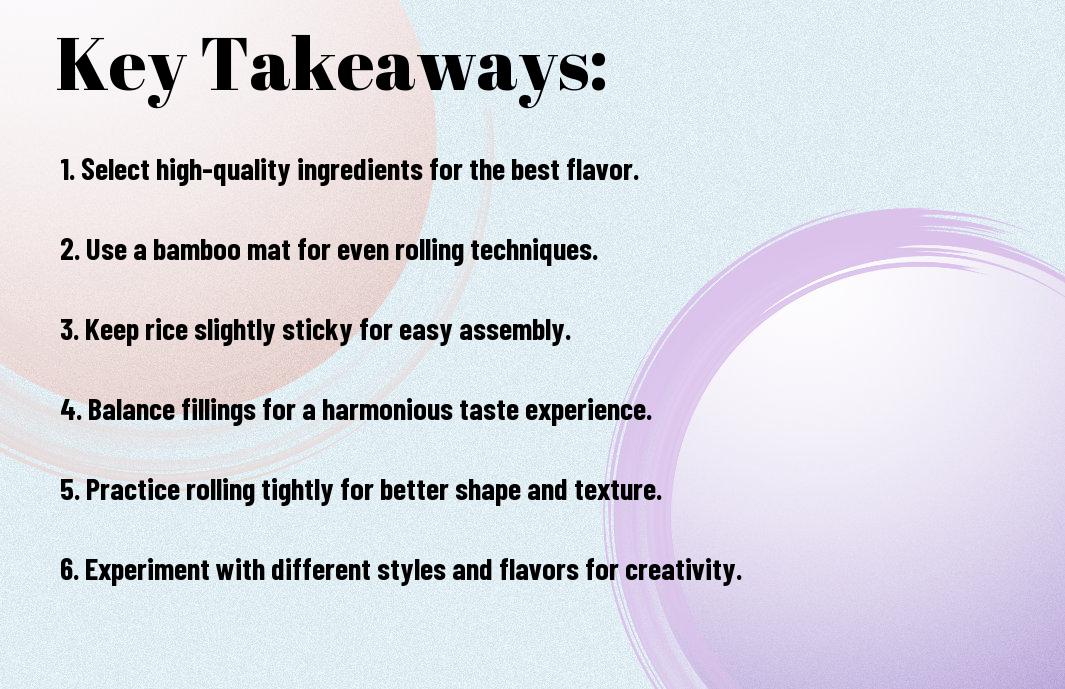
  • Preparation: Gather all ingredients, tools, and a clean workspace to ensure efficiency and creativity while rolling sushi.
  • Technique: Master the rolling technique by applying even pressure and using a bamboo mat to achieve uniform shapes and tight rolls.
  • Presentation: Focus on the visual appeal by cutting sushi rolls into even pieces and arranging them beautifully on a plate.
Understanding Sushi Fundamentals

For anyone aspiring to roll sushi like a master chef, understanding the fundamental components is vital. These elements will lay the groundwork for your sushi-making skills and enhance your appreciation for this culinary art. As you progress, you’ll discover the balance of flavors, textures, and presentation that define sushi mastery.

Types of Sushi

For sushi enthusiasts, it’s important to grasp the variety of sushi types. Each offers unique flavors and techniques that contribute to the overall experience.

  • Nigiri – Hand-formed rice topped with fish.
  • Maki – Rolled sushi with fillings, wrapped in seaweed.
  • Sashimi – Sliced raw fish served without rice.
  • Uramaki – Inside-out rolls with rice on the outside.
  • Temaki – Hand-rolled cones filled with ingredients.

Perceiving these distinctions will deepen your understanding and appreciation of sushi craftsmanship.

Sushi Type Description
Nigiri Rice with hand-formed topping of fish.
Maki Rice and fillings rolled in seaweed.
Sashimi Raw fish slices without rice.
Uramaki Rolled sushi with rice on the outside.
Temaki Hand-rolled sushi cone.

Essential Ingredients

An enjoyable sushi-making experience begins with selecting the important ingredients. Familiarizing yourself with these will elevate your sushi creations and enhance their authenticity.

Fundamentals of sushi revolve around quality ingredients. You’ll need sushi rice, a vital element that is sticky and short-grained. Fresh fish, such as tuna or salmon, is necessary for flavor, while nori provides that signature wrap. Additional toppings and fillings—like avocado, cucumber, or pickled vegetables—contribute to the overall taste. Don’t overlook rice vinegar, which enhances your sushi rice with a pleasant tang. Balancing these ingredients is key to creating delicious sushi that delights the palate.
Equipment Needed for Rolling Sushi

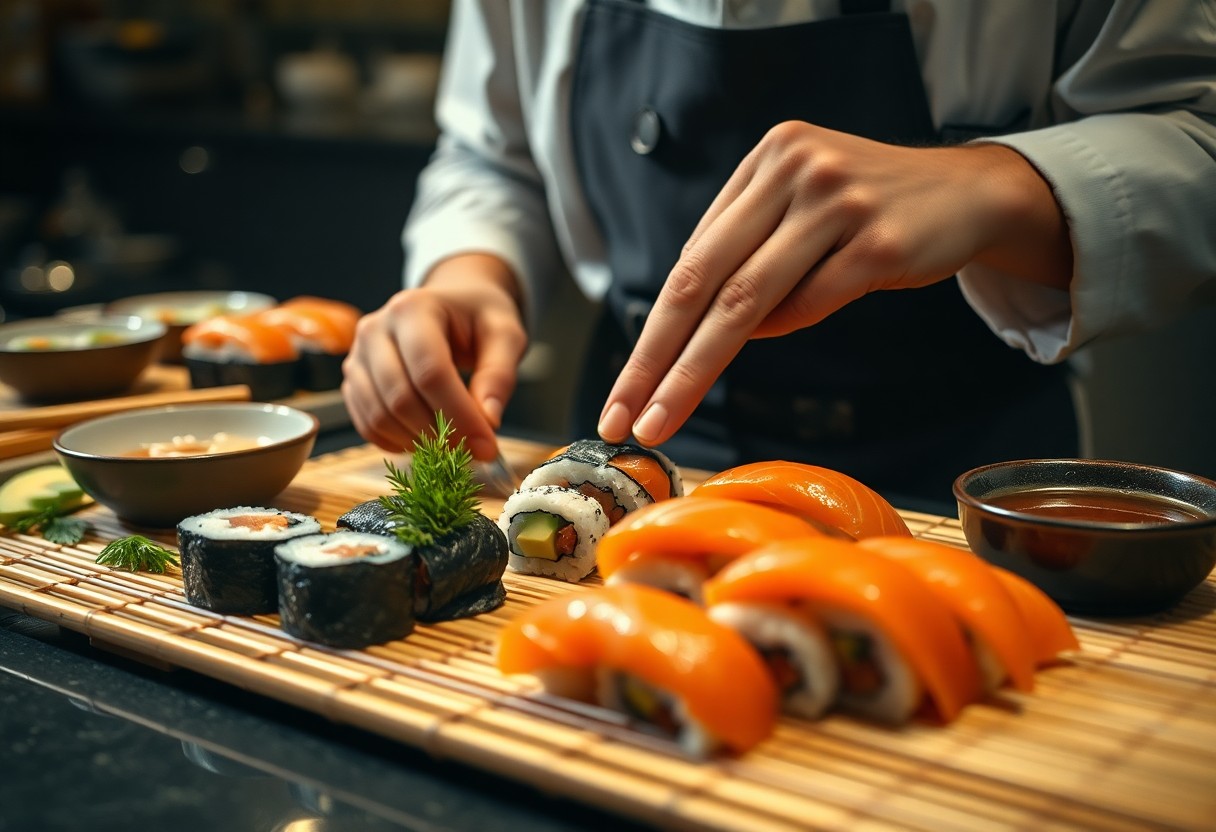
Clearly, having the right equipment is crucial for mastering the art of sushi rolling. To create beautifully crafted sushi rolls, you’ll need a few key tools that simplify the process and enhance your technique. Investing in high-quality equipment will not only elevate your sushi-making experience but also lead to impressive results that will delight your family and friends. Let’s investigate the must-have tools and optional accessories that will help you roll sushi like a master chef.

Must-Have Tools

Any sushi enthusiast should have a bamboo rolling mat, known as a makisu, which helps you achieve a tight roll. Additionally, a sharp, elongated knife is crucial for cutting your rolls cleanly, while a rice cooker can simplify the preparation of perfect sushi rice. You will also need high-quality sushi nori and a small bowl of water mixed with vinegar to help prevent sticking during the rolling process.

Optional Accessories

Tools like sushi molds or cutters can enhance your sushi-making experience by providing uniform shapes and sizes for your rolls. A sushi rolling guide may also assist you in achieving an even pressure while rolling, resulting in a more professional appearance. Other optional accessories, such as a sushi mat cover for easy cleanup and decorative plates for presentation, can take your sushi preparations to the next level.

Needed accessories can elevate your sushi rolling game and make the process easier. For instance, using sushi molds allows you to create consistent shapes and sizes with minimal effort. Additionally, decorative utensils and platters can enhance the visual appeal of your finished rolls, making for an impressive dining experience. Consider adding these optional accessories to your toolkit as you become more confident in your sushi-making abilities.

Preparing Sushi Rice

Your sushi journey begins with preparing the perfect sushi rice. This necessary component sets the foundation for all your sushi creations, providing the right texture and flavor to complement fresh ingredients. By following the correct techniques, you’ll ensure your sushi rice is both fluffy and slightly sticky—attributes that make it ideal for rolling and shaping. With the right preparation, your sushi will not only taste amazing but look stunning as well.

Cooking the Rice

Below, you’ll find a method for cooking sushi rice that will yield the desired consistency. Start by rinsing your sushi rice thoroughly under cold water, until the water runs clear. This removes excess starch and prevents the rice from becoming gummy. Then, use a rice cooker or pot, adding the correct water-to-rice ratio (typically 1:1.2) and cooking according to your device’s instructions. Once cooked, let it rest for 10-15 minutes to allow the grains to firm up.

Seasoning Techniques

Against popular belief, seasoning sushi rice is not merely about adding vinegar. The combination of vinegar, sugar, and salt creates a balance that enhances the rice’s flavor profile. To season your rice, gently fold in the mixture while the rice is still warm, being careful not to mash the grains. This technique ensures that every bite of your sushi is perfectly flavored, enhancing your overall sushi experience.

Cooking sushi rice is an art that requires careful attention to detail. After your rice has cooked, prepare a seasoning mixture of rice vinegar, sugar, and salt. Heat it slightly to dissolve the ingredients, but not to boil. Once combined, gently fold the seasoning into the warm rice using a wooden spatula, in a cutting motion rather than stirring, to maintain the grain integrity. The warmth of the rice will absorb the flavors, resulting in beautifully seasoned sushi that enhances your rolls.

Selecting and Preparing Fillings

Once again, the choice of fillings can elevate your sushi-making game. Opt for a range of textures and flavors, such as fresh vegetables, seafood, and proteins. Combining colors and tastes will not only create appealing sushi but also excite your palate. Be open to experimenting with different fillings; this is where your creativity shines. Prepare your ingredients in advance to ensure a smooth sushi rolling process.

Choosing Fresh Ingredients

Among the key factors for delightful sushi is the freshness of your ingredients. Look for bright, vibrant vegetables and fish that have a clean, ocean-like scent. Visit your local market or preferred fishmonger to select your items. The quality of your fillings directly influences the taste and overall experience of your sushi.

Cutting Techniques for Fillings

Among the necessary skills in sushi preparation, mastering cutting techniques enhances both aesthetics and flavor. Properly cut fillings ensure even distribution of ingredients and a cohesive roll. Aim for uniform sizes to maintain balanced flavor combinations. Additionally, sharp knives minimize bruising and oxidation, preserving the integrity of your fillings.

Considering the importance of cutting techniques, focus on using a sharp, quality knife to achieve clean, precise slices. For vegetables, cut them into thin julienne strips or small cubes, which will improve both presentation and ease of rolling. For proteins like fish, aim for slices of about 1/4 inch thick, allowing for a perfect balance in your sushi. Practice different techniques to find what works best for your favorite fillings, and don’t hesitate to experiment with shapes and sizes that suit your culinary style.

Mastering the Rolling Technique

Keep your focus on the rolling technique, as it’s the key to creating perfectly shaped sushi. Start by ensuring your ingredients are evenly distributed and your rice is spread thinly on the nori. Utilize a gentle yet firm pressure when rolling, making sure to tuck the ingredients securely while maintaining a cylindrical shape. The more you practice, the more your skills will refine, allowing you to create sushi that looks as impressive as it tastes.

The Use of Bamboo Mats

Along with mastering your technique, using a bamboo mat (makisu) is vital for achieving uniform rolls. The mat provides a stable surface and helps maintain consistent pressure while rolling. It’s beneficial to keep your mat clean and dry, and to place a layer of plastic wrap over it before rolling, which will prevent the rice from sticking and ensure easy cleanup after your sushi-making sessions.

Step-by-Step Rolling Process

Rolling sushi involves several steps that need to be followed for best results. Here’s a structured approach:

Step-by-Step Rolling Process

1. Prepare your ingredients and tools, including nori, rice, and fillings. 2. Place a sheet of nori shiny-side down on the bamboo mat.
3. Moisten your hands and spread an even layer of rice over the nori. 4. Add your desired fillings in a line across the center of the rice.
5. Lift the edge of the bamboo mat closest to you and gently roll. 6. Roll tightly while tucking in the ingredients until the roll is complete.
7. Use a sharp knife to slice your roll into bite-sized pieces. 8. Serve your sushi with soy sauce or your favorite dipping sauce.

Even though the rolling process can seem intricate, following these steps will lead you to delicious results. Start by properly preparing all your ingredients while ensuring the workspace is clean. Begin with a firm and even pressure during the initial roll, and gradually apply more as you tuck the ingredients. With practice, you’ll find your rhythm and discover how to customize rolls with various fillings and flavors, making every sushi session a unique experience.

Presentation and Serving Suggestions

Not only does sushi taste incredible, but its presentation can elevate your dining experience significantly. To wow your guests, arrange your sushi on a clean, white plate to emphasize the vibrant colors of the fish and ingredients. You may also want to garnish the dish with edible flowers or sliced radishes to create an inviting visual contrast, ensuring your culinary creation is as pleasing to the eye as it is to the palate.

Plating Techniques

Suggestions for plating include layering your sushi pieces in a fan-like arrangement or stacking them vertically to create height on the plate. Use different plate sizes for variation, and don’t shy away from incorporating elements of your cooking style into each dish, which adds a personal touch to your presentation.

Accompaniments and Sauces

Behind every perfect sushi roll lies an array of delicious accompaniments and sauces that enhance the flavor profiles of your dish. Pairing your sushi with items like pickled ginger, wasabi, and soy sauce not only complements the taste but also adds texture and variety to the meal.

Hence, consider serving small dishes with soy sauce, spicy mayo, or ponzu for dipping. Fresh wasabi can be a delightful alternative to the common paste. Additionally, creating a simple cucumber salad or edamame on the side can provide freshness, while a sprinkle of sesame seeds can add a subtle crunch. These elements work together to transform your sushi presentation into a complete culinary experience.

Final Words

Conclusively, mastering the art of rolling sushi requires practice and precision. By following the techniques outlined, including proper rice preparation, ingredient selection, and rolling methods, you can elevate your sushi-making skills to a professional level. Engage with your ingredients, experiment with flavors, and enjoy the creative process as you refine your technique. With dedication and passion, you will be able to impress family and friends with your culinary creations that reflect the essence of authentic sushi craftsmanship.

Q: What ingredients do I need to roll sushi at home?

A: To roll sushi like a master chef, you’ll need a few key ingredients. First, sushi rice is necessary; it should be short-grain rice that becomes sticky when cooked. You’ll also need rice vinegar, sugar, and salt to season the rice. For fillings, you can use fresh fish like salmon or tuna, vegetables such as cucumber and avocado, and other items like crab meat or pickled radish. Nori, the seaweed sheets used to wrap the sushi, is also necessary. Don’t forget a sharp knife for slicing your rolls and a bamboo mat to help with the rolling process!

Q: How do I properly prepare sushi rice?

A: Preparing sushi rice is an important step for making great rolls. Start by rinsing 2 cups of short-grain rice under cold water until the water runs clear, which removes excess starch. Then, cook the rice according to the package instructions, usually combining it with 2 cups of water. Once cooked, let it sit for about 10 minutes off the heat. After that, transfer the rice to a large bowl and gently fold in a mixture of 1/4 cup rice vinegar, 2 tablespoons sugar, and 1 teaspoon salt, which should be heated lightly to dissolve the sugar. Allow the rice to cool to room temperature before using it to roll your sushi.

Q: What techniques should I use to roll sushi effectively?

A: Rolling sushi takes a bit of practice, but there are some techniques that can help you get it right. Start by placing a sheet of nori on your bamboo mat, shiny side down. Wet your hands with a mixture of water and rice vinegar to prevent sticking, then take a handful of sushi rice and spread it evenly across the nori, leaving about an inch at the top. Place your fillings in a line at the bottom of the rice. Using the bamboo mat, start rolling away from you while applying gentle pressure to shape the roll. Continue to roll until the nori edges overlap and seal the roll with a little water. Finally, use a sharp knife to slice the roll into bite-sized pieces for serving. Consistent practice and adjusting your technique will improve your rolling skills over time!
Behind the Scenes with a Sushi Chef

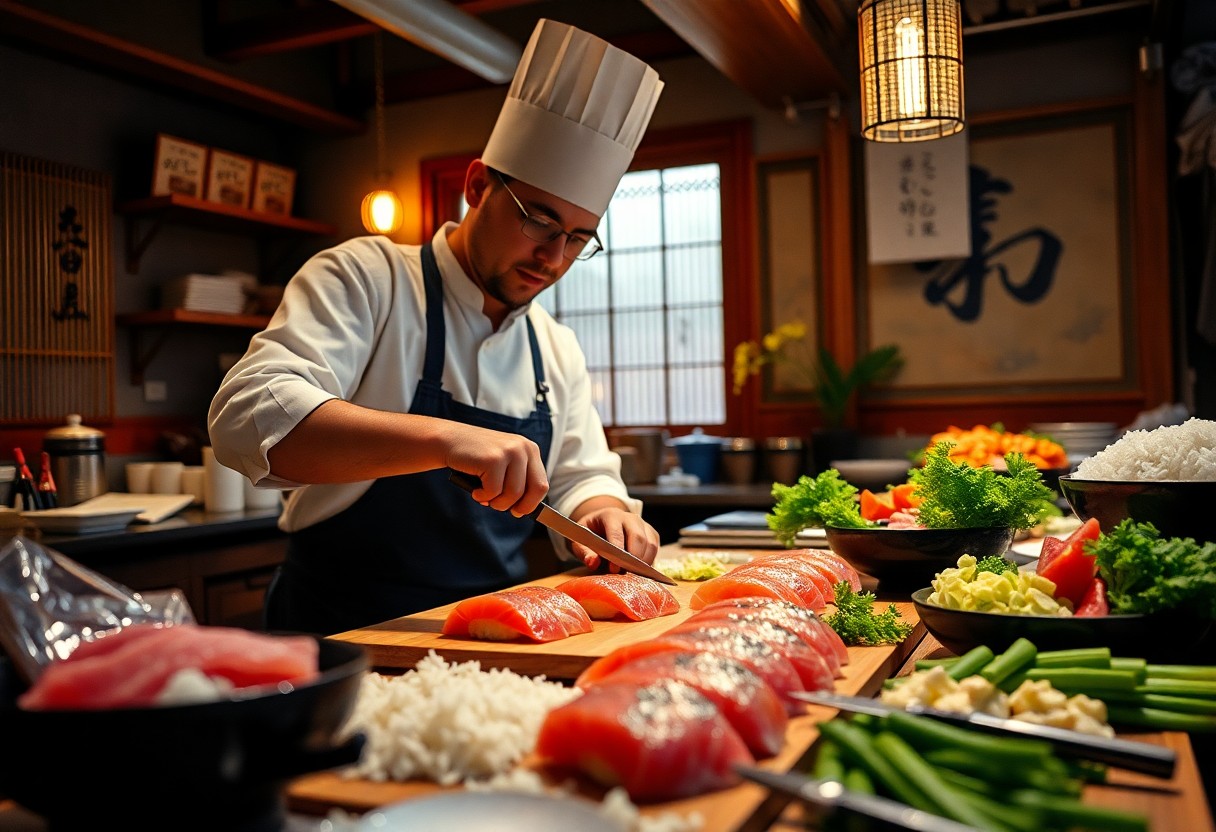
With an increasing appreciation for sushi artistry, you may be curious about what goes into creating these exquisite dishes. This blog post takes you on an enlightening journey through the meticulous processes and skillful techniques employed by sushi chefs. From selecting the freshest ingredients to mastering intricate knife skills, you’ll gain insight into the dedication and precision required to craft each sushi piece. Prepare to discover the world behind the sushi bar and understand the passion that drives these culinary artisans.

Key Takeaways:

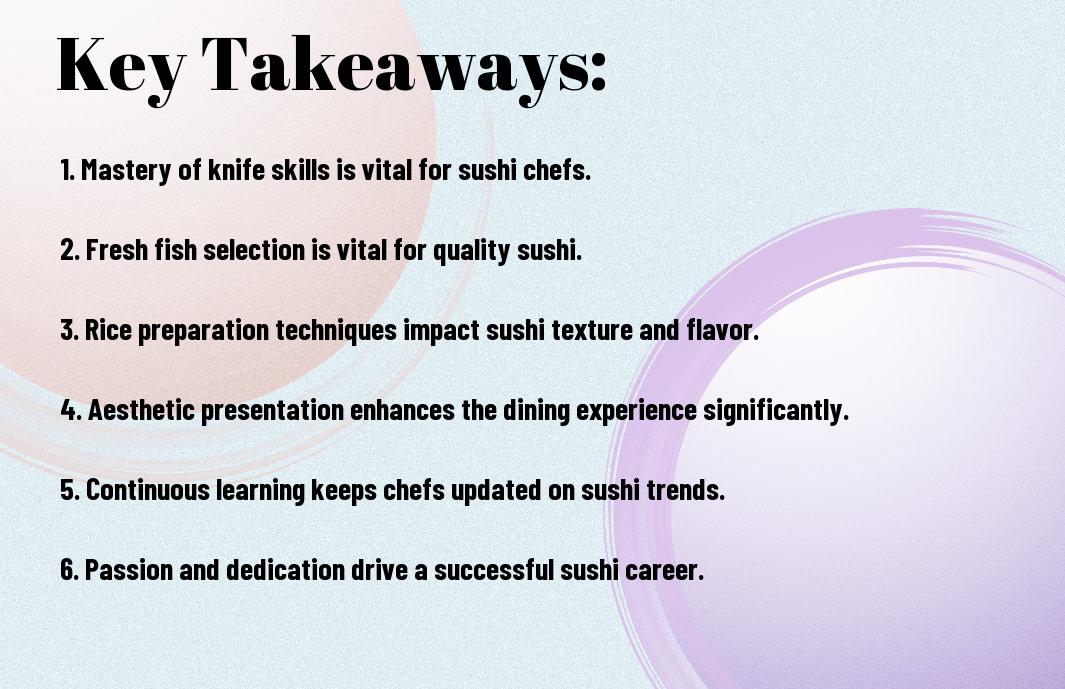
  • Artistry: A sushi chef is not just a cook; they are an artist who meticulously crafts each piece with skill and precision.
  • Ingredients: The quality of fish and other ingredients is crucial for creating authentic sushi, and sourcing them sustainably is paramount.
  • Technique: Mastering techniques such as rice preparation and knife skills is vital, as these form the foundation of excellent sushi making.

The Art of Sushi Making

A sushi chef pours not only skill but also passion into the art of sushi making. The delicate balance of flavor and presentation requires years of practice, patience, and a deep understanding of ingredients. If you’re curious about the creative process, you can explore Behind the scenes with Chef Jose Kishimoto Arteche of … to see how each piece comes to life.

History of Sushi

An intriguing journey awaits you as you research into the history of sushi, tracing its roots back to ancient Southeast Asia. Over centuries, sushi evolved from a preservation technique into the beloved culinary art form it is today, influenced by various cultural exchanges and innovations.

Different Types of Sushi

About the myriad of sushi types, you’ll find a delightful array that caters to every palate. Here’s a breakdown of some popular varieties:

Sashimi Raw fish or seafood, served without rice.
Sushi Rolls (Maki) Rice and fillings rolled in seaweed.
Nigiri Hand-formed rice topped with fish or seafood.
Temaki Hand-rolled sushi in a cone shape.
Chirashi Sushi rice served in a bowl topped with various ingredients.
  • A variety of textures and flavors await you.

Another interesting aspect of sushi is how it allows for endless creativity. You can experiment with flavors, ingredients, and presentations to make it your own. Here is a closer look:

Specialty Rolls Unique combinations and ingredients crafted by chefs.
Vegetarian Sushi Utilizes fresh vegetables and tofu for filling.
Fusion Sushi Incorporates elements from various cuisines.
Sushi Burrito Large sushi roll, styled like a burrito.
Egg Sushi (Tamago) Sweet Japanese omelet over rice.
  • The combinations are endless, encouraging you to be inventive.

Tools of the Trade

The art of sushi-making requires specific tools that enhance your culinary experience. From the precision of a sharp knife to the careful crafting of sushi mats, every item plays a vital role in creating a delectable sushi masterpiece. Understanding these tools can elevate your skills and bring authenticity to your sushi-making journey.

Essential Sushi-Making Equipment

Below is a list of important sushi-making equipment that you should have in your kitchen, including a sharp sushi knife, a bamboo sushi mat for rolling, and a rice cooker for perfect sushi rice. Each tool serves its purpose in ensuring that your sushi preparation is efficient and results in a beautifully crafted dish.

Choosing the Right Ingredients

SushiMaking is an art that begins with the careful selection of your ingredients. Fresh, high-quality fish and produce are fundamental to achieving the authenticity and flavor that define great sushi. Whether you’re sourcing sushi-grade fish or picking the right vegetables, your choices will significantly influence the outcome of your sushi rolls.

Due to the delicate nature of sushi, it’s important to prioritize freshness when choosing your ingredients. When deciding on fish, look for options labeled as sushi or sashimi-grade to ensure safety and quality. Additionally, consider types of rice, seaweed, and seasonings that complement your dish. The more effort you put into sourcing the best ingredients, the more satisfying your sushi experience will be.

The Sushi Chef’s Training

Many aspiring sushi chefs launch on a rigorous journey that blends artistry with precision. Your training will often start with a deep understanding of the ingredients and techniques that set sushi apart from other culinary disciplines. With commitment and discipline, you will find that mastering sushi-making is not just about the food; it’s about honoring tradition while embracing innovation.

Traditional Apprenticeships

Beside the art of sushi making, many chefs begin their careers through traditional apprenticeships that can last several years. During this time, you will work closely with seasoned chefs, observing and participating in daily operations, which helps you absorb the culture and nuances of sushi craftsmanship.

Skills and Techniques

An integral part of your training involves honing specific skills and techniques that define excellent sushi. From knife skills to the careful preparation of rice and fish, each element requires precision and finesse that can take years to perfect.

Indeed, mastering sushi techniques is about more than just the final product. You will focus on developing your knife skills, understanding the fish’s anatomy, and perfecting the rice cooking process. Balancing flavors and textures is important, as is the eye for presentation. With practice, you will learn how to appreciate the nuances of each ingredient, ensuring your sushi isn’t just a meal but an experience that delights the senses.

Behind the Counter

Not just anyone can step behind the counter at a sushi restaurant. This sacred space is reserved for the chef, who practices discipline and skill, preparing each dish with precision. As you observe the chef, you’ll see a well-oiled machine in action, with each movement honed over years of training. The energy, focus, and commitment that fill this area reveal the dedication necessary to create sushi that resonates with customers’ palates.

Daily Routine of a Sushi Chef

At the crack of dawn, your day begins with sourcing the freshest ingredients from local markets. You inspect each fish, ensuring it meets your high standards before returning to the restaurant to begin preparation. The morning hours are spent slicing, marinating, and crafting exquisite designs, while the afternoon is for plating and refining your techniques to perfection. By the time evening arrives, you are ready to greet guests, serving them the fruits of your labor.

The Importance of Freshness

Around every sushi chef is an unwavering commitment to using only the freshest ingredients. The quality of your fish and other components directly affects the flavor and overall experience for your customers. Not only do fresh ingredients taste better, but they also offer superior health benefits, showcasing your respect for the ingredients and the art of sushi-making.

The quality of your fish impacts the final product significantly. Freshness means better flavor, texture, and appearance, elevating your craft to an art form. By sourcing from reputable vendors and understanding the seasonal availability of ingredients, you ensure that each piece of sushi you serve is a reflection of your dedication. This attention to detail not only enhances the dining experience but also builds trust with your customers, who come to appreciate the value of true authenticity in sushi.

Sushi Presentation

All sushi is not just about flavor; the presentation plays a significant role in the overall dining experience. As you explore the world of sushi, you will discover that a beautifully arranged plate not only enhances the appeal of the dish but also showcases the chef’s skill and respect for the ingredients. Attention to detail is important, with vibrant colors and intricate designs inviting you to savor each piece.

The Aesthetic Appeal

Around every sushi platter lies an artistic endeavor that transforms the meal into a feast for the eyes. You will notice how colors, shapes, and textures come together harmoniously. Each component is intentionally placed, allowing your senses to engage long before the first bite, creating anticipation and delight for what’s to come.

Cultural Significance

One aspect of sushi presentation you might find intriguing is its cultural significance. In Japan, the way food is presented is deeply tied to etiquette and tradition, reflecting age-old customs that emphasize harmony, simplicity, and seasonal beauty. This artistic approach goes beyond mere eating; it invites you to appreciate the cultural heritage and values embedded in Japanese cuisine.

In fact, the artistry of sushi presentation embodies the philosophy of “wabi-sabi,” which celebrates the beauty in imperfection and transience. As you research into this world, you’ll learn that each dish not only tells a story about the ingredients but also about the seasons, rituals, and communities they represent. The attention to detail in sushi presentation acknowledges the integral role of food in cultural identity and heritage, making your dining experience richer and more meaningful.

Common Misconceptions

Your understanding of sushi might be clouded by several misconceptions. Many people associate sushi solely with raw fish, while the truth is that sushi can encompass a variety of ingredients and styles. These misunderstandings can affect your appreciation and enjoyment of this culinary art. By addressing these misconceptions, you’ll gain a richer perspective on sushi and its diverse offerings.

Myths About Sushi

To clear the air, it’s important to debunk the myths surrounding sushi. A common myth is that all sushi must include raw fish, but in reality, sushi can be made with cooked seafood, vegetables, and even fruits. Additionally, many believe that sushi is primarily a Japanese dish when it has roots across various cultures and regions.

Understanding Quality

One aspect that truly defines your sushi experience is the quality of the ingredients. High-quality sushi is often made with fresh, seasonal fish, rice that’s perfectly seasoned, and expert craftsmanship. When you prioritize quality, you’ll not only taste the difference but also appreciate the effort that goes into creating each piece.

Understanding the factors that contribute to quality is crucial for any sushi enthusiast. Different types of fish have varying levels of freshness and fat content, which directly impact flavor and texture. Additionally, the rice used in sushi should be of high quality, often with specific varieties chosen for their stickiness and taste. Pay attention to the skill of the sushi chef, as their expertise plays a significant role in presenting the dish beautifully and balancing the flavors. When you choose quality sushi, you not only nourish your body but also indulge in an art form that celebrates the connection between nature and craftsmanship.

To wrap up

From above, you can appreciate the intricate world of a sushi chef. By immersing yourself in their art, you gain insight into the skill, precision, and dedication required to create each dish. Understanding the nuances of ingredients and techniques enhances your appreciation for sushi, allowing you to enjoy it on a deeper level. As you explore this culinary journey, you can feel a connection to the chef’s craft, transforming your sushi experience into something truly exceptional.

FAQ

Q: What inspired sushi chefs to adopt unique techniques in sushi preparation?

A: Sushi chefs are often driven by a desire to balance tradition with innovation. Many chefs spend years mastering the traditional methods, which form the foundation of sushi making. As they gain experience, they explore new flavors, techniques, and presentations that reflect their personal style or the influence of global culinary trends. The creative process often involves experimenting with different ingredients and cooking styles, ultimately leading to a fresh take on classic sushi.

Q: What are some common misconceptions about the sushi-making process?

A: One prevalent misconception is that all sushi is raw fish. In reality, sushi encompasses a wide variety of ingredients, including cooked seafood, vegetables, and even rice with various toppings. Another misconception is that sushi preparation is solely about rolling and cutting; in fact, it involves a deep understanding of flavor combinations, ingredient sourcing, and technical skills to achieve the perfect texture and taste. Moreover, many people don’t realize how much time and effort goes into sourcing high-quality fish and mastering the art of rice preparation, which is vital for authentic sushi.

Q: How do sushi chefs stay informed about the latest trends in the culinary world?

A: Sushi chefs often engage in continuous learning to keep up with culinary trends. This includes attending workshops, culinary schools, and tasting events focused on sushi and other cuisines. Many chefs also follow global culinary publications, social media platforms, and industry influencers to gain insights into new techniques and ingredients. Networking with other chefs allows for the exchange of ideas and inspiration, fostering creativity in their sushi-making practices. Additionally, visiting markets and discovering seasonal ingredients helps them stay attuned to what’s fresh and trending.

A Day in the Life of a Sushi Chef

Over the course of a busy day, you will gain insight into the art and discipline required to be a sushi chef. From the early morning market runs to hand-select the freshest fish, to the meticulous preparation and presentation of each dish, every moment is steeped in tradition and skill. You will discover how a sushi chef balances creativity with technique, ensuring each roll is as delectable as it is visually stunning. Join us as we explore the daily routines, challenges, and rewards that define this culinary profession.

Key Takeaways:

  • Preparation: A sushi chef begins their day early, ensuring that all ingredients are fresh and prepped for the day’s service.
  • Technique: Mastery of techniques such as rice preparation, fish slicing, and rolling is vital for crafting high-quality sushi.
  • Presentation: A significant part of a sushi chef’s job involves plating and presenting sushi in an aesthetically pleasing manner.
  • Customer Interaction: Engaging with customers and understanding their preferences enhances the dining experience and builds loyalty.
  • Continuous Learning: The field requires ongoing practice and learning, often encompassing new recipes and culinary trends.

Early Morning Preparations

A typical day for you as a sushi chef begins at dawn, when you prepare for the bustling hours ahead. You understand that success largely hinges on the quality of your ingredients, and as you set out to create exquisite dishes, you prioritize every element. If you’re curious to learn more, here’s what a day in the life of a sushi chef looks like.

Arrival at the Restaurant

With the sun barely rising, you arrive at the restaurant, ready to embrace the day’s challenges. The familiar scent of the ocean fills the air, reminding you of the artistry that awaits. You take a moment to gather your thoughts before submerging into the morning routine.

Ingredient Sourcing and Quality Checks

Below the surface of the early morning calm lies a meticulous process of ingredient sourcing and quality checks that you initiate. From fresh fish to vibrant veggies, each item must meet your high standards to ensure the best dishes hit the plates.

Further, you take a keen interest in selecting fresh, local produce and fish each day, inspecting their appearance, texture, and scent. You build strong relationships with suppliers who share your passion for quality, allowing you to handpick the finest ingredients that enhance your culinary creations and keep your customers coming back.

The Art of Sushi Making

Assuming you’ve ever marveled at the exquisite beauty of sushi, you might appreciate that its creation is as much an art as it is a craft. Mastering the techniques of sushi making involves patience, precision, and respect for the ingredients. Every component, from the rice to the fish, needs your full attention to ensure that each bite showcases perfect balance and flavor.

Mastering Rice Preparation

On your journey to becoming a sushi chef, mastering rice preparation lays the foundation for great sushi. You’ll need to choose the right type of rice and wash it properly to remove excess starch. Then, cooking it to achieve the ideal texture is crucial, resulting in grains that are sticky yet distinct, allowing them to hold together without being mushy.

Selecting and Preparing Fresh Ingredients

Beside mastering rice, selecting and preparing fresh ingredients is vital to the sushi-making process. Each ingredient not only contributes its unique flavor to the dish but also impacts the overall experience. You want to source high-quality fish, fresh vegetables, and seaweed, ensuring they are handled with care throughout the preparation process.

A sustainable approach to selecting and preparing fresh ingredients means knowing your sources and understanding seasonal offerings. When you choose fish, opt for those that are fresh and sustainably harvested, paying attention to their color and texture. Similarly, fresh vegetables should be crisp and vibrant, enhancing both visual appeal and taste in your sushi. Precision in slicing is equally important; the way you cut your ingredients will influence the overall presentation and mouthfeel of each piece you create.

Time Management and Efficiency

After each morning’s preparation, your efficiency as a sushi chef becomes paramount during busy hours. You must manage your time wisely, balancing the need for quality with the demand for speed. Every second counts, so organizing your workstation and prepping ingredients ahead of time allows you to respond quickly to orders without compromising taste or presentation.

Balancing Orders During Peak Hours

Around peak hours, your kitchen transforms into a bustling environment where orders pour in rapidly. You utilize a well-structured system to prioritize tasks, ensuring that you’re able to meet customer requests promptly. Efficiently coordinating with your team helps maintain a seamless flow, allowing you to deliver fresh, delicious sushi while keeping wait times to a minimum.

Streamlining Workflow in the Kitchen

Balancing your workflow in the kitchen is vital for success. Establishing a clear process for assembling sushi, from rice preparation to ingredient placement, reduces delays and enhances efficiency. Each member of the team should have defined roles, which streamlines communication and allows for a smoother workflow, helping you complete orders more effectively.

Understanding how to optimize each step in your cooking process helps minimize wasted time and resources. By creating a designated area for each task—cutting, rolling, plating—you can swiftly transition between them without confusion. Additionally, consistently evaluating your methods and adjusting as you go will lead to improved productivity and satisfaction among your patrons.

Customer Interaction

Unlike many culinary professions, being a sushi chef involves a unique level of guest interaction. You are not only crafting artful dishes but also engaging with your customers to understand their tastes and preferences. Each conversation is an opportunity to create a memorable dining experience, making their visit truly special.

Understanding Guest Preferences

Below, you will find that getting to know your guests is an important part of the sushi-making experience. Through attentive listening and asking the right questions, you can uncover their favorite flavors, dietary restrictions, and even their level of sushi knowledge. This information allows you to craft a personalized meal that resonates with their palate, enhancing their overall enjoyment.

Educating Patrons on Sushi Craftsmanship

An important aspect of your role as a sushi chef is educating patrons about the artistry and techniques involved in sushi preparation. Sharing insights on how ingredients are sourced, the significance of rice texture, and the importance of knife skills allows customers to appreciate the craftsmanship behind each dish.

Plus, by highlighting the traditions and cultural significance of sushi, you enhance your guest’s appreciation for the meal. This educational interaction fosters respect for the culinary art form and allows you to showcase your expertise, making each dining experience not just a meal but also a journey through the rich world of sushi craftsmanship.

Continuing Education and Training

Keep honing your skills as a sushi chef by engaging in ongoing education and training. The culinary world is ever-evolving, and staying sharp in your craft not only enhances your abilities but also keeps your palate and creativity alive. Attending workshops, participating in competitions, and seeking mentorship opportunities can vastly improve your technique and knowledge base.

Learning New Techniques

Along your journey as a sushi chef, you will find that learning new techniques is vital in enhancing your repertoire. Embrace the opportunity to explore innovative approaches, whether it’s mastering the art of fermentation or practicing advanced knife skills. Each new method you acquire will allow you to craft unique sushi experiences for your customers.

Staying Updated on Culinary Trends

Continuing to stay updated on culinary trends is key to maintaining your relevance in the sushi industry. By following influential chefs, attending food festivals, and exploring social media platforms, you gain insight into emerging flavors and presentation styles that can transform your sushi creations into a modern culinary experience.

Education plays a significant role in equipping you with the tools needed to adapt and innovate your offerings. By immersing yourself in the latest trends and techniques, you can drive your creativity and inspire your menu. Staying informed about dietary preferences and global influences allows you to cater to a diverse clientele, ensuring your sushi remains desirable and exciting.

End of Day Reflections

Despite the exhaustion that settles in at the end of your demanding shift, it’s vital to take a moment to reflect on your day. You analyze the successes and challenges faced while preparing each dish, understanding that every experience contributes to your growth as a sushi chef. This daily ritual not only reinforces your dedication but also encourages a mindset of continuous improvement as you strive to perfect your craft and embrace new techniques.

Cleaning and Closing Procedures

Across the kitchen, the day’s work comes to a close with meticulous cleaning and closing procedures. You ensure that every surface is scrubbed, every tool is sanitized, and the workspace is left spotless, ready for tomorrow’s hustle. This routine goes beyond hygiene; it’s a reflection of your respect for the ingredients and the art of sushi-making.

Personal Reflections on Craftsmanship

Among the many tasks you complete daily, taking time for personal reflections on your craftsmanship is vital. You contemplate the intricate balance of flavors, textures, and presentation that define sushi. Each roll or nigiri is not just a dish, but a story of the dedication and skill that you’ve invested over the years.

Indeed, your craftsmanship is an evolving journey, characterized by the lessons you learn from both successes and mishaps. Each plate you create tells a story, reflecting your personal touch and artistic expression. As you explore new styles and ingredients, you honor the traditions of sushi-making while finding innovative ways to express your individuality. This reflection not only builds your confidence but also deepens your passion for the craft, motivating you to continue honing your skills and delighting those who enjoy your creations.

To wrap up

Upon reflecting on a day in the life of a sushi chef, you gain an appreciation for the meticulous craftsmanship and dedication required in this culinary art. From selecting the freshest ingredients to mastering intricate techniques, each step is vital in delivering an exceptional dining experience. You understand the importance of patience and precision as you navigate through the rhythm of preparing sushi, cultivating not only your skills but also your passion for the craft. Ultimately, this journey invites you to respect both tradition and innovation in the world of sushi making.

FAQ

Q: What does a typical day look like for a sushi chef?

A: A typical day for a sushi chef starts early in the morning. The chef arrives at the restaurant to prepare for the day’s service. This includes receiving fresh fish and other ingredients from suppliers, checking quality, and ensuring everything is properly stored. The chef then begins preparing ingredients, such as slicing vegetables, marinating fish, and making rice. As the restaurant opens for lunch, the chef transitions into cooking and assembling sushi dishes, focusing on presentation and quality. Throughout the day, the chef interacts with customers, sharing knowledge about the dishes and the art of sushi-making. After the lunch rush, there’s a brief respite before preparing for the dinner service, which is often busier. The day concludes with cleaning and organizing the kitchen for the next day.

Q: What skills are important for a successful sushi chef?

A: A successful sushi chef needs a variety of skills. First and foremost, a deep understanding of fish and seafood is important, including how to select, handle, and prepare various types. Knife skills are also very important; precise slicing techniques are used to ensure the fish is presented attractively and maintains quality. Attention to detail is crucial in sushi preparation, as each dish must be visually appealing and taste balanced. Additionally, a good sushi chef should possess strong time management skills, as peak service times can be hectic. Finally, communication skills enhance the overall dining experience, allowing chefs to interact with guests effectively and share their passion for sushi.

Q: How do sushi chefs source their ingredients?

A: Sushi chefs take sourcing very seriously, often developing strong relationships with local fishmongers and suppliers to ensure they receive the freshest ingredients. Many chefs visit fish markets early in the morning to select the best quality seafood directly. Depending on the region, some ingredients may come from specialty suppliers who focus on sustainable fishing practices. In addition to fish, chefs also source high-quality rice, vegetables, and other accompaniments, often paying attention to seasonality and regional availability. The emphasis on freshness and quality is foundational in sushi preparation, directly impacting the final dish.

What $400 Gets You at One of NYC’s Most Expensive Sushi Restaurants — Consumed

On this episode of Consumed, host and sushi aficionado Kat Odell visits Sushi Ginza Onodera, the New York City outpost of an acclaimed Tokyo omakase restaurant, to try the many-coursed meal that sets diners back $400. Is it worth it? Watch the video above for an inside look. 

For more episodes of Consumed, click here: https://www.youtube.com/watch?v=S8Wjj2d28rA&list=PLUeEVLHfB5-SD8g61OopU4eowWVoTnJAE&index=14

— — — — — — — — — — — — — — — — — — — — — — — 

Eater is the one-stop-shop for food and restaurant obsessives across the country. With features, explainers, animations, recipes, and more — it’s the most indulgent food content around. So get hungry.

Subscribe to our YouTube Channel now! http://goo.gl/hGwtF0

How to Make Sushi

Watch more Introduction to Sushi Making videos: http://www.howcast.com/videos/270-How-to-Make-Sushi

You may think sushi is just raw fish, but you’d only be half right. It’s actually the combination of fish and rice – and how it’s combined is an art form in itself.

Step 1: Slice fish
With a very sharp knife, slice the trimmed fish slab into individual portions so each piece is a rectangle approximately 2-inches long and ¼-inch thick.

Tip
To make things easier, cut all your fish at one time, but keep the pieces cold until you use them —put them on a plate and keep it in the refrigerator or on top of some ice.

Step 2: Roll rice into ball
Moisten your hands with water from your bowl, and scoop an ounce of sushi rice—about the amount that will fit into your palm—and roll it into a ball.

Step 3: Shape rice ball
Shape the rice ball into an oblong by squeezing it with firm but gentle pressure.

Tip
Your rice should be about the same size as your cut piece of fish.

Step 4: Dab wasabi on fish
Pick up a piece of sliced fish. While palming the shaped rice, scoop up a tiny amount of wasabi with your index finger and gently dab it onto the middle of the fish.

Step 5: Press rice against fish
Press the shaped rice against the fish and gently but firmly cup the two together until they adhere.

Step 6: Squeeze together
Firmly squeeze the sushi together until the fish and rice become one. Tap with your right index finger as you go to create a uniform shape.

Step 7: Continue process
Place the finished sushi on a serving plate or sushi board, and continue making pieces until all the fish is used.

Step 8: Garnish plate
Garnish the plate with a mound of Japanese pickled ginger and a smaller mound of wasabi. Pour some soy sauce into a small dish and get ready to dunk.

Did You Know?
Real wasabi is notoriously expensive, so most sushi restaurants just use a mixture of horseradish, mustard powders, and food coloring.

Learning to make Sushi – Gordon Ramsay

Gordon Ramsay visits the award winning Aaya Japanese restaurant in London's west end to try and learn to make sushi. Subscribe for weekly videos. From Cookalong Live.

Subscribe Here: http://www.youtube.com/subscription_center?src_vid=frUO65rWSmU&add_user=gordonramsay&feature=iv&annotation_id=annotation_508980

How to Eat Sushi: You’ve Been Doing it Wrong

Click here to learn all the rules of eating sushi: http://bit.ly/1p8UQ3p

Coming to you straight from the sushi chef’s mouth, MUNCHIES presents the dos and don’ts of eating sushi, as taught by Tokyo's Naomichi Yasuda. Be warned: You’ve been doing it wrong.

Subscribe to Munchies here: http://bit.ly/Subscribe-to-MUNCHIES

Click here for more How-To videos: http://bit.ly/1tT33ut

Check out http://munchies.tv for more!

Follow Munchies here:
Facebook: http://facebook.com/munchies
Twitter: http://twitter.com/munchies
Tumblr: http://munchies.tumblr.com
Instagram: http://instagram.com/munchiesvice

Sushi Chef Reviews Cheap Sushi

“Bad shrimp smell…I have to eat this one?”

Check out more awesome videos at BuzzFeedVideo!
http://bit.ly/YTbuzzfeedvideo

MUSIC
Koto Swang
Licensed via Warner Chappell Production Music Inc.

SFX provided by Audioblocks. 
(https://www.Audioblocks.com)

Made by BFMP www.buzzfeed.com/videoteam
+
Yoya Takahashi
http://hamasakula.com/
@HamasakuLA

STILLS
Vector gold star
nidwlw / Thinkstockphotos.com
Salmon sushi
Creatas / Thinkstockphotos.com
Sushi set
ksyfoto / Thinkstockphotos.com

GET MORE BUZZFEED:
www.buzzfeed.com
www.buzzfeed.com/video
www.buzzfeed.com/videoteam
www.youtube.com/buzzfeedvideo
www.youtube.com/buzzfeedyellow
www.youtube.com/buzzfeedblue
www.youtube.com/buzzfeedviolet
www.youtube.com/buzzfeed

BUZZFEED VIDEO
BuzzFeed is the world's first true social news organization. Featuring tasty, short, fun, inspiring, funny, interesting videos from the BuzzFeed. /BuzzFeedVideo is BuzzFeed's original YouTube Channel, with a focus on producing great short-form BuzzFeed videos for YouTube (and the world!). BuzzFeed Video will entertain, educate, spark conversation, inspire and delight. Subscribe to BuzzFeedVideo today and check us out at http://buzzfeed.com

$3 Sushi Vs. $250 Sushi

“This is closest to a mouthgasm I have ever achieved.”

Check out more awesome videos at BuzzFeedVideo!
http://bit.ly/YTbuzzfeedvideo

GET MORE BUZZFEED:
www.buzzfeed.com
www.buzzfeed.com/video
www.buzzfeed.com/videoteam
www.youtube.com/buzzfeedvideo
www.youtube.com/buzzfeedyellow
www.youtube.com/buzzfeedblue
www.youtube.com/buzzfeedviolet
www.youtube.com/buzzfeed

BuzzFeedVideo
BuzzFeed Motion Picture’s flagship channel. Sometimes funny, sometimes serious, always shareable. New videos posted daily!

MUSIC
String Quartet In F Major, Op. 14, No. 1 – I. Allegro Moderato_60 second edit licensed by Warner Chappell
Cafe Del Kok_FullRthm licensed by Warner Chappell
Checkit_Main licensed by Warner Chappell
Monkey Funk_30Edit licensed by Warner Chappell
Salmon Smash_Main licensed by Warner Chappell
Genesis_Main licensed by Warner Chappell
Pluto's In The News_fullmix licensed by Warner Chappell
Marginality licensed by Warner Chappell
Daffodils licensed by Warner Chappell
One To Many licensed by Warner Chappell
Flower Duet licensed by Audio Network

Made by BFMP www.buzzfeed.com/videoteam
+
Chef Nobi Kusuhara
https://www.facebook.com/sasabune/
+
Chef Yoya Takahashi
http://www.hamasakula.com/
+
Chris Kimura
http://www.sushistopusa.com

Skip to content