Sushi is not just a delicious culinary experience; it’s a rich tapestry of history and culture waiting to be explored. In this blog post, you’ll discover fascinating trivia that will elevate your knowledge about sushi, making you the go-to expert among your friends. From its origins and the various types to the art of sushi-making, you’ll gain insights that will not only impress but also enhance your appreciation for this beloved dish. Get ready to share some sushi secrets that will leave your friends craving more!
Key Takeaways:
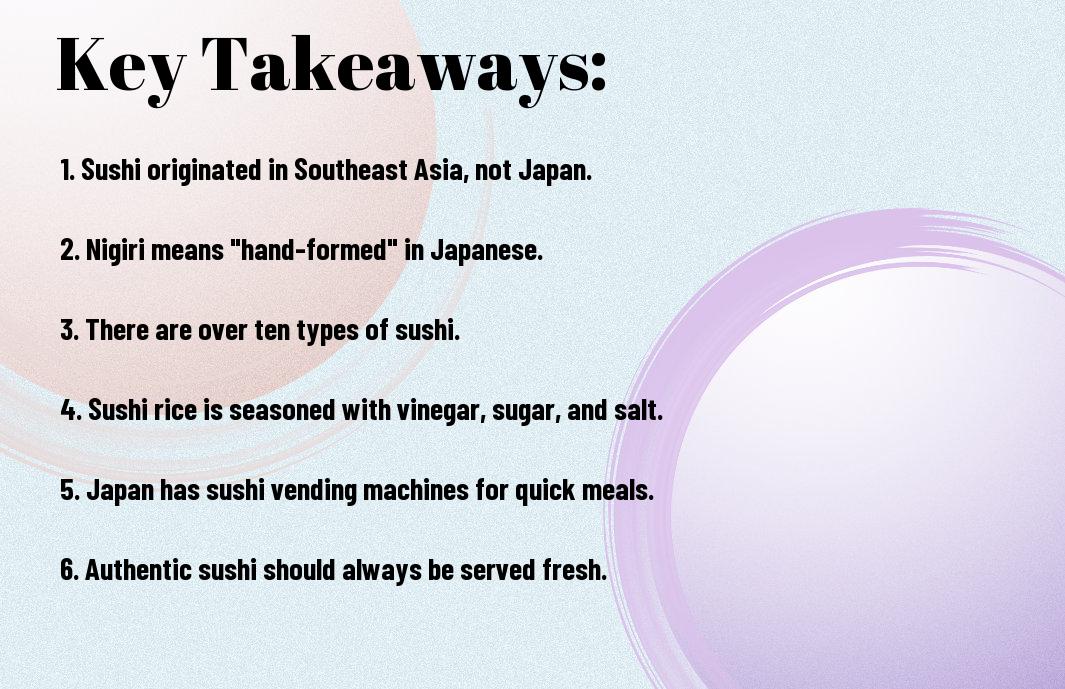
- Origin: Sushi originated in Japan over 1,000 years ago, evolving from a preservation method using fermented rice and fish.
- Varieties: There are numerous styles of sushi, including Nigiri, Maki, Sashimi, and Temaki, each with unique preparation methods and ingredients.
- Etiquette: Traditionally, it’s considered polite to eat sushi with your hands or chopsticks, and the proper way to enjoy sushi is to dip only the fish side in soy sauce.
The History of Sushi
A fascinating blend of flavor and tradition, sushi boasts a rich history that dates back thousands of years. Its evolution reflects changes in societal preferences, technology, and culinary practices. From its humble beginnings as a method of preserving fish to the refined dishes you can enjoy today, sushi has experienced significant development across cultures.
Origins and Evolution
The origins of sushi can be traced back to Southeast Asia, where fish was fermented with rice for preservation. This process eventually made its way to Japan, evolving into different forms, including narezushi, and later, the more familiar nigiri and maki styles that you know and love.
Cultural Significance
Among sushi’s many attributes, its cultural significance stands out, especially in Japan, where it symbolizes craftsmanship and attention to detail. You’ll find that sushi is often served during special occasions, celebrations, and gatherings, showcasing not just culinary expertise, but also the deep respect for nature and seasonal ingredients.
Even outside of Japan, sushi has transcended borders, becoming a symbol of Japanese culinary arts worldwide. This dish has influenced not only gourmet restaurants but also leveraged various culinary interpretations in different cultures, prompting an appreciation for intricate designs, flavors, and the harmony between taste and aesthetics that sushi embodies. It’s a testament to cultural exchange and the universal love for food that you can share with friends around the world.
Types of Sushi
Any sushi lover knows that there are various types to explore. Here’s a breakdown to enhance your knowledge:
| Sushi Type | Description |
|---|---|
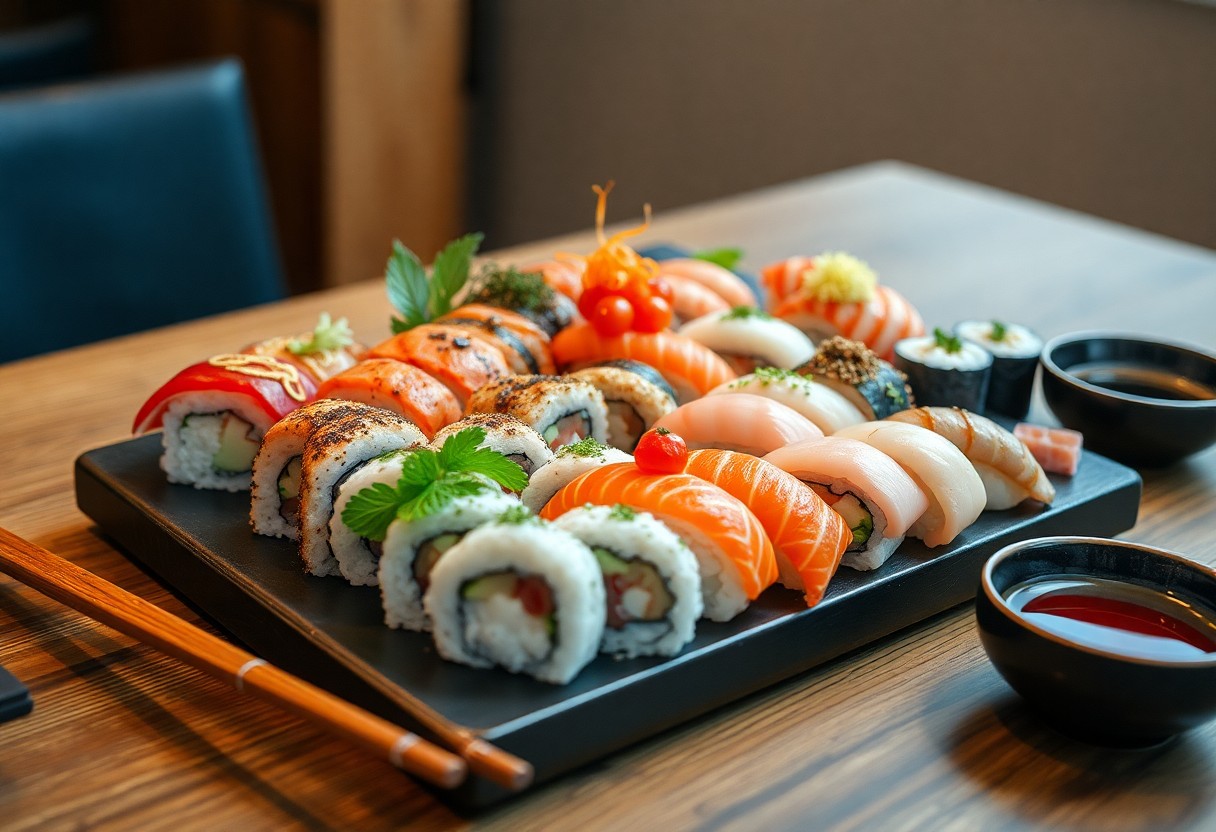
| Nigiri | Hand-formed rice topped with fish or seafood. |
| Sashimi | Thinly sliced raw fish, served without rice. |
| Maki | Rolled sushi, typically containing rice, fish, and veggies. |
| Temaki | Hand-rolled cone of nori filled with sushi ingredients. |
| Uramaki | Inside-out rolls with rice on the outside. |
Thou can now impress your friends with your sushi type expertise!
Nigiri, Sashimi, and Rolls
The world of sushi includes several staples, such as nigiri, sashimi, and rolls. Nigiri typically features a small mound of rice with a slice of fish or seafood placed atop it. Sashimi is all about enjoying the freshest raw fish without rice, allowing you to savor the pure taste. Meanwhile, rolls, or maki, combine a variety of fillings rolled in rice and nori, creating delightful bites that cater to many palates.
Traditional vs. Modern Variations
Above all, sushi has evolved over the years, leading to both traditional and modern variations that appeal to diverse tastes. Traditional sushi emphasizes high-quality fish, vinegary rice, and simple presentations. Modern sushi, however, incorporates a range of ingredients and flavors, like spicy sauces and unconventional fillings, promoting creativity in pairings and techniques.
But as much as modern sushi has gained popularity, exploring traditional types is equally rewarding. You’ll find that each sushi form celebrates the quality of its ingredients. Traditional versions often focus on the purity of flavors and techniques that have been passed down through generations, while modern twists invite you to experiment. This blend of old and new showcases the adaptability of sushi and encourages you to expand your palate with every bite.
Sushi Ingredients
Keep in mind that sushi is more than just rice and fish; it’s a combination of diverse ingredients that come together to create a delightful culinary experience. Traditional sushi includes vinegared rice, raw fish or seafood, vegetables, and sometimes tropical fruits. Each ingredient plays a vital role in achieving the perfect balance of flavor, texture, and presentation.
Essential Components
Above all, sushi relies on a few key components: sushi rice, known as ‘shari,’ is mixed with rice vinegar, while fresh fish like tuna, salmon, or mackerel, along with nori (seaweed), vegetables, and wasabi, enhance the overall flavor. Mastering these necessarys will elevate your sushi-making skills and impress your friends.
Unique Additions and Flavors
With inspiration from various cultures, sushi has evolved to include unique additions and flavors that make it even more exciting. From spicy tuna rolls topped with crunchy tempura flakes to creative sauces like eel sauce or spicy mayo, these enhancements can genuinely transform your sushi experience.
Further exploring unique additions, you might encounter ingredients like mango, cream cheese, or even fruit sauces that elevate traditional sushi rolls. Some chefs experiment with smoked ingredients or unconventional pairings to create fusion sushi that blends multiple flavors and textures. By understanding these unique additions, you can diversify your sushi repertoire and impress your friends with innovative combinations that will tantalize their taste buds.
Sushi Etiquette
Unlike what many believe, sushi etiquette is not just about how you eat but also how you appreciate the dish. When dining on sushi, it’s important to maintain respect for the chef’s craftsmanship and the ingredients. Always try to eat sushi with your hands or chopsticks, but never mix wasabi with soy sauce—this diminishes the experience. Moreover, chew with your mouth closed and don’t discuss unpleasant topics at the table to ensure a pleasant dining atmosphere.
How to Properly Eat Sushi
About eating sushi, you should ideally pick up each piece with your fingers or chopsticks, and dip it lightly into soy sauce, fish-side down, to prevent overwhelming the flavors. It’s common to consume the entire piece in one bite, as sushi is designed to be enjoyed in a single mouthful. This approach enhances the taste and allows you to appreciate the texture and freshness of each ingredient.
Common Misconceptions
An interesting misconception about sushi is that it always has to be consumed raw. While many sushi types feature raw fish, there are plenty of cooked and vegetarian options available, such as tempura rolls or inari sushi. Understanding this variety can enhance your sushi experience.
Due to a lack of knowledge, many people assume sushi is limited to raw fish and rice. In truth, sushi can include a wide range of ingredients and styles. You may come across options featuring vegetables, cooked seafood, and even fruit. Sushi is versatile, with many regional variations allowing you to explore flavors without necessarily opting for raw fish. Embracing this diversity can make your sushi journey even more enjoyable.
Sushi Around the World
Many people are surprised to learn that sushi has made its way around the globe, evolving into numerous regional variations. From the traditional Edomae sushi of Tokyo to the hand rolls of California, each locale has put its unique spin on this beloved dish. You can discover even more about its worldwide journey by checking out 15 Surprising, Interesting & Fun Facts About Sushi.
Global Adaptations
For sushi fans, it’s fascinating to see how the dish has adapted to meet local tastes. For example, in Sweden, you’ll find “sushi” made with smoked salmon and cream cheese, while in Brazil, sushi gets a samba twist with tropical fruits like mango and papaya. These adaptations show how sushi unites different cultures through food.
Popular Sushi Restaurants
Around the world, some sushi restaurants have garnered a loyal following due to their unique offerings and experiences. Whether you’re dining in a bustling Tokyo sushi bar or a serene restaurant in New York, you’ll always find places serving high-quality sushi crafted by skilled chefs.
Even in cities where sushi was once unknown, you can now find gourmet sushi spots serving delectable rolls and nigiri that reflect local flavors. From fusion restaurants to authentic establishments, each venue tells its story through its creative use of ingredients and presentation, making every experience memorable.
Fun Facts About Sushi
Now, sushi is more than just a delicious meal; it’s a cultural phenomenon. Originating from Japan, sushi has evolved from its humble beginnings as preserved fish wrapped in fermented rice to the exquisite rolls and nigiri you enjoy today. Different types of sushi highlight regional variations and fresh ingredients, making it a versatile dish that offers endless possibilities for flavor. You’ll truly impress your friends by sharing these fascinating insights about sushi’s history and diversity!
Record-Breaking Sushi
On occasion, sushi breaks records for its size, creativity, and even the number of ingredients used. One of the largest sushi rolls ever made weighed a staggering 2,014 pounds and was created in 2001 in Japan. Imagine the feast that would have provided! These monumental sushi creations not only showcase culinary skills but also serve as a testament to the dish’s global appeal.
Sushi in Pop Culture
At the heart of modern cuisine, sushi has made its mark in various aspects of pop culture, from movies to music. Its fusion with American food culture has given birth to unique variations like the California roll, making it widely accessible and enjoyable. With sushi bars and restaurants popping up everywhere, you’ll often find references in films and television shows, making it a beloved symbol of culinary sophistication.
Hence, sushi’s presence in pop culture illustrates its significance as a culinary treasure. Iconic films and shows often depict characters enjoying sushi, highlighting its role in social gatherings and celebrations. Celebrities and influencers frequently post about their sushi experiences, encouraging new generations to explore this exquisite cuisine. This widespread visibility not only shapes trends but also drives your cravings for sushi, illustrating its central role in contemporary food culture.
Conclusion
Taking this into account, armed with intriguing sushi trivia, you can elevate your conversations and impress your friends during your next dining experience. From the various types of sushi to its rich cultural history, sharing these fun facts not only adds depth to your sushi enjoyment but also showcases your knowledge and passion for this culinary art. So next time you gather for sushi, let your newfound insights shine and delight your companions with fascinating tidbits about their favorite dishes.
Sushi Trivia to Impress Your Friends
Q: What are the different types of sushi, and how are they classified?
A: Sushi is primarily classified into several types based on preparation methods and presentation. The main types include Nigiri (hand-formed rice topped with a slice of fish), Maki (rice and filling rolled in seaweed), Sashimi (slices of raw fish without rice), Temaki (hand rolls wrapped in seaweed), and Uramaki (inside-out rolls with rice on the outside). Each type offers a unique tasting experience and showcases various techniques used in sushi-making. Understanding these classifications can elevate your sushi conversations and impress your friends.
Q: Where did sushi originate, and how has its popularity evolved over time?
A: Sushi originated in Southeast Asia as a method of preserving fish in fermented rice. Over time, it evolved in Japan during the Edo period, transitioning from a fermentation-based preservation method to the sushi we enjoy today, with fresh seafood and vinegared rice. Throughout the 20th century, sushi gained immense popularity in the West, particularly in the United States, where creative rolls like California and Philadelphia were developed. This evolution highlights how sushi has adapted to various cultures and tastes, making it a fascinating topic to discuss with friends.
Q: What are some common misconceptions about sushi?
A: Many people believe that sushi is synonymous with raw fish, but this is not entirely accurate. While sashimi is raw fish, sushi can include cooked ingredients, vegetables, and various toppings. Another misconception is that sushi is a Japanese creation alone; however, it has been influenced by various cuisines around the world. Lastly, the idea that sushi should always be eaten with wasabi is also misleading; authentic sushi chefs often balance flavors without making wasabi a requirement. Clearing up these misconceptions can spark engaging conversations among sushi enthusiasts.