Sushi is not only a delicious treat but also a fun and interactive activity for kids. Hosting a sushi-making workshop can be an exciting way to engage your children and their friends in a hands-on culinary experience. In this guide, you will learn how to organize a successful workshop, from selecting ingredients to mastering basic sushi techniques. For inspiration and professional guidance, check out this Cooking Class – Sushi Rolling Party for Kids – Atlanta.
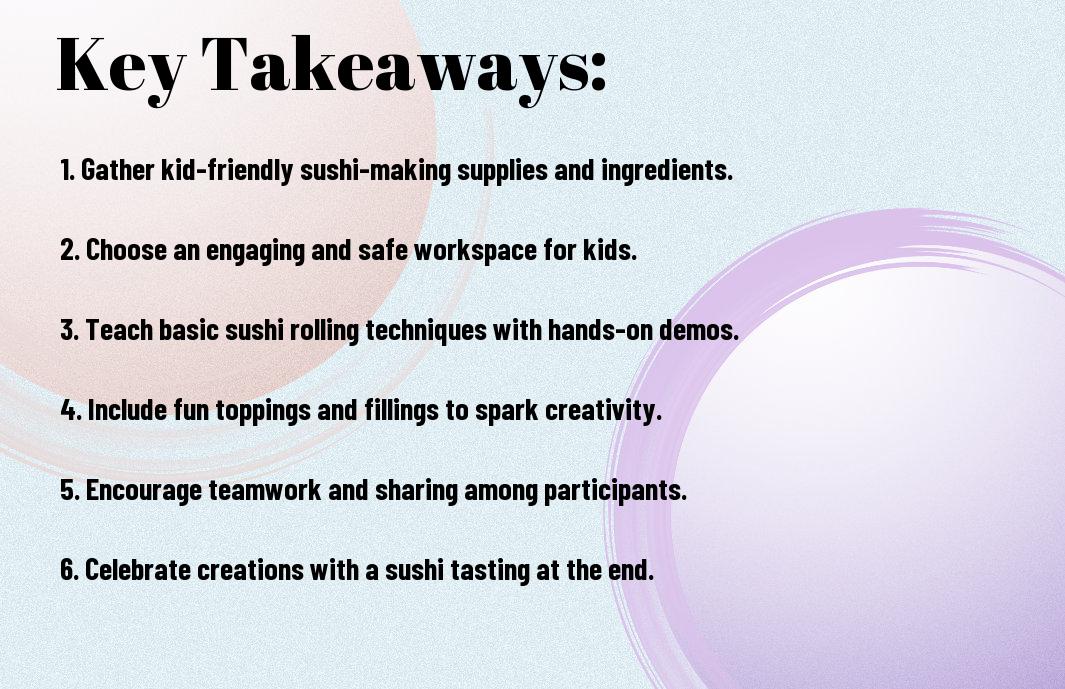
Key Takeaways:
- Preparation: Gather all necessary ingredients and tools, such as sushi rice, nori, fillings, rolling mats, and sharp knives to ensure a smooth workshop experience.
- Kid-friendly Techniques: Opt for simple sushi types, like maki rolls, and demonstrate techniques that children can easily replicate, ensuring they have fun while learning.
- Safety First: Emphasize food safety by discussing hygiene practices, using kid-safe utensils, and supervising them closely during the preparation process.
- Creative Freedom: Encourage kids to personalize their sushi rolls with various fillings and colors, fostering their creativity and making the activity more enjoyable.
- Taste Testing: Allow time for kids to taste their creations, creating a celebratory atmosphere and giving them a chance to share and appreciate each other’s sushi.
Planning the Workshop
As you prepare to host a sushi-making workshop for kids, effective planning is key to ensuring the event runs smoothly and is enjoyable for everyone involved. Start by outlining the logistics, including the date, venue, and necessary supplies. Consider the ages and skill levels of the children attending, as this will help shape the format and activities during the workshop.
Choosing a Date and Venue
For selecting the ideal date and venue for your workshop, choose a time when most kids are available, such as during weekends or school holidays. Look for a space that can accommodate the number of participants comfortably, and consider a kitchen or community center that provides the necessary tools and equipment for sushi-making.
Budgeting for Supplies
The success of your sushi-making workshop largely depends on effectively budgeting for supplies. Consider the cost of ingredients, utensils, and any other materials needed for the event, such as aprons or decorations. By estimating costs early on, you can set a realistic budget that helps keep your expenses in check while ensuring you don’t run out of necessary items.
To create an accurate budget, list all the supplies you’ll need, including rice, seaweed, fresh vegetables or fruits, and protein options like shrimp or salmon. Prices can vary, so shop around for the best deals. Additionally, factor in costs for disposable utensils and plates for serving sushi, as well as any beverages or snacks you might want to provide. Once you have a total cost, you can adjust as needed to align with your overall budget and maximize the experience for the children involved.
Selecting Sushi Recipes
It’s imperative to choose sushi recipes that are easy to prepare and appealing to kids, ensuring a fun experience for everyone involved. Consider varieties that allow for personalization, so children can select their favorite ingredients and customize their rolls. Opt for colorful fillings and familiar flavors that will entice young palates and encourage creativity during the workshop.
Kid-Friendly Options
To keep the workshop engaging, incorporate kid-friendly sushi options like cucumber rolls, avocado rolls, and crab stick rolls. These choices are simple to make and suit a variety of tastes, allowing children to explore sushi without the pressure of trying unfamiliar ingredients. Additionally, you can include some fun and creative variations, such as sushi donuts or fruit sushi, to spark their imagination.
Dietary Considerations
The dietary needs of your participants should always be taken into account when selecting sushi recipes for the workshop. Consider any allergies, vegetarian or vegan preferences, as well as gluten-free alternatives, to ensure all children can join in on the fun without concern.
Also, providing alternative ingredients means that you can cater to children who may have sensory issues or strong dislikes. Having options available, such as cooked ingredients like shrimp or chicken, can help accommodate different tastes. Make sure to communicate openly with parents beforehand to address any specific dietary restrictions, ensuring a safe and enjoyable experience for all young chefs.

Gathering Supplies
Keep your sushi-making workshop organized by gathering all necessary supplies ahead of time. Make a checklist to ensure you have everything you’ll need for a successful, fun event. From ingredients to tools, preparing your workspace will make the process smoother and allow your young chefs to focus on the art of sushi-making.
Essential Ingredients
By selecting fresh and colorful ingredients, you can excite the kids about sushi-making. Include sushi rice, nori sheets, and a variety of fillings such as cucumber, avocado, and crab sticks. Adding options like mango or cooked shrimp can also encourage creativity, enabling each child to customize their rolls.
Tools and Equipment
Equipment for sushi-making can enhance the experience significantly. Ensure you have rice cookers, cutting boards, sharp knives, and bamboo mats for rolling. A small bowl with water will help kids moisten their fingers when handling sushi rice, which is imperative to prevent it from sticking.
But don’t forget to include fun items that can make the workshop more engaging. Consider investing in colorful sushi-making kits or fun-shaped molds to help kids create unique sushi designs. Additionally, kid-sized utensils will make it easier for the children to participate, increasing their comfort and enthusiasm for trying something new.
Preparing the Space
Not only does a well-prepared space set the tone for fun, but it also gives kids the freedom to explore and create. Clear an area in your kitchen or dining room where the children can gather comfortably without distractions. Ensure you have enough light for visibility, and consider decorating with a theme to make it visually appealing. Lay down protective coverings on the surfaces to manage any mess that might occur during the workshop.
Setting Up Workstations
Below, divide your space into individual workstations for each child, equipped with their own set of tools and ingredients. Each station should have a cutting board, rolling mat, knife (suitable for kids), and bowls for ingredients. This setup not only helps manage the workflow but also promotes independence as they create their sushi.
Ensuring a Safe Environment
The safety of your young chefs is paramount. Prior to the workshop, survey your space for any potential hazards. Make sure sharp objects and hot materials are out of reach, and emphasize the importance of handling utensils with care. Provide child-appropriate equipment and wearables, like aprons, to protect clothing. Additionally, always have adult supervision during the session to assist when needed.
It’s important to set clear ground rules before the workshop starts. Explain how to use kitchen tools properly and establish behavior expectations to keep the environment safe and conducive to learning. Have a first aid kit on hand for minor injuries, and ensure everyone is aware of emergency procedures. Regularly checking on the children during the workshop allows you to address any safety concerns immediately, ensuring they remain engaged and protected throughout the experience.
Facilitating the Workshop
Now that you have set the stage, it’s time to facilitate the workshop. Engage the children by explaining the importance of sushi and its origins, while ensuring their safety in the kitchen. Guide them through each step patiently, and encourage questions. Make it a fun learning experience by sharing interesting facts and stories about sushi, allowing their excitement and curiosity to flourish. Emphasize teamwork and praise their efforts as they explore rolling their creations.
Step-by-Step Instructions
To provide clear guidance for the kids, break down the sushi-making process into manageable steps:
| Step | Instructions |
| 1 | Gather all ingredients and tools. |
| 2 | Demonstrate how to prepare sushi rice. |
| 3 | Show how to cut veggies and proteins. |
| 4 | Guide them in washing their hands. |
| 5 | Teach rolling techniques with nori. |
| 6 | Encourage creative fillings and presentations. |
| 7 | Assist with slicing and serving the sushi. |
Encouraging Creativity
Around the workshop, it’s important to inspire the kids to use their creativity. Allow them to experiment with different fillings and colors while they make their sushi. Encourage them to think outside the box, such as using fruit or unconventional ingredients to create unique rolls. By providing various toppings and sauces, you invite them to express themselves and personalize their sushi, making the experience truly theirs.
Instructions for encouraging creativity can include displaying colorful ingredients and encouraging brainstorming sessions. Ask open-ended questions like, “What unique flavors do you think would taste great together?” or “How can you make your sushi look like a rainbow?” This approach sparks their imagination and makes the process more enjoyable, helping them build confidence in their culinary skills.
Engaging the Kids
Despite the challenges of keeping kids focused, you can make your sushi-making workshop an unforgettable experience. Take inspiration from this Cooking Class – Kid-Friendly Sushi-Making Party – Chicago to plan activities that ignite their creativity and enthusiasm.
Fun Presentation Ideas
Kids love to showcase their creations, so consider incorporating fun presentation ideas. Encourage them to create sushi masterpieces using various colorful ingredients, and set up a “Sushi Show-and-Tell” session for them to proudly display their rolls.
Interactive Games and Activities
Engaging the children through interactive games can enhance their sushi-making experience. From sushi-themed relay races to trivia competitions about sushi facts, these activities will heighten their excitement and connection to the theme.
Indeed, incorporating games like “Sushi Scavenger Hunt” encourages cooperation and teamwork while making the workshop more dynamic. You can create teams, provide clues related to sushi ingredients, and let them explore the kitchen to find and collect these items. This interactive approach not only fosters learning but also builds a fun and lively atmosphere for your kids’ sushi-making workshop.
Final Words
As a reminder, hosting a kids’ sushi-making workshop can be a fun and engaging experience. By gathering the right ingredients, setting up a kid-friendly workspace, and guiding them through the process, you can spark their creativity and teach them valuable skills. Make sure to incorporate safety tips and encourage teamwork throughout the activity. With your enthusiasm and preparation, the workshop will not only be educational but also deliciously enjoyable for everyone involved.
FAQ
Q: What materials do I need for a kids’ sushi-making workshop?
A: To host a kids’ sushi-making workshop, gather the following materials: sushi rice, nori (seaweed sheets), a bamboo sushi mat, various fillings (such as cucumber, avocado, crab sticks, and carrots), dipping sauces like soy sauce and wasabi (for adult supervision), and utensils such as chopsticks and bowls for rice. Additionally, it can be useful to have aprons, serving plates, and a wet cloth for easy cleanup.
Q: How can I ensure that the sushi-making process is safe for children?
A: To ensure safety during the sushi-making workshop, supervise children closely, especially when using sharp utensils or handling ingredients. Pre-cut vegetables and fillings can simplify the process and minimize risks. Teach children about proper handwashing before cooking and remind them not to put any unsafe ingredients, like raw fish, in their sushi. Always have adult supervision, especially when any sharp tools are nearby.
Q: What age group is appropriate for participating in a sushi-making workshop?
A: A sushi-making workshop is typically suitable for kids aged 5 and up. Younger children may require more assistance and supervision, while older kids can take more responsibility for their creations. Tailoring the complexity of sushi to the children’s ages helps ensure an enjoyable experience for everyone. For younger participants, you might focus on simpler rolls with fewer ingredients, while older kids can explore more complex sushi styles.
Q: How long should the sushi-making workshop last?
A: A sushi-making workshop for kids typically lasts between 1.5 to 2 hours. This timeframe allows for an introduction to sushi-making techniques, hands-on preparation, and the opportunity for children to roll and decorate their sushi. Incorporating time for eating the sushi they’ve made and a fun discussion about the experience can also enhance their enjoyment and learning.
Q: What are some variations of sushi that kids might enjoy making?
A: Kids often enjoy making sushi variations that appeal to their tastes. Options include vegetable rolls with colorful ingredients such as bell peppers, carrots, or even fruit rolls using mango and strawberries for a sweet twist. Inside-out rolls (uramaki) where the rice is on the outside can be very popular and fun to make. Additionally, creative shapes, like sushi balls (onigirazu) or sushi cones (temaki), can make the experience more engaging for kids, allowing them to customize their creations.