Many people might not know that sushi, a dish often associated with fine dining today, actually had its origins as a popular street food in Japan. You’ll discover that during the Edo period, sushi was a quick, convenient meal for the bustling populace of Tokyo, known then as Edo. Comprised mainly of vinegared rice and fresh fish, this portable fare fit seamlessly into the fast-paced lives of the working class. Join us as we explore the transformation of sushi from humble beginnings to a global culinary icon.
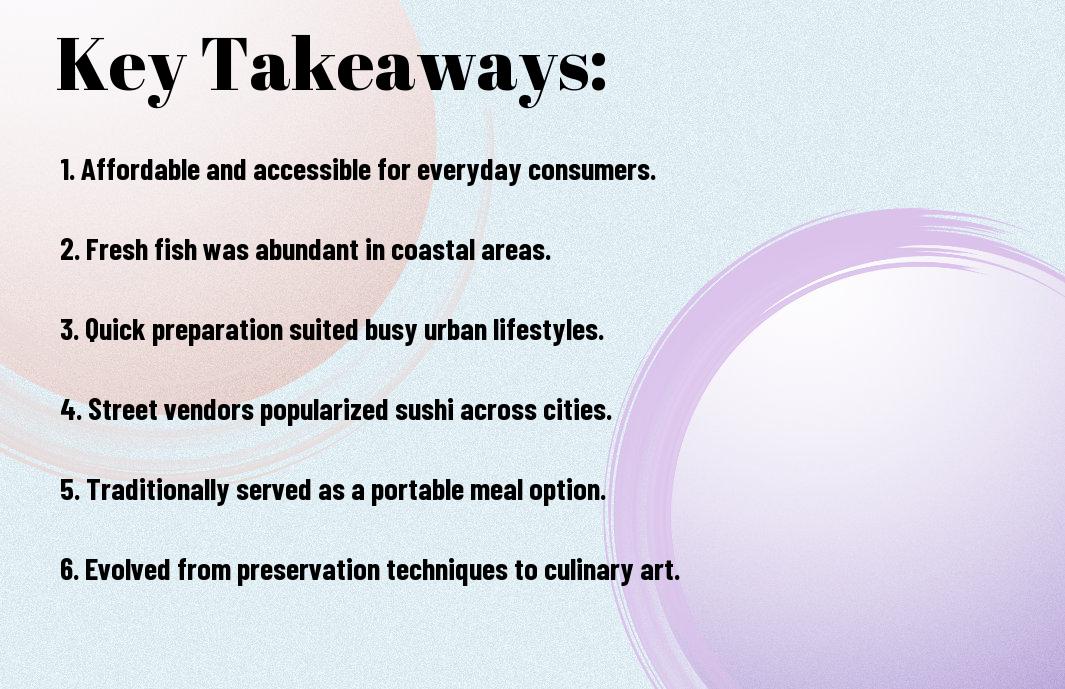
Key Takeaways:
- Historical Roots: Sushi originated as a way to preserve fish using fermented rice, making it a convenient and street-friendly option for busy city dwellers.
- Accessibility: Street vendors offered sushi at affordable prices, allowing a wider audience to enjoy this delicacy without the need for formal dining settings.
- Cultural Evolution: Over time, sushi transitioned from street food to an art form, reflecting Japan’s changing culinary landscape and dining habits.
Historical Context of Sushi in Japan
Your understanding of sushi cannot be complete without recognizing its rich historical context in Japan. Originating as a method of preserving fish in fermented rice, sushi transformed over centuries into the beloved culinary art form you appreciate today. The evolution of sushi reflects Japan’s cultural changes and adaptation to various influences, helping you grasp its significance beyond mere food to a symbol of tradition and innovation.
Origins of Sushi as a Food
Historical records indicate that sushi began as a means to preserve fish, using rice as a fermenting agent. This practice, known as narezushi, enabled fish to last longer, allowing communities to thrive and trade more effectively. As you explore sushi’s origins, you can see how this preservation method laid the groundwork for various styles of sushi that emerged later, evolving to meet the tastes and preferences of the Japanese people.
The Role of Street Vendors in Early Sushi Culture
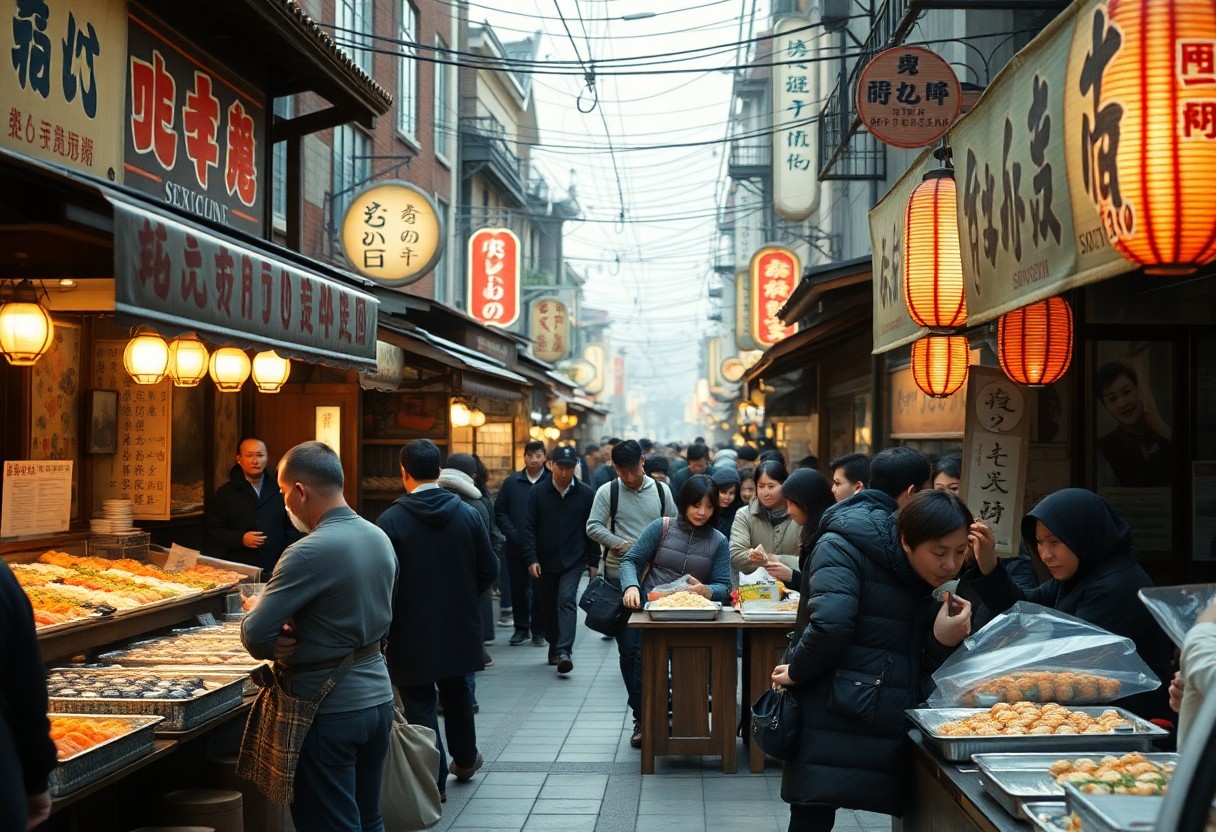
Sushi played a pivotal role in the vibrant culture surrounding Japanese street vendors. Beginning in the Edo period, street vendors became necessary suppliers of quick, accessible meals, making sushi a popular on-the-go food for the working class. You can appreciate the evolution of sushi from its humble beginnings as a street food to its rise in gourmet dining, as vendors showcased their craft and creativity through various styles and presentations.
Further exploration reveals that these street vendors perfected their craft, creating a lively social environment where people gathered to enjoy fresh and affordable sushi. As modern Japan embraced this tradition, the street food style influenced contemporary sushi dining and appreciation. By valuable engagement with these vendors, you can see how they played a significant role in transforming sushi into a national staple, catering to communities and contributing to its rich culinary heritage.
Ingredients and Preparation Methods
Some of the key ingredients in sushi include fresh fish, vinegared rice, and various vegetables. Street vendors often utilized local seafood, ensuring that the sushi was not only fresh but also culturally relevant. Preparation methods were simple yet effective, allowing vendors to quickly assemble sushi for eager customers. This combination of quality ingredients and efficient methods contributed to sushi’s popularity as a delightful street food option across Japan.
Freshness and Local Sourcing
With an emphasis on freshness, street vendors sourced their ingredients from local markets and nearby fishing ports. This practice not only ensured that your sushi was made from the best quality ingredients but also supported local economies. By utilizing seasonal seafood and vegetables, vendors created vibrant dishes that reflected the regional flavors and traditions of Japan, allowing you to enjoy a genuine culinary experience.
Techniques Used by Street Vendors
Preparation methods were simple yet effective, allowing vendors to quickly assemble sushi for eager customers. Throughout the streets of Japan, you would have encountered numerous techniques—from rolling sushi with bamboo mats to hand-pressing rice and fish together. Street vendors often perfected these methods through practice and repetition, ensuring that each piece of sushi was crafted with care and precision.
Sourcing local and seasonal ingredients played a significant role in the techniques used by street vendors. Fresh fish and vegetables were often displayed prominently, enticing customers with vibrant colors and aromas. The speed at which vendors prepared sushi ensured that your meal was always served at the peak of freshness. These methods did not only enhance the overall quality of the sushi but also created a lively atmosphere that distinguished street food in Japan.
Social and Cultural Significance
Keep in mind that sushi’s evolution from a simple street food to a gourmet delicacy reflects its deep-rooted social and cultural significance in Japan. As you explore this delightful cuisine, you will appreciate its connections to tradition, communal enjoyment, and the artistry that has shaped its place in Japanese society.
Sushi and Daily Life in Edo Period Japan
Japan during the Edo period witnessed the emergence of sushi as a staple in daily life. Street vendors prepared and sold nigiri and other forms, making fresh and affordable meals accessible to the bustling populace. As you explore into this era, you’ll see how sushi became intertwined with the rhythm of urban life, providing nourishment for workers and a source of satisfaction during leisure moments.
Community and Interaction at Street Stalls
Behind the vibrant street stalls of Edo, sushi was not just about food; it served as a hub for community interaction. You would find lively discussions and social connections forming around these stalls, with locals gathering to share stories and enjoy their meals together.
In addition, these sushi stalls fostered a sense of belonging among patrons, creating social ties that transcended mere transactions. As you observe the interactions, you’ll find people bonding over shared culinary experiences, with vendors often becoming familiar faces in their neighborhoods. This community atmosphere played a vital role in nurturing relationships and reinforcing the cultural fabric of Japan during this period.
Evolution of Sushi from Street Food to Fine Dining
For centuries, sushi was a convenient street food, satisfying the cravings of busy urban dwellers. Over time, shifts in culinary trends and dining culture led to its transformation into an esteemed fine dining option. You can trace this evolution through the refinement of ingredients, intricate preparation methods, and the emergence of sushi restaurants that emphasize artistry and presentation.
Economic Changes and Urban Development
Across Japan, economic growth and urbanization significantly altered dining habits. As cities expanded and consumer power increased, sushi transitioned from a quick snack for laborers to an experience sought by food enthusiasts. You witnessed this change as sushi establishments began to flourish, responding to demand for higher quality and more diverse offerings.
The Impact of Globalization on Sushi Perception
Dining experiences have expanded worldwide, transforming how you perceive sushi. As it spread globally, sushi adopted various influences, merging traditional practices with local flavors and concepts. You now find sushi in an array of settings, from casual eateries to upscale restaurants, reflecting its evolution from humble origins to a celebrated gourmet cuisine.
To fully appreciate the impact of globalization on sushi perception, consider how local adaptations have made it more accessible while preserving core elements of its Japanese heritage. You may have encountered sushi burritos, sushi pizza, or even sushi infused with regional ingredients, showcasing creativity and versatility. This fusion not only broadens your sushi experience but also invites you to appreciate the balance between tradition and innovation in the culinary world.
Modern-Day Sushi Vendors
Despite the elegant reputation sushi has gained over the years, you can still find vibrant sushi vendors on the streets of Japan today. These modern-day food stalls serve a variety of sushi options, ranging from traditional nigiri to inventive rolls, offering a convenient way for you to enjoy this beloved dish on the go. With fresh ingredients and quick preparation, sushi vendors have maintained the street food culture while keeping pace with today’s culinary trends.
The Revival of Street Sushi in Contemporary Japan
Above all, the revival of street sushi in contemporary Japan speaks to a longing for nostalgic culinary experiences. You can find pop-up sushi stalls and food trucks that celebrate this timeless dish, often located at festivals or popular tourist spots. This resurgence invites you to enjoy sushi in a casual environment, reinforcing its accessible and communal nature.
Fusion and Innovation in Street Sushi Offerings
By embracing creativity, modern street sushi vendors have introduced innovative takes on traditional flavors. As you explore these offerings, you’ll discover unique combinations that blend international cuisines with classic sushi elements, transforming your sushi experience into something fresh and exciting.
Due to the increasing demand for diverse culinary experiences, sushi vendors are experimenting beyond traditional boundaries. You might encounter sushi burritos, sushi tacos, and even vegan options that showcase unexpected ingredients, catered to a variety of taste preferences. These innovative offerings enhance your journey through street food culture, integrating global flavors while still celebrating the art of sushi-making. So, as you venture to try street sushi, you are not only enjoying a meal but also participating in its evolving story.
Comparison with Other Street Foods in Japan
After exploring sushi’s origins as street food, you may find it fascinating to compare it with other popular Japanese street foods. This comparison highlights the diversity and cultural significance of street cuisine in Japan.
| Sushi | Fresh fish and vinegared rice, portable and quick to eat |
| Takoyaki | Ball-shaped snacks filled with octopus, served hot |
| Okonomiyaki | Savory pancakes with various ingredients, cooked on a griddle |
| Yakitori | Grilled chicken skewers, often served with dipping sauce |
| Yakisoba | Stir-fried noodles, served with vegetables and meat |
Similarities and Differences with Other Types of Street Cuisine
Foods like takoyaki, okonomiyaki, and yakitori offer similar portability and quick preparation as sushi, making them equally popular street options. However, they vary in ingredients and cooking methods:
- Sushi focuses on raw fish and rice.
- Takoyaki incorporates octopus in a doughy ball form.
- Okonomiyaki is like a savory pancake filled with diverse ingredients.
- Yakisoba involves stir-fried noodles with various toppings.
- Yakitori highlights grilled chicken on skewers.
After enjoying these street foods, you’ll appreciate the unique culinary landscape of Japan.
The Continued Popularity of Street Food Culture
Around Japan, street food culture thrives, continuously evolving while maintaining its traditional roots. You can find bustling street vendors at festivals, markets, and urban centers, serving a delightful array of culinary choices.
Further, this culture promotes a sense of community and encourages you to engage with local flavors. The vibrancy of street food is not just about convenience—it represents a deep-rooted connection to Japan’s culinary history. Each dish tells a story, inviting you to experience the rich traditions and modern innovations side by side. Whether you are savoring sushi, takoyaki, or yakitori, you’re partaking in a cultural experience that has persisted for generations.
Final Words
As a reminder, sushi’s origins as a street food in Japan highlight its role in everyday life, reflecting both convenience and accessibility. You can appreciate how it evolved from a simple, practical meal for busy urban dwellers to a celebrated culinary art form. Your understanding of sushi’s history enriches your experience, allowing you to savor each bite with a sense of cultural significance. Embracing its humble beginnings gives sushi an even deeper flavor, transforming it from a mere dish into a link to Japan’s vibrant street life.
Q: Why was sushi originally considered street food in Japan?
A: Sushi originated as a simple, portable meal for the common people in Japan. In the early days, it was made using leftover fish and rice, making it an affordable option for those on the go. Street vendors would serve sushi wrapped in leaves or placed on simple wooden trays, allowing people to enjoy it quickly while traversing busy streets. The convenience and low cost contributed to its popularity among the working class, turning it into a mainstream street food dish.
Q: How did the preparation and presentation of sushi as street food evolve over time?
A: Initially, sushi was made through a process called narezushi, where fish was fermented with rice. Over time, this evolved into nigirizushi, which is the hand-formed rice and fish combination we recognize today. Street vendors adapted their methods to cater to changing tastes and preferences, making the seafood fresher and the rice more flavorful. As sushi became more refined, it started to be served in stalls with improved presentation, yet it maintained its accessibility as a quick and delicious meal option.
Q: What factors contributed to the decline of sushi as a street food?
A: Several factors led to the decline of sushi as a street food. As Japanese society modernized, sushi restaurants began to emerge, offering a more formal dining experience. The rise of food safety standards and regulations also played a role; sushi made from fresh fish required better facilities than a street food vendor could provide. Furthermore, as sushi gained international recognition, it transformed into a high-end delicacy, straying further away from its roots as an affordable street meal. Today, while sushi is still enjoyed in many casual settings, its perception has shifted significantly over the decades.