Sushi has evolved significantly, with plant-based options increasingly capturing the spotlight in recent years. As consumer preferences shift towards healthier and more sustainable food choices, you may find yourself intrigued by the variety and creativity of plant-based sushi rolls that cater not just to vegans but also to the environmentally conscious. This blog post will guide you through the trends, ingredients, and benefits of plant-based sushi, helping you explore these delicious alternatives for your next dining adventure.
Key Takeaways:
- Sustainability: Plant-based sushi offers an eco-friendly alternative to traditional sushi by reducing fish consumption and promoting sustainable food practices.
- Health-Conscious Choices: Many consumers are turning to plant-based sushi for its health benefits, including lower calories and increased nutrients, alongside dietary preferences like veganism and vegetarianism.
- Innovative Ingredients: Chefs are creatively using ingredients such as avocado, tofu, and vegetable wraps to enhance flavor and texture, expanding the appeal of plant-based sushi to a broader audience.
The Origins of Sushi
To understand the rise of plant-based sushi, you must first explore the origins of this beloved dish. Sushi traces its roots back to ancient Japan, where it began as a method of preserving fish through fermentation with rice. This practice eventually evolved into the delicacy we enjoy today, highlighting the seamless fusion of flavors, culture, and culinary artistry that defines sushi.
Traditional Ingredients
Across the centuries, traditional sushi has relied heavily on specific ingredients, such as vinegared rice, fresh fish, seaweed, and vegetables. The harmony between these elements is crucial, creating a balanced flavor profile that enhances your dining experience. While fish remains a staple, other natural ingredients have always played a vital role in crafting the perfect sushi.
Evolution of Sushi Culture
Culture surrounding sushi has transformed significantly over time. Initially embraced as a practical food innovation, it became a symbol of Japanese gastronomy, showcasing an artistry that elevates dining to a cultural experience. You may find that sushi has now transcended its traditional roots, captivating global palates and inspiring creativity in new forms, including plant-based options.
For instance, sushi’s evolution led to various regional styles and adaptations, reflecting local preferences and ingredients. As tastes diversified, chefs began incorporating unconventional components such as tropical fruits, grains, and even plant proteins. This creative shift has not only broadened sushi’s appeal but also introduced an environmentally-conscious pathway for diners looking to explore flavors beyond fish, thus enhancing your culinary journey.
The Plant-Based Movement
Now, as you navigate the world of food options, it’s clear that the plant-based movement is gaining tremendous momentum. This shift toward plant-centric diets is reshaping culinary trends, emphasizing sustainability, animal welfare, and health. Chefs and home cooks alike are exploring innovative ways to incorporate vegetables, grains, and legumes into traditional dishes, including sushi, creating exciting new flavors and textures that appeal to a broader audience.
Health and Environmental Benefits
Before diving deeper, you should know that opting for plant-based sushi comes with numerous health benefits. Plant-based diets can lower the risk of chronic illnesses, improve digestion, and boost energy levels. Additionally, these diets are often more sustainable, as they require fewer resources and contribute less to greenhouse gas emissions compared to those heavily reliant on animal products.
Increasing Popularity and Demand
Below this rising trend, it’s evident that demand for plant-based sushi is on the rise. As more and more people become aware of their health and environmental impacts, they are seeking out alternative cuisine options, resulting in increased visibility in restaurants, grocery stores, and among home-cooked meals. With innovation at the forefront, chefs are continuously crafting unique plant-based sushi variations that cater to diverse tastes, thereby broadening the appeal.
A notable factor in the increasing popularity and demand for plant-based sushi is the broader societal shift towards conscious eating. You may find that more dining establishments are either adding plant-based options to their menus or specializing entirely in plant-based cuisine, reflecting the desire for healthier choices. Social media also plays a role as users showcase their plant-powered culinary adventures, inspiring others to experiment and embrace plant-based sushi in their own kitchens.
Types of Plant-Based Sushi
Once again, the world of sushi has adapted to diverse preferences, showcasing various forms of plant-based options that can excite your palate. These types may include:
- Vegetable Rolls
- Fruit Sushi
- Sushi Bowls
- Rice Paper Rolls
- Pressed Sushi
Recognizing these variations not only enriches your sushi experience but also allows you to invite a wider audience to the communal joy of sushi dining.
| Type | Description |
|---|---|
| Vegetable Rolls | Traditional rolls filled with a variety of fresh vegetables. |
| Fruit Sushi | Innovative rolls that feature fruits for a sweet touch. |
| Sushi Bowls | A deconstructed sushi experience served in a bowl. |
| Rice Paper Rolls | Light and fresh options wrapped in rice paper. |
| Pressed Sushi | Artfully layered ingredients compressed into a sushi shape. |
Vegetable Rolls
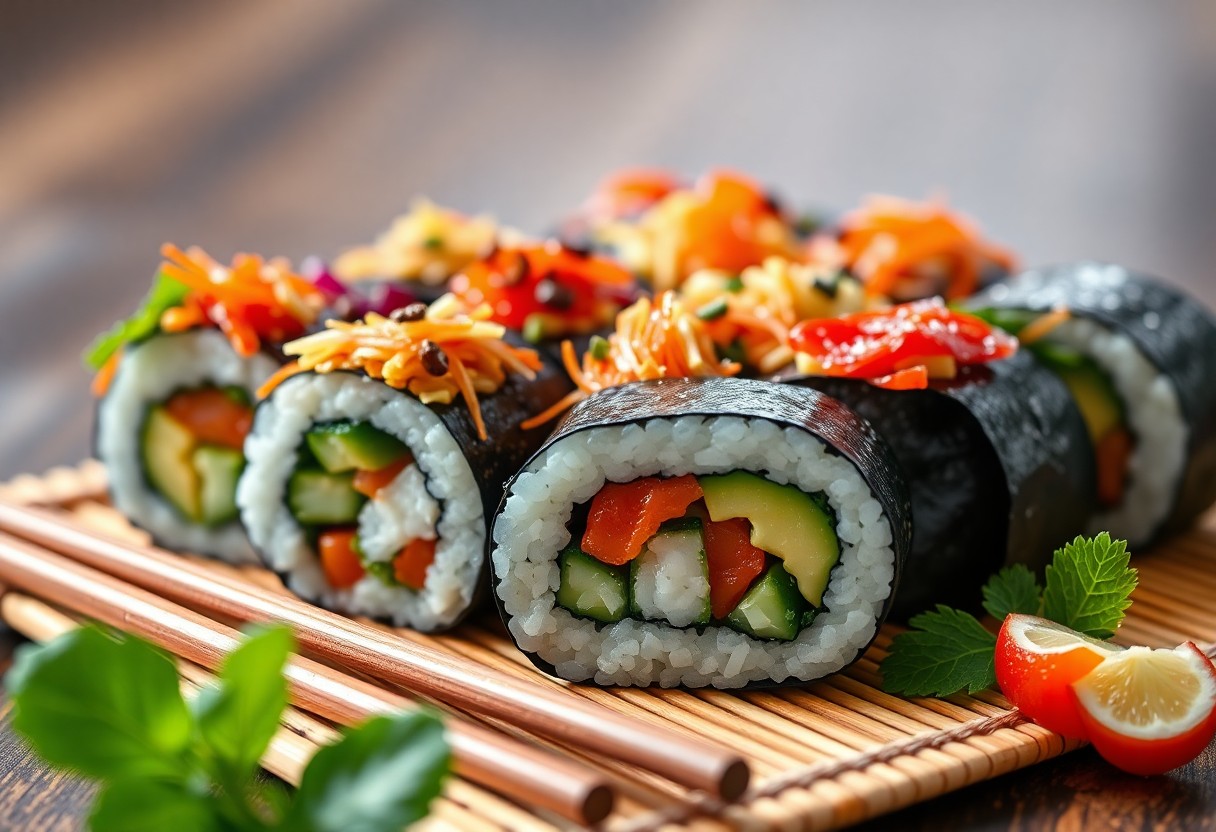
At the heart of plant-based sushi, vegetable rolls combine the freshest veggies like avocado, cucumber, and bell peppers, expertly rolled with sushi rice and nori. These rolls not only retain the classic feel of sushi but bring forth a meal that’s both nutritious and satisfying, making it a favorite among vegan and non-vegan sushi lovers alike.
Innovative Substitutes
Along with vegetables, innovative substitutes have gained popularity, offering vital flavors and textures that mimic traditional fish. From using marinated tofu to replicate the umami of seafood, to creative uses of smoked carrots resembling eel, these alternatives provide an exciting dimension to your sushi experience.
Hence, by exploring these innovative substitutes, you can enjoy a delightful variety of textures and flavors in your sushi. Ingredients like plant-based cream cheese, chickpea tuna, and even tempura vegetables replace conventional fillings without compromising taste or satisfaction. You’ll likely find that these inventive approaches not only appeal to your taste buds but also spark curiosity among friends and family, making plant-based sushi a delightful shared experience.
Nutritional Aspects of Plant-Based Sushi
Not only is plant-based sushi a delicious alternative to traditional options, but it also brings a wealth of nutritional benefits. By incorporating vibrant vegetables, grains, and legumes, you can enjoy a meal that is rich in necessary nutrients and low in unhealthy fats. Plant-based sushi provides a variety of vitamins, minerals, and antioxidants, making it a heart-healthy choice that can also support your overall well-being.
Essential Nutrients
The composition of plant-based sushi allows you to consume a myriad of necessary nutrients. Ingredients like avocado, seaweed, and brown rice contribute healthy fats, fiber, and proteins. You’ll find an abundance of vitamins A, C, and K, as well as minerals such as iron and calcium, showcasing the nutritional prowess of this modern sushi style.
Comparison with Traditional Sushi
Around the globe, sushi is often synonymous with fish and seafood, but plant-based sushi presents an exciting alternative. Below is a comparison of some nutritional aspects between traditional sushi and its plant-based counterpart:
| Aspect | Traditional Sushi | Plant-Based Sushi |
|---|---|---|
| Calories | Higher due to fish and added sauces | Lower, primarily from vegetables and grains |
| Omega-3 Fatty Acids | Rich source from fish | Minimal; derived from plant sources |
| Fiber Content | Lower depending on rice and fish | Higher from vegetables and seaweed |
Indeed, while traditional sushi often boasts higher omega-3 fatty acids due to its seafood content, plant-based sushi excels in fiber and overall lower calories, making it a satisfying alternative. The use of ingredients such as tofu, avocado, and various vegetables means you can enjoy numerous health benefits without compromising flavor. This comparison highlights how you can still enjoy sushi while catering to a healthier lifestyle through plant-based options.
Recipes and Preparation Techniques
Many people are discovering the joy of crafting delicious plant-based sushi at home. By utilizing an array of fresh vegetables, fruits, and plant-based proteins, you can create vibrant rolls that are not only visually appealing but also packed with flavor. The key is to balance textures and tastes while incorporating various sauces and seasonings for a satisfying culinary experience.
Homemade Plant-Based Sushi
Among the simplest pleasures of plant-based sushi is the ability to customize your rolls according to your tastes. Gather ingredients like avocado, cucumber, carrots, and bell peppers, then pair them with sushi rice seasoned with rice vinegar. Conjure innovative combinations that suit your cravings, such as mango and spicy mayo or a medley of pickled vegetables.
Best Practices for Sushi Rolling
Sushi rolling can become an art form with the right techniques. Use a sushi mat to ensure even pressure and consistent shapes while rolling. Lay your rice and fillings tightly but don’t overstuff, as this can make rolling difficult. With a little patience and practice, you’ll achieve beautifully formed rolls that showcase your culinary skills.
Due to the delicate nature of sushi, it is important to maintain a clean and organized workspace. Start with dry hands and a damp towel to minimize stickiness. As you roll, apply gentle but firm pressure to keep your ingredients compact without squeezing too hard, which can ruin the texture. Finally, use a sharp knife to slice your rolls for a clean presentation, ensuring each piece looks just as good as it tastes.
The Future of Plant-Based Sushi
All signs point to a delicious future for plant-based sushi as culinary creativity and sustainability intersect. The growing awareness of health and environmental issues positions plant-based sushi as not just a trend, but a staple in future dining experiences. With innovative chefs experimenting with flavors and textures, your sushi choices will expand significantly, making it easier than ever to enjoy this cuisine while aligning with a sustainable lifestyle.
Market Trends
Against the backdrop of increasing demand for plant-based options, sushi restaurants are rapidly incorporating vegan and vegetarian offerings. As consumers prioritize health-conscious choices, market research indicates that plant-based sushi is gaining traction, with more establishments adapting menus to cater to this growing demographic. You can expect to see more diverse options that appeal to both traditional sushi lovers and those seeking healthier alternatives.
Potential Innovations
Sushi chefs are continuously exploring new flavors and textures, leading to exciting innovations in plant-based sushi. You might soon find sushi made from ingredients like avocado, jackfruit, and even algae, which mimic the taste and mouthfeel of traditional fish. With the rise of alternative proteins, such as soy-based and legume-based options, your choices for sushi can become more varied and satisfying than ever before.
Trends within the culinary world suggest that the future of plant-based sushi will also harness innovative technology. Techniques like 3D food printing and fermentation are opening up possibilities for unique shapes and flavors, enticing you to experience sushi in entirely new ways. As sustainability continues to gain importance, you may also find more eco-friendly packaging and serving methods that enhance the dining experience while reducing your carbon footprint.
Summing up
With these considerations, it’s clear that the rise of plant-based sushi reflects a significant shift in dietary preferences and awareness of sustainability. You can explore the innovative options available, as brands like Boldly announces vegan seafood line; Kikka Sushi … and others are leading the charge to create flavorful sushi without traditional fish. Embracing this trend not only enhances your culinary experience but also contributes to a more sustainable future for our oceans.
Q: What is plant-based sushi and how does it differ from traditional sushi?
A: Plant-based sushi is a variation of traditional sushi that utilizes vegetables, fruits, and other plant-derived ingredients instead of fish or seafood. While traditional sushi often features raw or cooked fish wrapped in rice and seaweed, plant-based sushi embraces creativity with ingredients like avocado, cucumber, sweet potato, and even plant-based proteins such as tofu or tempeh. The focus is on fresh, vibrant flavors and textures, making it a delicious alternative for those who are vegetarian, vegan, or simply looking to reduce their consumption of animal products.
Q: Why has plant-based sushi become more popular in recent years?
A: The rise in popularity of plant-based sushi can be attributed to several factors. Firstly, there has been an increasing awareness of health and wellness, leading many individuals to seek out plant-based diets for their health benefits. Secondly, sustainability concerns regarding overfishing and the environmental impact of seafood harvesting have prompted consumers to look for alternatives. Lastly, the culinary world has embraced innovation, with chefs exploring new flavors and presentations that make plant-based sushi exciting and appealing to a wide audience.
Q: Where can I find plant-based sushi options?
A: Plant-based sushi options are becoming more widely available and can be found in various places. Many sushi restaurants have started offering plant-based rolls on their menus, catering to the growing demand. Additionally, vegan or vegetarian restaurants may specialize in plant-based sushi. For those who prefer to make their own, numerous recipes and kits are available online, allowing you to experiment with different ingredients and flavor combinations at home. Also, grocery stores and health food shops are increasingly stocking pre-made plant-based sushi for convenient dining.