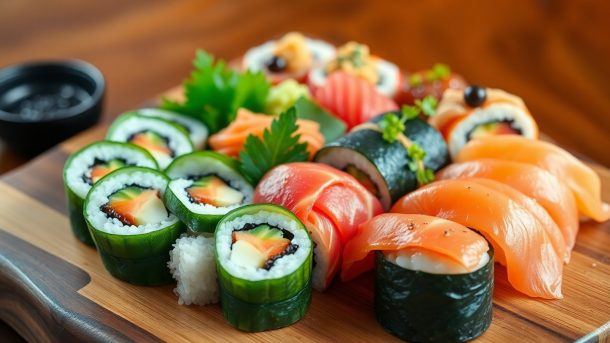
Just because you follow a specific diet doesn’t mean you have to miss out on the joys of sushi. Whether you’re adhering to keto, paleo, or another specialized lifestyle, there are delicious options to satisfy your cravings without straying from your dietary principles. In this post, you’ll discover how to enjoy sushi tailored for your unique nutritional needs, including ingredient swaps and tips for crafting your own rolls. Embrace the versatility of sushi while staying committed to your health goals!
Key Takeaways:
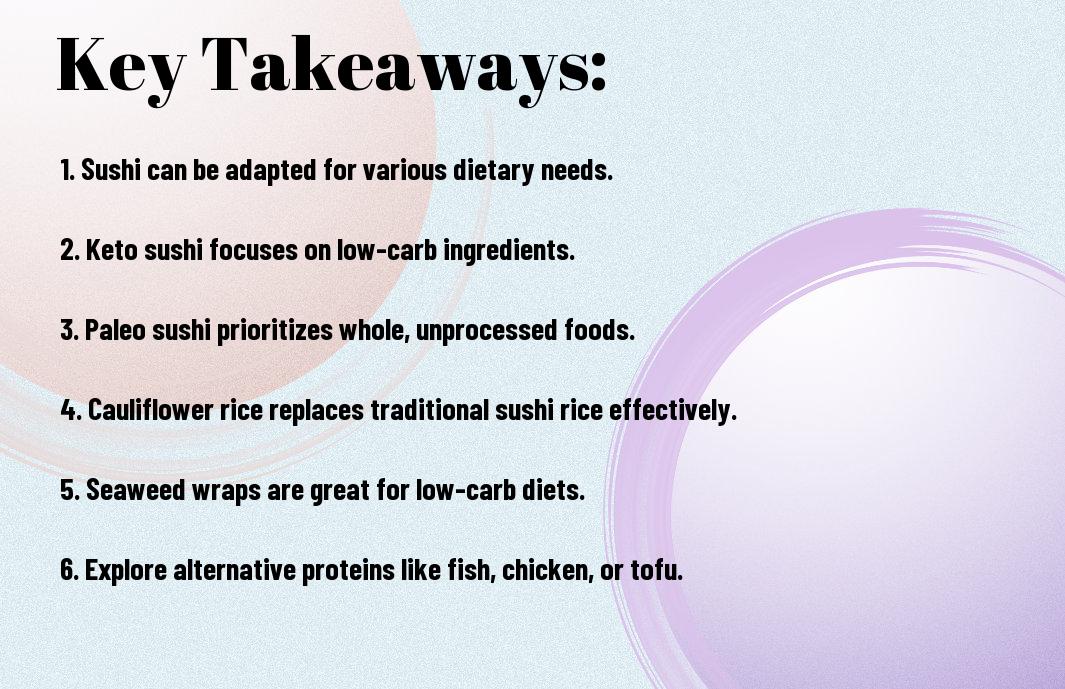
- Adaptability: Sushi can be modified for various diets including Keto and Paleo by substituting traditional ingredients with higher protein and lower carb options.
- Ingredients: For Keto sushi, consider using cauliflower rice instead of regular rice, while Paleo sushi favors whole, unprocessed ingredients.
- Flavor Alternatives: Avocado, cucumber, and other vegetables can enhance flavor and texture in place of traditional sushi components.
- Protein Focus: Opt for fresh fish, shrimp, or other seafood as a primary source of protein while adhering to your dietary restrictions.
- Health Benefits: Special diet sushi can provide nutritional benefits such as healthy fats and vitamins without compromising on taste.
Understanding Sushi and Its Traditional Ingredients
While sushi may seem simple at first glance, it is a rich culinary tradition rooted in centuries of Japanese history. The harmony of flavors, textures, and presentation in sushi can enhance your dining experience, making it necessary to understand the traditional ingredients that define this iconic dish. From vinegared rice to fresh seafood, each component plays a vital role in creating the perfect sushi experience.
Basics of Sushi
Sushi consists primarily of vinegared rice combined with various ingredients, such as seafood, vegetables, and occasionally tropical fruits. This unique combination is often rolled in seaweed or served in bite-sized pieces, making it both visually appealing and satisfying to eat. Understanding the basics is key to appreciating the diverse range of sushi available.
Common Ingredients in Traditional Sushi
Below are the fundamental ingredients commonly found in traditional sushi, including sushi rice, nori (seaweed), fresh fish or seafood, and a variety of vegetables. Each component brings unique flavors and textures that contribute to the overall sushi experience.
Hence, knowing these ingredients enables you to make informed choices when selecting sushi that aligns with your tastes and dietary needs. Sushi rice, seasoned with vinegar, creates a slightly tangy base, while nori adds a crisp texture. Fresh fish like tuna, salmon, or even shellfish provide protein, while vegetables such as cucumber and avocado enhance flavor diversity. By recognizing these common ingredients, you can better appreciate sushi’s artistry and nutritional value.
Keto Sushi: Low-Carb Alternatives
Some sushi lovers find ways to enjoy their favorite dish while adhering to a ketogenic diet. By substituting traditional ingredients with low-carb alternatives, you can savor sushi without disrupting your macronutrient goals. Using cauliflower rice or cucumber as a base, along with fresh fish and veggies, creates a delicious and satisfying option that aligns with your low-carb lifestyle.
Key Principles of the Keto Diet
Among the fundamental aspects of the ketogenic diet is a significant reduction in carbohydrate intake while increasing healthy fats and maintaining moderate protein levels. This dietary approach encourages your body to enter a state of ketosis, wherein it becomes more efficient at burning fat for fuel. By understanding these principles, you can craft delicious meals, including sushi alternatives that fit seamlessly into your keto journey.
Keto-Friendly Sushi Options
Diet-friendly sushi options allow you to delight in vibrant flavors while keeping your carb count low. You can choose sashimi, which consists solely of fresh fish, or roll up your favorite ingredients in a nori wrap without rice. Avocado and cream cheese are excellent choices for adding creaminess and taste without the extra carbs. Your imagination can run wild with these fresh, simple, and satisfying combinations!
At the heart of keto-friendly sushi options lies your creativity and willingness to explore new flavors. Try combinations like spicy tuna and cucumber rolls or avocado and smoked salmon. You might also consider making “sushi bowls” with a base of leafy greens topped with sashimi, avocado, sesame seeds, and low-carb sauces. Each bite becomes a harmonious explosion of taste while adhering to your keto guidelines. Dive into this delightful world where sushi meets your low-carb lifestyle!
Paleo Sushi: Embracing Whole Foods
Once again, you can enjoy sushi without compromising your Paleo lifestyle by focusing on whole, unprocessed ingredients. This means swapping out traditional rice for cauliflower rice or zucchini noodles, and using fresh fish, vegetables, and healthy fats. For more inspiration on low-carb options, check out this Keto Sushi recipe that you can easily adapt to fit your Paleo needs.
The Paleo Diet Explained
Around the world, the Paleo diet emphasizes eating foods that our ancestors would have consumed, centering on whole, unprocessed items like lean meats, fish, fruits, and vegetables. By avoiding grains, legumes, and refined sugars, you provide your body with nutrient-rich foods that align with your natural dietary patterns.
Paleo-Compatible Ingredients for Sushi
Paleo-compatible sushi relies on fresh, wholesome ingredients to maintain your health-focused diet. You can use ingredients like sashimi-grade fish, fresh veggies, and avocado while forgoing rice and sugary sauces.
Even when it comes to creating delicious sushi rolls, your options can be diverse. Incorporating items such as nori sheets, spiralized veggies like carrots and cucumbers, and creamy avocado will create a flavorful and satisfying experience. By focusing on whole foods and organic ingredients, you can craft sushi that not only fits your Paleo regimen but also tantalizes your taste buds with freshness and nutrition.
Sushi for Vegetarians and Vegans
Despite the traditional focus on seafood, sushi can be a delightful experience for vegetarians and vegans. You can explore various plant-based options that highlight flavors and textures, ensuring a satisfying meal. For those on a keto diet, consider Keto Sushi (Without Rice), which incorporates vegetables and seaweed to create tasty alternatives that fit your dietary needs.
Plant-Based Sushi Options
With an array of ingredients at your disposal, plant-based sushi can be as diverse and enjoyable as its traditional counterpart. You can use sushi rice alternatives like cauliflower rice, and fill your rolls with an assortment of colorful vegetables, avocado, and even fruits. Adding ingredients like tofu or tempeh can enhance protein content, making your sushi both filling and nutritious.
Nutritional Benefits of Vegetarian Sushi
Among the many perks of consuming vegetarian sushi is its high fiber content, which aids digestion and promotes satiety. Utilizing fresh vegetables and healthy fats from avocado, you can create balanced meals that are rich in vitamins and minerals while minimizing the intake of unhealthy fats and cholesterol.
And as you enjoy your vegetarian sushi, you’re not just savoring delicious bites; you’re also benefiting from antioxidants found in ingredients like seaweed and vegetables. These nutrients support your immune system, improve skin health, and offer anti-inflammatory properties, making vegetarian sushi a smart choice for a vibrant lifestyle.
Creative Sushi Recipes for Special Diets
Many individuals looking to enjoy sushi while adhering to specific dietary needs can find innovative recipes that satisfy both cravings and nutritional requirements. Explore delicious options like cauliflower rice rolls and zucchini sushi wraps to transform traditional sushi into a guilt-free delight. If you’re curious about making these creative dishes yourself, check out Keto Paleo Sushi | Do you miss eating sushi? It’s so easy to … for inspiration!
Keto Sushi Rolls
Around the world of keto dining, sushi rolls take on a whole new identity. You can create rolls using alternatives like avocado, cream cheese, and cucumber to bring full flavors without the carbs. Pair these ingredients with protein-rich fillings like smoked salmon or grilled chicken, ensuring your meal is as satisfying as it is compliant with your dietary goals.
Paleo-Inspired Sushi Bowls
About Paleo sushi bowls, they are an excellent way to enjoy the essence of sushi while staying true to the principles of the diet. These bowls typically include fresh seafood, a variety of colorful veggies, and flavorful sauces, all without any grains or processed ingredients. You’ll be able to personalize your bowl to suit your preferences while keeping it healthy and vibrant.
Diets focused on whole foods often make the most of sushi bowl concepts by incorporating ingredients like spiralized vegetables, coconut aminos for a soy sauce alternative, and plenty of fresh herbs. This allows you to create a satisfying dish that packs a nutritional punch, providing necessary vitamins and minerals along with your favorite sushi flavors.
Tips for Making Sushi at Home
For a successful sushi-making experience, there are a few tips you should keep in mind:
- Start with high-quality sushi rice for the best texture.
- Use a sharp knife to cut your ingredients precisely.
- Experiment with fillings to suit your dietary preferences.
- Practice rolling techniques to achieve even sushi shapes.
The more you practice, the more confident you’ll become in creating delicious sushi at home.
Essential Tools and Techniques
Around your kitchen, a few imperative tools will elevate your sushi-making skills. You’ll need a bamboo mat for rolling, a rice cooker for perfectly cooked sushi rice, and a sharp knife for precise cutting. Familiarize yourself with different rolling techniques, such as hosomaki and uramaki, to diversify your sushi creations.
Ingredients to Stock for Special Diets
Sushi can be tailored to meet various special diets with the right ingredients. Stock up on fresh vegetables, quality seafood, and alternative wraps to create keto, paleo, and other dietary-friendly options.
To ensure your sushi aligns with your dietary needs, consider incorporating ingredients like cauliflower rice for keto, nori sheets for a healthy wrap, and a variety of fresh vegetables. Avocado, cucumber, and radish make great fillings, while proteins like shrimp or tuna can add imperative nutrients. By keeping these ingredients on hand, you can whip up delicious sushi that caters to your lifestyle anytime you crave it.
Summing up
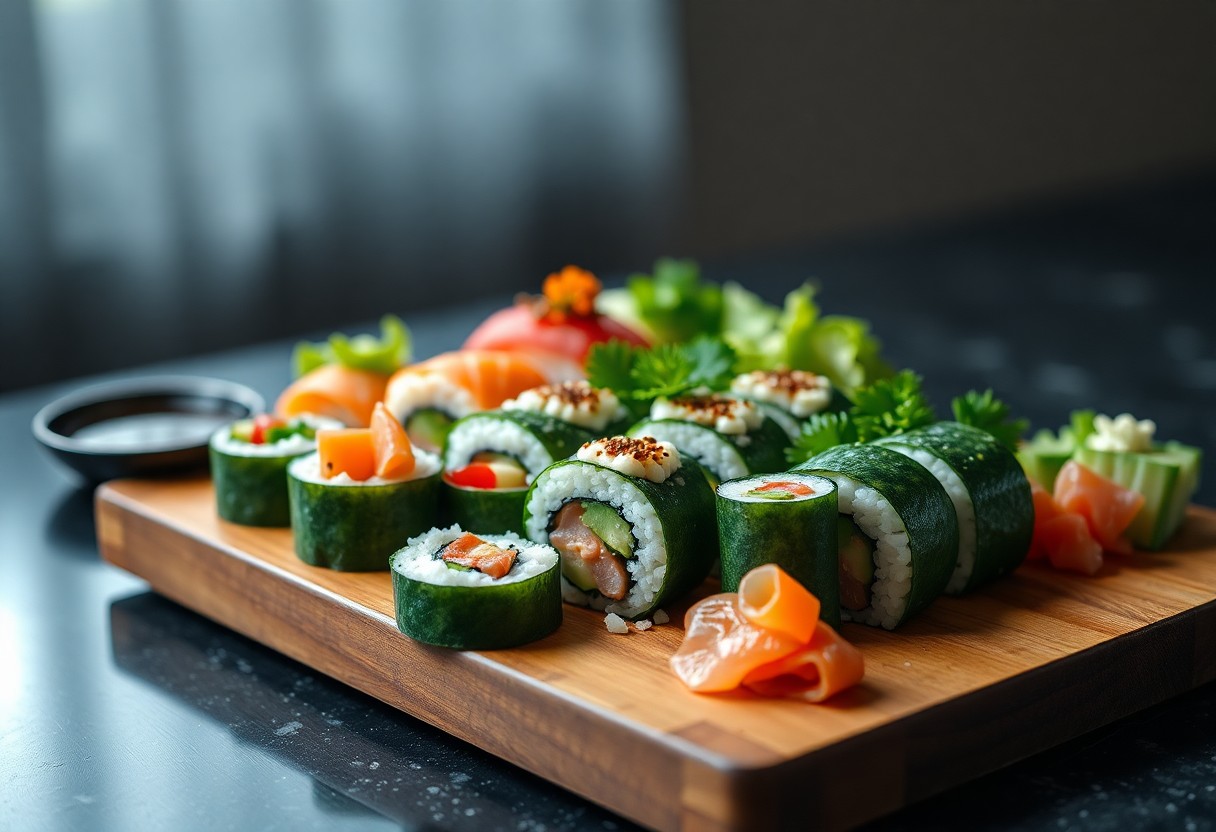
From above, it’s clear that sushi can be tailored to fit your special diet needs, whether it’s Keto, Paleo, or beyond. By focusing on low-carb alternatives, opting for fresh, high-quality ingredients, and being mindful of condiments, you can enjoy sushi without compromising your dietary goals. Experiment with different fillings and avoid high-carb options like sweet sauces or tempura. With these adjustments, you can savor the delightful flavors of sushi while staying true to your nutritional lifestyle.
FAQ
Q: Can I enjoy sushi on a keto diet?
A: Yes, you can enjoy sushi on a keto diet by opting for options that replace traditional rice. Look for sushi made with cauliflower rice or sashimi, which consists of fresh fish without any rice. You can also skip the rolls and focus on fish, seafood, and low-carb vegetable options, keeping your carb intake minimal while still enjoying the flavors of sushi.
Q: Is sushi compatible with the paleo diet?
A: Sushi can be adapted for those following a paleo diet by emphasizing whole, unprocessed ingredients. Choose sashimi or nigiri without rice and focus on fresh fish, seaweed, and vegetables. Avoid soy sauce or use alternatives like coconut aminos. Creating homemade sushi with compliant ingredients allows you to enjoy seafood while aligning with your paleo lifestyle.
Q: What are some tips for making sushi that caters to various dietary restrictions?
A: To create sushi suitable for a variety of dietary restrictions, start by selecting a base that accommodates specific needs, such as cauliflower rice for keto or zucchini spirals for a low-carb option. Use fresh, high-quality seafood and vegetables to pack in nutrients and flavor. For allergies, check all sauces and ingredients for common allergens. Offering a range of healthy dips and toppings can cater to different preferences and enhance the meal.