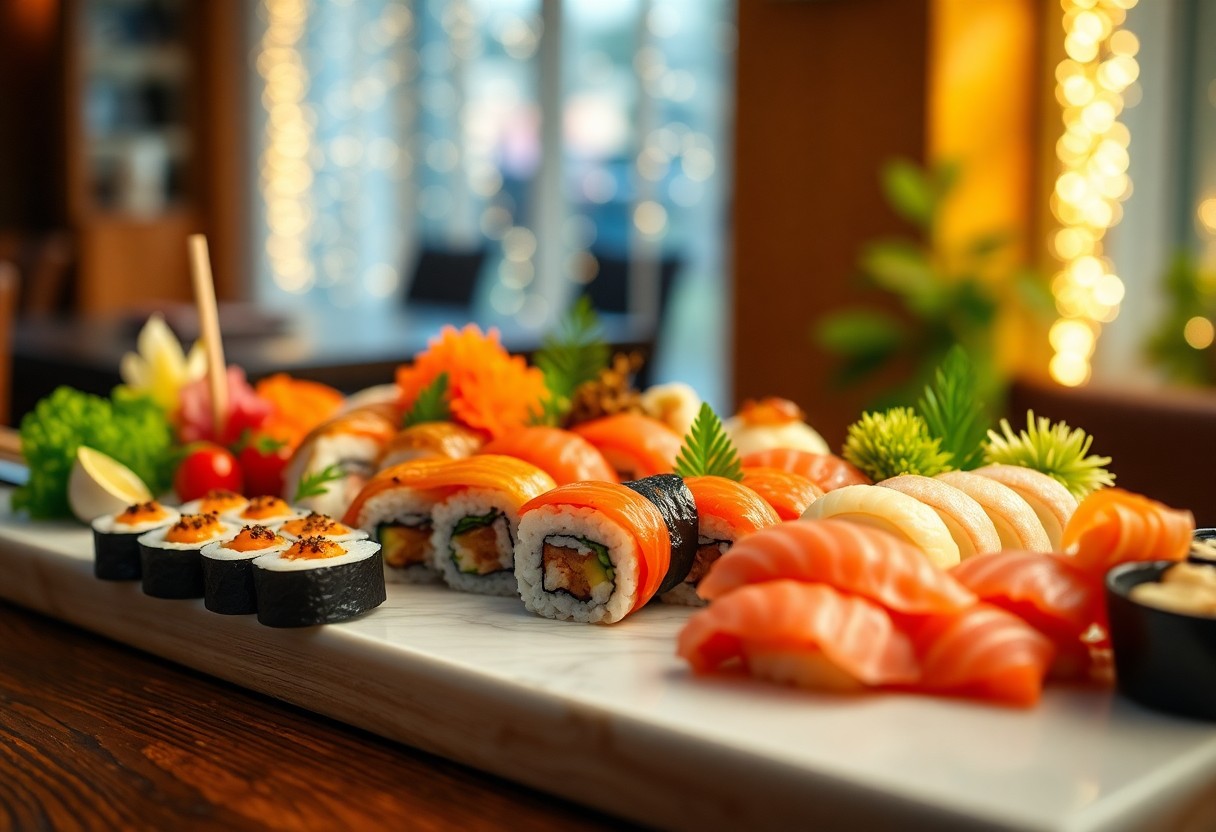
Ideas for creating a stunning sushi party platter can elevate any special occasion, transforming it into a memorable culinary experience. Whether you’re celebrating a birthday, an anniversary, or simply gathering friends for a casual get-together, knowing how to select and arrange various sushi types will impress your guests. You can experiment with different flavors, textures, and presentations to craft a visually appealing and delicious platter that showcases your creativity. This guide will help you design a sushi platter that suits your event while satisfying your guests’ appetites.
Key Takeaways:
- Diverse Selection: Offer a variety of sushi types, including rolls, nigiri, and sashimi to cater to different tastes.
- Presentation Matters: Arrange sushi on platters in an aesthetically pleasing way, using colors and garnishes to enhance visual appeal.
- Include Accompaniments: Enhance the experience by providing soy sauce, wasabi, and pickled ginger on the side.
- Dietary Considerations: Be mindful of guests’ dietary restrictions by offering vegetarian and gluten-free options.
- Portion Control: Create platters in sizes suitable for the occasion, ensuring there is enough sushi without overwhelming guests.
Types of Sushi for Your Platter
For your sushi platter, consider an array of variations to delight your guests. Select a mix of classic, nigiri, sashimi, and specialty rolls for a comprehensive experience. Each type brings unique flavors, so experimenting with combinations is key. Here are some ideas to incorporate:
- Classic Rolls (Maki)
- Nigiri
- Sashimi
- Specialty Rolls
- Vegetarian Options
Perceiving your options will help craft an enticing platter that suits every palate.
| Classic Rolls | Examples: California Roll, Spicy Tuna Roll |
| Nigiri | Hand-formed sushi rice topped with fish |
| Sashimi | Thinly sliced raw fish, no rice |
| Specialty Rolls | Innovative combinations and flavors |
| Vegetarian Options | Cucumber Rolls, Avocado Rolls |
Classic Sushi Rolls
To start, classic sushi rolls are a staple that appeals to many taste preferences. These rolls often feature combinations of sushi rice, seaweed (nori), and fillings like fresh fish, vegetables, and avocado. They can be enjoyed in various flavors and textures, making them a versatile addition to your platter.
Nigiri and Sashimi
To elevate your sushi platter, include nigiri and sashimi, which provide a more sophisticated taste experience. Nigiri consists of small, oval-shaped mounds of sushi rice topped with a delicate slice of raw fish or seafood, while sashimi showcases the pure flavor of the fish in thin, exquisite slices.
A well-crafted selection of nigiri and sashimi not only showcases the quality of the fish but also allows for a refined tasting experience. This pair makes an impressive statement, as their simplicity highlights the essence of the seafood, appealing to connoisseurs and newcomers alike.
Specialty Rolls
Sushi specialty rolls add excitement to your platter with unique ingredients and flavors. Chefs often create these rolls to surprise and delight your guests, combining ingredients like tempura, spicy sauces, and unusual toppings.
Your choice of specialty rolls can truly set your sushi platter apart. Experiment with creative combinations that showcase vibrant colors and flavors, enhancing the visual appeal and ensuring everyone finds something they adore.
Complementary Dishes
Now that you have your sushi platter ready to impress your guests, consider adding complementary dishes to enhance the dining experience. These additions not only balance out flavors but also create a more diverse meal, ensuring that everyone leaves satisfied. Options such as edamame, seaweed salad, or tempura can be excellent companions to your sushi, bringing different textures and flavors to the table.
Appetizers and Side Dishes
Against the common notion that sushi can stand alone, adding appetizers and side dishes transforms your gathering into a well-rounded feast. Offer items like gyoza, spring rolls, or even a light miso soup to entice your guests’ appetites and set the stage for a delicious sushi experience.
Sauces and Condiments
Dishes accompanying your sushi platter can be made even more delightful with the right sauces and condiments. A selection of soy sauce, wasabi, and pickled ginger will enhance the flavors and elevate your sushi experience.
Also, consider homemade dipping sauces to provide a personal touch. Pair your sushi with spicy mayo, eel sauce, or ponzu for unique flavor combinations. You can even experiment with different heat levels by modifying the wasabi or adding some sriracha to the mix. Offering various sauces gives your guests the freedom to customize their bites, making for an interactive and enjoyable dining experience.
Presentation Ideas
Once again, the way you present your sushi platter can elevate the overall experience for your guests. Consider incorporating a variety of heights and shapes to create visual interest, such as using tiered stands or decorative plates. Utilizing attractive serving ware along with vibrant colors will not only highlight the sushi itself but also add to the ambiance of your special occasion.
Creative Platter Arrangements
On a well-curated sushi platter, creativity knows no bounds. You can arrange the sushi by type, color, or even shape. Consider alternating between rolls, sashimi, and nigiri, or create themed sections that represent different regions of Japan. This thoughtful arrangement not only enhances the visual appeal but also invites your guests to explore various flavors as they indulge.
Garnishes and Decoration
For an extra touch of elegance, consider adding garnishes and decorations to your sushi platter. Fresh herbs, edamame, and colorful pickled vegetables can make great accents. A splash of wasabi and a drizzle of soy sauce can also enhance the presentation. Small bowls of dipping sauces not only serve a functional purpose but are also an opportunity to inject personality into your display.
In addition, you can use decorative elements like edible flowers, citrus slices, and textured napkins to create a more harmonious and visually appealing presentation. Incorporate layers with bamboo leaves or a salted stone for added texture, and remember to balance colors for an inviting arrangement. By thoughtfully selecting garnishes, you can transform your platter into an artful display that captivates the eyes and pleases the palate.
Dietary Considerations
All special occasions should take into account the dietary preferences and restrictions of your guests. Planning a sushi party platter means you should consider allergies, lifestyle choices, and dietary needs to ensure everyone can partake in the festivities. Balancing flavors and textures while accommodating these considerations will enhance your party and create an inclusive atmosphere.
Vegetarian and Vegan Options
On your quest to please all guests, incorporating vegetarian and vegan sushi options is important. You can create delicious rolls filled with fresh vegetables, avocado, and plant-based proteins like tofu or tempeh. Additionally, using rice paper wraps instead of traditional seaweed can elevate the experience for your plant-based guests.
Gluten-Free Alternatives
At your sushi gathering, it’s important to offer gluten-free alternatives to cater to those with gluten sensitivities. Sushi rice is naturally gluten-free, and you can use tamari instead of soy sauce to keep flavors intact.
This inclusion will allow your gluten-sensitive guests to enjoy your sushi party without worry. Consider using fresh vegetables, sashimi, and even rice paper rolls as delightful substitutes. You may also explore gluten-free wraps to create sushi-style dishes that everyone can enjoy, ensuring a memorable experience for all. Providing these options will demonstrate your thoughtfulness and consideration for everyone’s dietary needs while still delivering on taste and presentation.
Pairing Beverages
Unlike traditional party food, sushi deserves careful beverage pairing to enhance its flavors. From light and refreshing drinks to robust options, your selection can greatly influence the dining experience. Whether it’s a casual gathering or a formal celebration, choosing the right beverages will elevate your sushi party platter and delight your guests.
Sake and Wine Suggestions
Against popular belief, sake isn’t the only drink that pairs well with sushi. A crisp white wine, like Sauvignon Blanc or a light Pinot Grigio, can complement the delicate flavors of your sushi. Consider serving chilled sake to highlight the umami notes or a sparkling wine for a refreshing contrast to richer rolls.
Non-Alcoholic Options
By including non-alcoholic options, you ensure all guests can enjoy the meal, regardless of their preferences. Sparkling water, green tea, or even a fruity mocktail can enhance the experience without the alcohol content, providing refreshing alternatives that still resonate with the sushi flavors.
Plus, having an inviting selection of non-alcoholic beverages enables you to cater to diverse guest preferences. You might consider offering flavored sparkling waters, refreshing fruit juices, or homemade iced teas. These options not only refresh the palate but also add a festive touch to your gathering, making everyone feel included. Always strive for variety to accommodate different tastes and dietary choices, ensuring a delightful experience all around.
Tips for Sourcing Fresh Ingredients
Your sushi party platter’s success largely hinges on sourcing fresh ingredients. Here are some tips to ensure top-notch quality:
- Visit local seafood markets for the best selection.
- Ask your fishmonger about the catch of the day.
- Opt for sustainably sourced seafood for ethical choices.
- Purchase organic vegetables from trusted farmers’ markets.
- Keep all ingredients cool until you’re ready to use them.
Perceiving quality in your ingredients will enhance the overall taste and presentation of your sushi. For delicious inspiration, check out this 8PM – Sushi Party! recipe.
Finding Quality Seafood
Fresh seafood is the cornerstone of an excellent sushi platter. Look for fish with vibrant colors, a clean aroma, and firm texture. When purchasing, ask about the sourcing and freshness. Ideally, you want to select fish that has been caught within the last 24 hours to ensure the best taste and quality.
Choosing the Right Rice and Vegetables
Any good sushi starts with perfect rice and fresh vegetables. Sushi rice should be short-grain, sticky, and seasoned with rice vinegar for that authentic flavor. For vegetables, incorporate a variety of colors and textures. Radishes, cucumbers, and avocados are popular choices that enhance both taste and appearance.
Also, opting for quality-produced rice will significantly impact the final outcome of your sushi. Investing in the right rice, like sushi or Japonica rice, will give you that ideal sticky consistency, while fresh, organic vegetables will add crunch and vibrancy. Exploring your local markets can yield seasonal produce that will elevate your sushi assortment.
Final Words
From above, you can see how a sushi party platter can elevate any special occasion, providing a unique and interactive dining experience for your guests. By selecting a variety of sushi styles and incorporating fresh, vibrant ingredients, you can create an enticing spread that caters to different tastes. Don’t hesitate to get creative with your presentations and pairings, ensuring your platter not only pleases the palate but also dazzles the eyes. With these sushi platter ideas, you’ll be well-prepared to impress your friends and family during your next celebration.
Sushi Party Platter Ideas for Special Occasions
Q: What types of sushi should I include in a party platter for a diverse group of guests?
A: To cater to a variety of tastes, consider including a mix of traditional sushi types such as nigiri, maki, and sashimi. You can add popular rolls like California rolls and spicy tuna rolls for those who prefer cooked or mildly flavored options. Vegetarian options, such as cucumber rolls and avocado rolls, will cater to plant-based guests. Additionally, include some specialty rolls that might surprise your guests, like dragon rolls or rainbow rolls, for added excitement.
Q: How can I make my sushi platter visually appealing for special occasions?
A: Presentation plays a key role in making your sushi platter stand out. Use a large bamboo mat or a decorative platter for a traditional feel. Arrange sushi pieces by color and type—this creates an eye-catching display. Garnish with fresh herbs like cilantro or shiso leaves, and include colorful accompaniments such as pickled ginger, wasabi, and sliced radishes. Edible flowers can also add a touch of elegance. Use small bowls for soy sauce to keep the platter organized and enhance aesthetics.
Q: What are some good drink pairings with sushi platters for a special celebration?
A: Complementing your sushi platter with the right drinks can enhance the overall experience. Sake, whether served chilled, warm, or as a cocktail, is a classic pairing with sushi. Consider also offering wines such as Riesling or a light Sauvignon Blanc, which balance the flavors well. For a non-alcoholic option, Japanese green tea with a hint of sweetness or ginger lemonade are refreshing choices that pair wonderfully with sushi.
Q: How do I accommodate guests with dietary restrictions when planning a sushi platter?
A: To cater to guests with dietary restrictions, be sure to label each piece of sushi to indicate any key ingredients. Include a variety of options such as gluten-free soy sauce and rice paper rolls for those with gluten intolerance. Offer vegan and vegetarian sushi options made with fresh vegetables, tofu, or avocado. You can also create a separate platter with cooked sushi, like eel or tempura rolls, for anyone avoiding raw fish. Open communication with your guests about their specific dietary needs can help ensure everyone enjoys the celebration.
Q: What’s the best way to keep sushi fresh during an event?
A: To maintain freshness, sushi should be kept cool, ideally at a temperature between 35°F and 40°F. Place the sushi on ice or use refrigerated serving trays to prevent spoilage. If preparing in advance, keep individual pieces covered with damp cloths or plastic wrap to retain moisture. Avoid leaving sushi out for extended periods. As a general guideline, sushi should be consumed within two hours to ensure its quality and safety. After that, consider discarding any remaining pieces to avoid food safety issues.