Sushi is not just a culinary delight; it encompasses various forms, reflecting the cultural differences between Japan and Korea. You might be familiar with sushi, but have you tried kimbap? Both dishes feature rice and seaweed, yet they differ significantly in ingredients and preparation. Understanding these distinctions can enhance your appreciation for both cuisines. To dive deeper into the specifics, check out this guide on What’s The Difference Between Kimbap and Sushi?.
Key Takeaways:
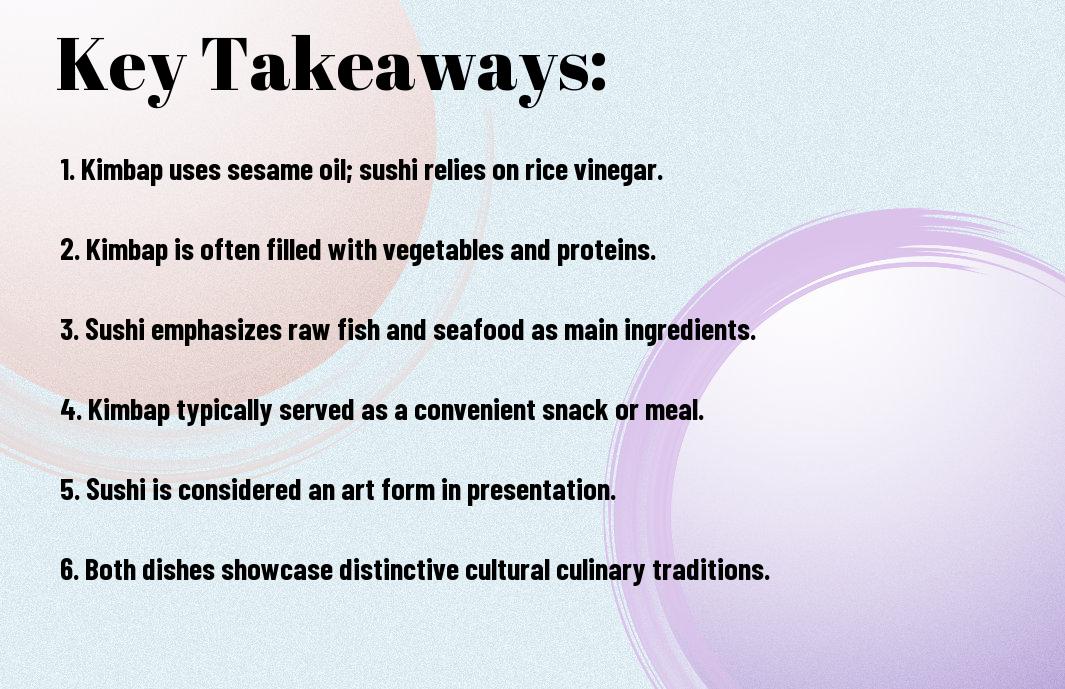
- Kimbap vs. Sushi: Kimbap is a Korean dish that resembles sushi but has distinct ingredients and preparation methods.
- Ingredients: Kimbap typically uses fillings like vegetables, pickled radish, and protein such as beef or egg, while sushi often incorporates raw fish and seafood.
- Seasoning: Sushi rice is seasoned with vinegar, sugar, and salt, whereas kimbap rice is commonly mixed with sesame oil and salt for flavor.
- Presentation: Kimbap is usually rolled tightly and sliced into bite-sized pieces, while sushi comes in various forms, including nigiri and maki.
- Cultural Significance: Kimbap is often enjoyed as a picnic food or snack in Korea, highlighting its role in Korean communal dining experiences.
The Origins of Sushi and Kimbap
For many food enthusiasts, the differences between sushi and kimbap can lead to interesting discussions, particularly surrounding their origins. Is kimbop considered sushi? : r/asianamerican examines into the nuances that separate these two beloved dishes, rooted in their unique histories and cultural backgrounds.
Historical Roots
Among the earliest precursors of sushi, you will find fermented rice dishes in ancient Japan, which were used to preserve fish. Kimbap, on the other hand, has its origins in the traditional Korean meal, using seasoned rice and various fillings wrapped in seaweed, reflecting the agrarian lifestyle of Korea.
Cultural Significance
Against the backdrop of their historical contexts, both sushi and kimbap hold considerable cultural significance in their respective countries. Kimbap is often associated with family gatherings and picnics, representing comfort and community, while sushi is considered an art form in Japan, highlighting precision and culinary skill.
Even today, these dishes exemplify the intrinsic values of their cultures: sushi embodies the Japanese ethos of perfection and simplicity, while kimbap emphasizes social connection and shared experiences. Understanding these cultural aspects enriches your appreciation of both meals, making them not just food, but also a representation of heritage and tradition.
Ingredients Used in Sushi and Kimbap
Assuming you are familiar with the basics of sushi and kimbap, it’s necessary to note the differences in their ingredients. Sushi typically incorporates vinegared rice, seafood, and various vegetables, while kimbap features sesame oil-infused rice paired with vegetables, meats, or fish, all wrapped in seaweed. Although both dishes share some similarities, the flavor profiles and preparations set them apart, making each a unique culinary experience.
Common Ingredients
Behind the scenes, the common ingredients for sushi include sushi rice, raw fish like salmon or tuna, seaweed, and vegetables such as cucumber and avocado. In contrast, kimbap primarily uses steamed rice, seasoned vegetables like pickled radish, and protein options such as bulgogi or crab meat, combined in a rolled format that offers a satisfying texture and taste.
Regional Variations
Ingredients can vary significantly based on the region where sushi or kimbap is made.
Even within Korea or Japan, local ingredients play a pivotal role in defining the character of these dishes. For instance, in coastal areas of Japan, you might find sushi utilizing the freshest local seafood, whereas inland areas focus on alternative proteins and vegetables. Similarly, in Korea, regions like Jeolla Province may include wild greens and local seafood in kimbap recipes, reflecting the area’s agricultural and fishing traditions. This diversity adds depth and richness to the overall culinary landscape of sushi and kimbap, inviting you to explore different flavors and interpretations.
Preparation Techniques
Keep in mind that the preparation techniques for sushi and kimbap are distinct yet share some similarities. Both involve a steady hand and attention to detail, but they each highlight unique ingredients and styles influenced by their cultures. Understanding these methods will enhance your appreciation for both dishes as you explore their individual characteristics and flavors.
Sushi-Making Process
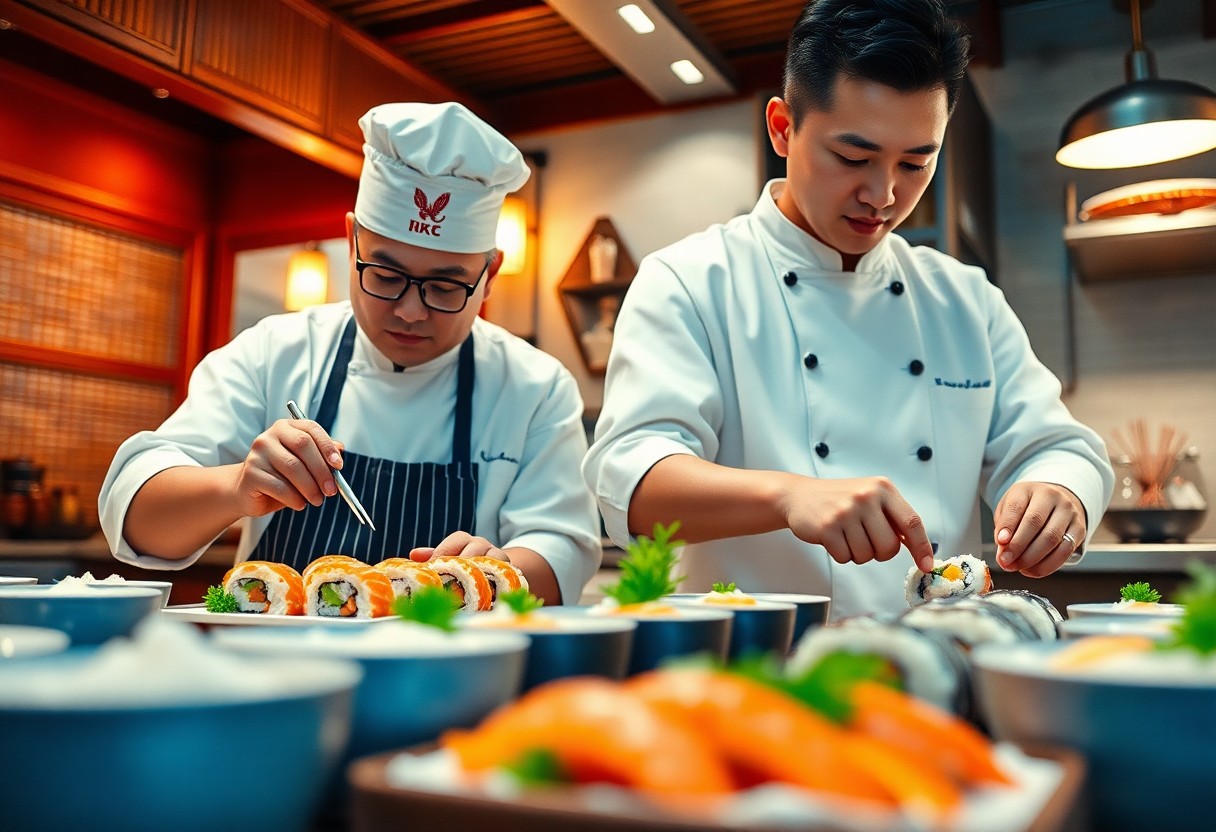
SushiMaking begins with selecting high-quality sushi rice, which is seasoned with a mixture of vinegar, sugar, and salt. You then shape the rice into small balls or layer it for rolls, adding fresh fish and vegetables as you go. The process emphasizes balance and presentation, making it a delightful culinary art to master.
Kimbap Preparation
On the other hand, kimbap is prepared by cooking and seasoning the rice with sesame oil while it’s still warm. You layer various fillings, such as pickled radish, vegetables, and proteins, then roll it all tightly in seaweed. The final touch is slicing the roll into bite-sized pieces, showcasing the vibrant colors of the ingredients.
In addition to the vital components, kimbap’s preparation allows for greater personal expression, with fillings ranging from bulgogi to tofu, catering to various tastes. The use of sesame oil gives it a unique aroma, while the fillings encapsulate a balance of taste and texture. The rolling technique is pivotal, as a tightly rolled kimbap ensures that each bite is flavorful and cohesive. Enjoy experimenting with different ingredients to create your own perfect kimbap roll!
Presentation and Serving Styles
To appreciate the nuances between kimbap and sushi, it’s necessary to understand their distinct presentation and serving styles. Both dishes showcase vibrant colors and fresh ingredients, but they each have their unique flair that reflects their cultural origins.
Sushi Presentation
Serving sushi is often an art form, with each piece meticulously crafted and artfully arranged. Traditional sushi is presented on decorative plates, sometimes accompanied by garnishes like wasabi and pickled ginger to enhance its visual appeal and flavor profile.
Kimbap Serving Methods
On the other hand, kimbap is typically served in a more casual manner, often sliced into bite-sized pieces and arranged on a simple platter. It’s common for kimbap to be accompanied by a side of pickled radish, adding a delightful contrast to the dish.
Presentation plays an important role in kimbap serving methods, as the slices reveal the colorful ingredients inside. Often enjoyed as a picnic or snack food, kimbap can be wrapped in plastic or placed in a bento-style box for easy transport. You will find it served at casual gatherings, showcasing its inviting and accessible nature that invites sharing and enjoyment among friends and family.
Taste and Flavor Profiles
Unlike sushi, which often emphasizes the freshness of its seafood and the delicate balance of flavors, kimbap presents a heartier taste experience. Filled with an assortment of ingredients like seasoned vegetables, proteins, and rice, kimbap offers a diverse palate that caters to various preferences. The boldness of sesame oil and the slight sweetness of cooked components blend seamlessly, making kimbap a satisfying meal on its own.
Sushi Flavor Elements
Sushi thrives on the natural flavors of its core ingredients, particularly the fish. You’ll enjoy the umami richness that fresh seafood brings, often complemented by a touch of soy sauce or wasabi. The vinegared rice acts as the perfect neutral base, allowing the fish and garnishes to shine while creating a harmonious flavor profile.
Kimbap Taste Characteristics
Along with its pleasing presentation, kimbap’s taste is defined by its variety of fillings and the seasonings that accompany them. You’ll find that the spectrum of flavors ranges from savory to slightly sweet, as ingredients such as pickled radish and marinated vegetables elevate the overall experience. The sesame oil adds depth and richness, making each bite enjoyable.
Profiles of kimbap are all about balance and variety. The mix of textures from the crunchy vegetables, tender rice, and flavorful meats creates a delightful contrast. Furthermore, the addition of unique ingredients like eggs or kimchi enhances the spectrum of flavors, ensuring that each piece remains interesting and satisfying. You’ll discover that kimbap is versatile enough to incorporate seasonal ingredients, making it a delightful option for any occasion.
Nutritional Comparison
All the nutritional values of kimbap and sushi can vary significantly based on their ingredients and preparation methods. Understanding these differences can help you make informed dietary choices.
| Kimbap | Sushi |
|---|---|
| Higher in carbohydrates | Typically lower in carbs |
| Often includes vegetables and meat | Features fish as a primary ingredient |
| May contain sesame oil | Usually seasoned with rice vinegar |
| Lower calorie options available | Higher protein options with raw fish |
Health Benefits of Sushi
Above all, sushi offers various health benefits, primarily due to its fresh ingredients. Rich in omega-3 fatty acids and protein, sushi can promote heart health and improve brain function. The seaweed used in sushi is also a great source of vital vitamins and minerals, enhancing its overall nutritional value.
Nutritional Aspects of Kimbap
Across the board, kimbap presents its own set of nutritional benefits, often containing a variety of vegetables that provide fiber and vital nutrients. The use of rice offers a good source of energy, while any added proteins, such as egg or meat, contribute to muscle building.
Also, kimbap often includes a variety of colorful vegetables, making it not only nutritious but also visually appealing. The inclusion of ingredients like pickled radish and cooked meats provides a balance of flavors, while the seaweed wrapping adds trace minerals. You can enjoy kimbap as a convenient option for a fulfilling meal, bolstering both your energy levels and nutritional intake throughout the day.
Summing up
To wrap up, understanding the differences between kimbap and sushi enhances your appreciation for these beloved dishes. While kimbap focuses on utilizing various vegetables and meats wrapped in seasoned rice, sushi emphasizes fresh seafood and rice vinegared to elevate its flavor. By exploring the nuances in preparation, ingredients, and cultural significance, you can enjoy these unique culinary experiences from Korea and Japan, each offering distinct flavors and textures that cater to your taste buds.
FAQ
Q: What is the main difference between Kimbap and sushi in terms of ingredients?
A: Kimbap typically features cooked or pickled ingredients such as vegetables, meats, and fish, while sushi often includes raw fish alongside vinegared rice. Kimbap is usually filled with items like beef, tuna, carrots, and pickled radish, while sushi may emphasize fresh fish varieties like salmon, tuna, or sea bass.
Q: How is the rice prepared for Kimbap compared to sushi?
A: In Kimbap, the rice is cooked with sesame oil and salt, which gives it a distinct flavor. Sushi rice, on the other hand, is seasoned with a mixture of rice vinegar, sugar, and salt, providing a slightly tangy taste. This difference in preparation contributes to the unique flavor profiles of each dish.
Q: Are there any differences in presentation between Kimbap and sushi?
A: Yes, the presentation of Kimbap and sushi can vary significantly. Kimbap is usually served in long, cylindrical slices and often arranged in a way that showcases the colorful ingredients. Sushi is presented in various forms, such as nigiri (rice topped with a slice of fish) or maki (rolled sushi), and tends to emphasize the fresh fish more prominently.
Q: What are some common occasions for eating Kimbap compared to sushi?
A: Kimbap is often enjoyed as a convenient meal or snack, making it a popular choice for picnics and outdoor activities in Korea. Sushi, particularly in its more artisanal forms, is typically served in restaurants and enjoyed during special occasions or as part of fine dining experiences. The context in which each dish is consumed reflects cultural preferences and traditions.
Q: Can you find sushi easily in Korea like Kimbap?
A: While Kimbap is widely available at street vendors, convenience stores, and restaurants throughout Korea, sushi is usually found in specialized sushi restaurants or higher-end dining establishments. The availability of sushi may be less prevalent compared to Kimbap, which is more integrated into everyday Korean cuisine.


