Most sushi lovers appreciate the delicate flavors and artistry involved in each roll, but pairing your sushi with the right side dishes can elevate your meal to a whole new level. In this guide, you will discover the best accompaniments to enhance your sushi experience, from refreshing salads to flavorful sauces. Whether you prefer traditional Japanese sides or modern interpretations, you’ll learn how to balance textures and tastes that complement your sushi choices, making your dining experience more enjoyable and satisfying.
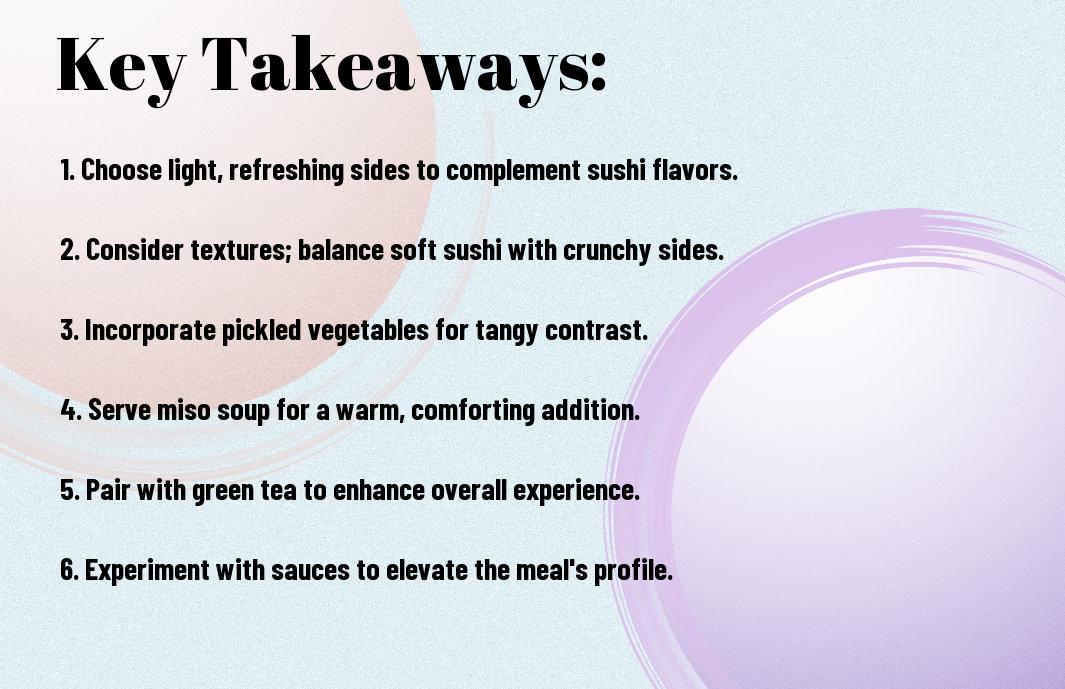
Key Takeaways:
- Balance of Flavors: Select side dishes that complement the taste of sushi, ensuring a harmony between the subtle flavors of the sushi and the sides.
- Textural Variety: Incorporate side dishes that provide contrasting textures, such as crispy tempura or creamy avocado, to enhance the overall dining experience.
- Seasonal Ingredients: Opt for seasonal vegetables and ingredients in your side dishes, which can elevate the freshness and appeal of the sushi meal.
Understanding Sushi Varieties
Before you can effectively pair sushi with side dishes, it’s important to comprehend the different types of sushi available. Each type offers a unique flavor profile and textural experience, influencing your selections for side dishes. Whether you prefer the simplicity of nigiri, the roll form of maki, or the purity of sashimi, understanding these varieties will allow you to enhance your dining experience.
Nigiri
Sushi lovers appreciate nigiri for its simplicity and elegance. Comprising a hand-formed mound of vinegared rice topped with a slice of seafood, nigiri is best when enjoyed fresh. The subtle flavors of the fish can be complemented by wasabi or soy sauce, but it’s the quality of the fish that truly shines in this variety.
Maki
Behind maki sushi lies a delightful combination of flavors and textures. This popular variety consists of vinegared rice and various fillings rolled in seaweed (nori) and sliced into bite-sized pieces. The creativity involved in maki allows for endless variations, from traditional tuna to innovative choices like tempura vegetables, making it a versatile option for pairing.
With its vibrant colors and varying ingredients, maki sushi offers a feast for both the eyes and the palate. The outer layer of nori adds a satisfying crunch, while the fillings can range from spicy to sweet. When considering side dishes, think about complementing the rolls’ flavors—crispy tempura or a refreshing cucumber salad can enhance your maki experience.
Sashimi
To enjoy sushi in its purest form, consider sashimi. This dish consists solely of thinly sliced raw fish or seafood, served without rice. With sashimi, the natural flavors and quality of the fish take center stage. It’s often accompanied by soy sauce and garnishes like wasabi and pickled ginger, enhancing its delicate taste.
Sashimi emphasizes freshness and quality, so when you’re pairing it with side dishes, think light and refreshing. A simple seaweed salad or a citrusy yuzu dressing can elevate the dish without overpowering the subtle flavors of the fish. The key is to maintain a balance, allowing the sashimi to shine as your main attraction.
Complementary Side Dishes
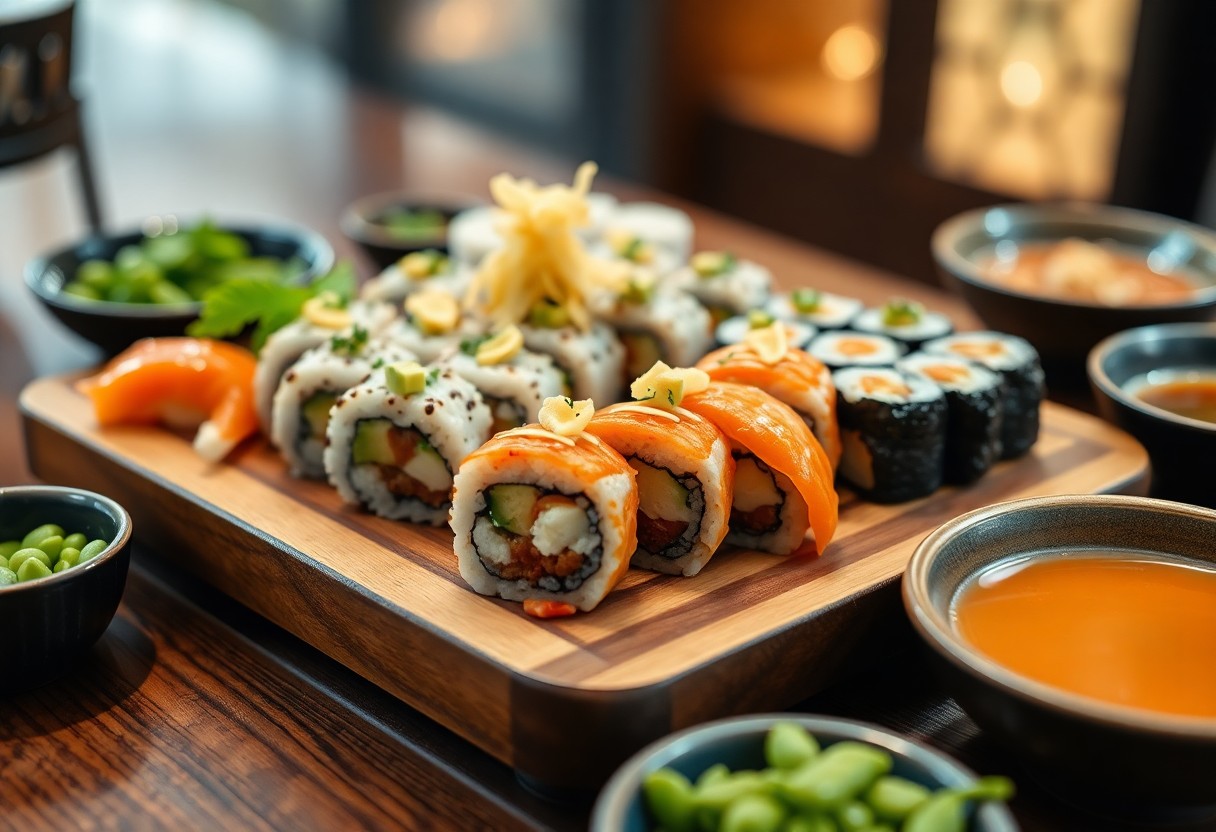
Any sushi lover knows that pairing your favorite rolls with the right side dishes can elevate the dining experience. Complementary side dishes play a vital role in balancing flavors and textures, enhancing the overall meal. Consider options like edamame, pickled vegetables, and seaweed salad to serve alongside your sushi selections for a delightful culinary adventure.
Edamame
To begin your sushi meal, consider serving a bowl of steamed edamame. This light and nutritious snack offers a satisfying crunch while providing protein and fiber. The slight saltiness of edamame sets a perfect backdrop for the flavors of sushi, making it an ideal choice for your palate.
Pickled Vegetables
Behind the scenes in Japanese cuisine, pickled vegetables, or tsukemono, deliver a burst of flavor and serve as a refreshing palate cleanser. Their tangy, sweet, and salty notes beautifully complement sushi, creating a vibrant contrast that enhances your overall dining experience.
Hence, incorporating pickled vegetables into your meal not only adds variety but also introduces imperative probiotics beneficial for gut health. You can find various types of pickles, from pickled radish to cucumber, each offering its unique taste profile that harmonizes with sushi, enriching your culinary journey.
Seaweed Salad
Around the world of sushi, a seasoned seaweed salad provides a refreshing break from the richness of fish. Its vibrant green strands, often tossed in sesame oil and sprinkled with sesame seeds, brings a textural contrast and an umami punch that pairs beautifully with your sushi choices.
For instance, seaweed salad not only complements sushi in taste but also offers nutritional benefits like omega-3 fatty acids and a variety of vitamins and minerals. Its light and zesty flavor makes it a great addition to any sushi meal, ensuring you have a well-rounded dining experience.
Beverage Pairings
Keep in mind that the right beverage can enhance your sushi experience significantly. Consider exploring options in What to Serve with Sushi (12 Japanese-Inspired Sides) to find the perfect match for your meal.
Sake
With its rich, complex flavors, sake is a classic choice to accompany sushi. Opt for a premium grade, as it complements the delicate taste of fish and enhances the overall experience.
Green Tea
Pairings like green tea with sushi add a refreshing element to your meal. Its light, grassy notes balance the flavors of your dish while aiding digestion, making it an excellent accompaniment.
Understanding the nuances of green tea is crucial for enhancing your sushi enjoyment. Matcha or sencha varieties offer different flavor profiles, allowing you to choose based on your sushi type. The warmth of tea can also soften the textures of sushi, creating a harmonious dining experience.
Beer
One popular option is to pair beer with sushi, as its effervescence enhances the flavors of lighter rolls. Opt for crisp lagers or even a light wheat beer for an enjoyable experience.
Green beers can heighten the sushi experience, especially with fried or spicy rolls. Consider a clean pilsner, as its bubbles cut through rich flavors, providing a refreshing contrast that elevates every bite.
Seasonal Ingredients in Side Dishes
Despite the versatility of sushi, pairing it with seasonal ingredients enhances both flavor and experience. Utilizing fresh produce not only elevates your dish but also ensures that you’re together embracing the essence of each season. Seasonal side dishes offer a delightful complement to sushi, allowing you to relish the unique tastes throughout the year while maintaining a harmonious balance on your plate.
Spring and Summer Options
About the warmer months, you can enhance your sushi experience with lighter, vibrant sides. Consider fresh salads bursting with ingredients like cucumber, radish, mixed greens, and citrus vinaigrettes. Grilled vegetables such as asparagus, zucchini, and bell peppers also pair beautifully with sushi, providing a delightful contrast in texture and flavor.
Fall and Winter Favorites
About the cooler months, it’s time to embrace the comforting, rich flavors that autumn and winter bring. Root vegetables like sweet potatoes and carrots work well roasted, while hearty greens such as kale or Brussels sprouts can be lightly sautéed with garlic for warmth. These warming dishes will perfectly complement the delicate flavors of your sushi, creating a cozy dining experience.
Further exploring fall and winter favorites, you can elevate your meal by integrating seasonal spices like cinnamon or nutmeg in roasted vegetable dishes. Additionally, incorporating ingredients such as mushrooms or squash can add earthy tones to your side options. Pair these hearty sides with a warm, comforting miso soup or a flavorful seaweed salad to create a balanced, satisfying winter meal alongside your sushi.
Regional Side Dish Variations
Not all regions share the same sushi accompaniments. For instance, while Japanese cuisine may typically offer pickled vegetables as a side, Hawaiian sushi often features tropical fruits that enhance the overall flavor. Similarly, you’re likely to find unique regional sides that reflect local ingredients and customs. So, exploring these variations can elevate your sushi experience and introduce exciting new flavors.
Japanese Traditions
Beside the sushi itself, traditional Japanese sides like miso soup, pickles, and seaweed salads enhance the meal’s texture and flavor profile. These dishes not only complement the sushi but also introduce a healthful balance of umami and crunch. Integrating these sides will transport your taste buds to Japan while offering a complete dining experience.
Fusion Approaches
Against conventional pairing, fusion side dishes incorporate global flavors that can make your sushi meal memorable. This creative approach invites you to mix Asian-inspired sides with non-traditional elements, such as spicy guacamole or chipotle mayo, offering a unique twist to your dining experience.
Also, embracing fusion dishes can turn your sushi night into a culinary adventure. Imagine pairing your sushi with kimchi nachos or a mango salsa, merging flavors from different cuisines. This not only excites your palate but also encourages creativity in the kitchen, allowing you to experiment with new ingredients and techniques. Just keep balance in mind, ensuring your fusion sides don’t overpower the delicate taste of your sushi.
Presentation Tips for a Balanced Meal
Unlike simply serving sushi and sides on a plate, achieving a visually appealing arrangement elevates your meal experience. Focus on these tips for a well-balanced presentation:
- Use various heights to create interest.
- Incorporate different shapes and sizes of dishes.
- Leave negative space for a clean look.
- Match your plate colors with the sushi and sides.
Assume that a stunning visual appeal will enhance the enjoyment of your meal.
Plating Techniques
Among the various plating techniques available, the art of stacking, arranging, or layering ingredients can add dimension to your sushi spread. Experiment with vertical stacking of rice and fresh vegetables or arrange pieces in a circular or spiral pattern on your plate. These techniques not only create visual interest but also guide the flow of eating, making your meal an interactive experience.
Color Coordination
Plating is all about balancing colors for visual harmony. Utilizing vibrant colors not only enhances the aesthetic appeal but also signifies freshness and diversity in flavors. Aim for a palette that showcases the natural hues of your sushi and side dishes, such as deep greens, bright reds, and subtle yellows, ensuring your meal is a feast for the eyes as well as the palate.
The right color coordination can transform your table setting. Consider using complementary colors that highlight the natural beauty of sushi and the accompanying sides. For instance, if your sushi features dark nori, pair it with bright ginger, green wasabi, and colorful vegetables like radishes or carrots. This not only attracts attention but also evokes excitement and anticipation for your culinary creation.
Conclusion
Following this guide, you can elevate your sushi experience by thoughtfully pairing it with side dishes that enhance its flavors and textures. Consider options like edamame for a protein boost, seaweed salad for a refreshing contrast, or miso soup for a warm, umami-rich companion. By selecting complementary sides, you create a well-rounded meal that allows your sushi to shine. Enjoy exploring these pairings, and let your taste buds lead the way to a delightful dining experience.
Q: What are some popular side dishes that pair well with sushi?
A: There are several side dishes that complement sushi beautifully. Some popular options include edamame, which provides a light and healthy protein source; miso soup, offering warm and savory flavors; and pickled ginger, which can cleanse the palate between different sushi types. Other great choices include seaweed salad, tempura vegetables, and wasabi-dressed cucumbers. Each of these dishes enhances the sushi experience by adding distinct tastes and textures.
Q: How can I choose the right side dish based on the type of sushi I’m serving?
A: When dicking out side dishes, consider the flavor profile of the sushi. For example, if you are serving fatty fish sushi like salmon or tuna, you might want a side that provides a fresh contrast, such as a cucumber salad or a light miso soup. If your sushi features more delicate flavors, like white fish or vegetables, you may opt for stronger flavored sides like spicy edamame or tempura. The goal is to create a balanced meal where the side dishes elevate the primary flavors of the sushi without overwhelming them.
Q: Are there any side dishes I should avoid pairing with sushi?
A: While personal preferences play a role, there are some side dishes you might want to steer clear of when enjoying sushi. Heavy or overly seasoned dishes, like rich curries or creamy pastas, can overshadow the delicate flavors of sushi. Similarly, side dishes that are fried or greasy can create an imbalance, detracting from the fresh, clean taste of sushi. Instead, focus on lighter, simpler sides that allow the sushi to shine, ensuring a harmonious dining experience.